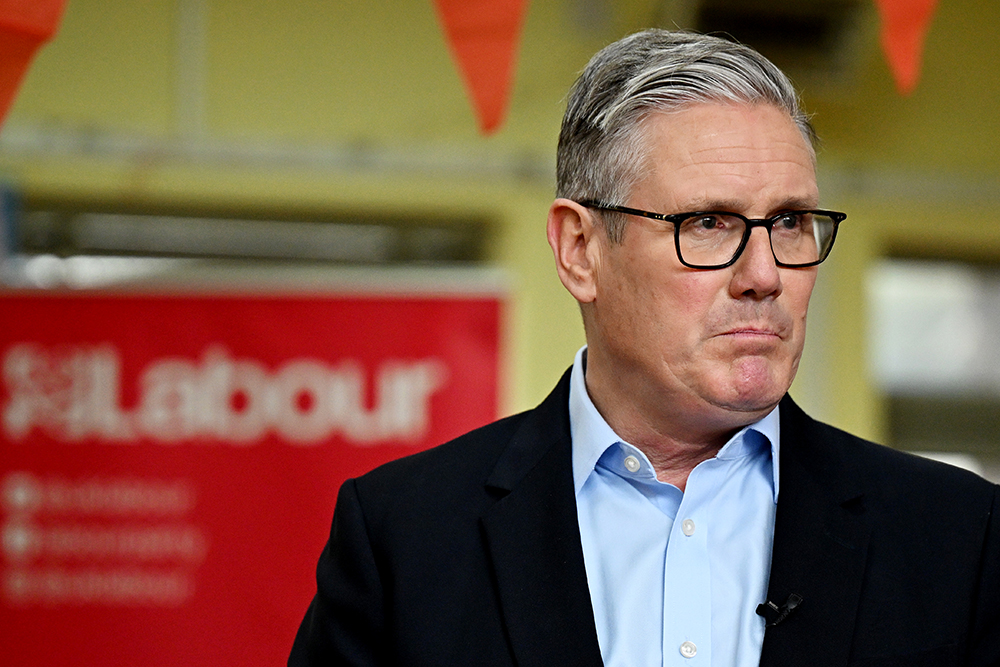
People laugh at Sir Keir Starmer for failing to acknowledge that he has almost no hope of survival. This is unfair. Until you absolutely know you will resign, you must not give the slightest indication that you might. By doing so, you encompass your own destruction. ‘I shall fight on. I fight to win,’ said Margaret Thatcher. She announced her resignation the next day. Sir Keir is not nearly at that stage. His position is stronger than hers. There has been no Geoffrey Howe-style resignation followed by a denunciation of the Prime Minister in the Commons. Indeed, there has been no formal challenge to Starmer’s leadership so far, let alone a leadership vote like that which undermined Mrs T. Sir Keir loves ‘due process’ (his own adaptation – misuse even – of a term with legal meaning). In this case, he is right to cling to it, even though it probably will not save him. He owes it to his successors and the office itself to resist easy ejection. I have an additional suggestion for Sir Keir as he tries to hit back. Before last week’s elections, Nigel Farage kept saying: ‘Vote Reform and get Starmer out.’ Why, Starmer should ask his own rebels, do they want to do Farage’s bidding?
Sir Keir well knows that his opponents face formidable difficulties, none more so than Andy Burnham. There is no modern precedent for what the Mayor of Greater Manchester is trying to do. The nearest is the story of Sir Alec Douglas-Home. In 1963, following Harold Macmillan’s resignation as prime minister because of illness, Home was his anointed successor. Under a recently enacted law, Home disclaimed his peerage and fought a by-election to be prime minister from the House of Commons. Mr Burnham, currently in neither House, hopes to become Labour leader, and therefore PM, through winning a by-election. Their situations are different, however. Home had kissed hands with the Queen before his by-election: he was already prime minister as the Earl of Home. If Mr Burnham stands in a by-election, he will not be PM at that point and will not be certain of the leadership because only sitting MPs can be chosen. Pledges of support will not be binding. Besides, as Home’s supporters feared in 1963, a by-election can be lost. Kinross and Western Perthshire, where he stood, was a deferential place over 60 years ago, and Home was returned with well over half the total vote. If Mr Burnham decides to stand, he will be offered a seat by whichever kind friend resigns it, but is there such a thing as deference or a safe Labour seat right now anywhere in the country?
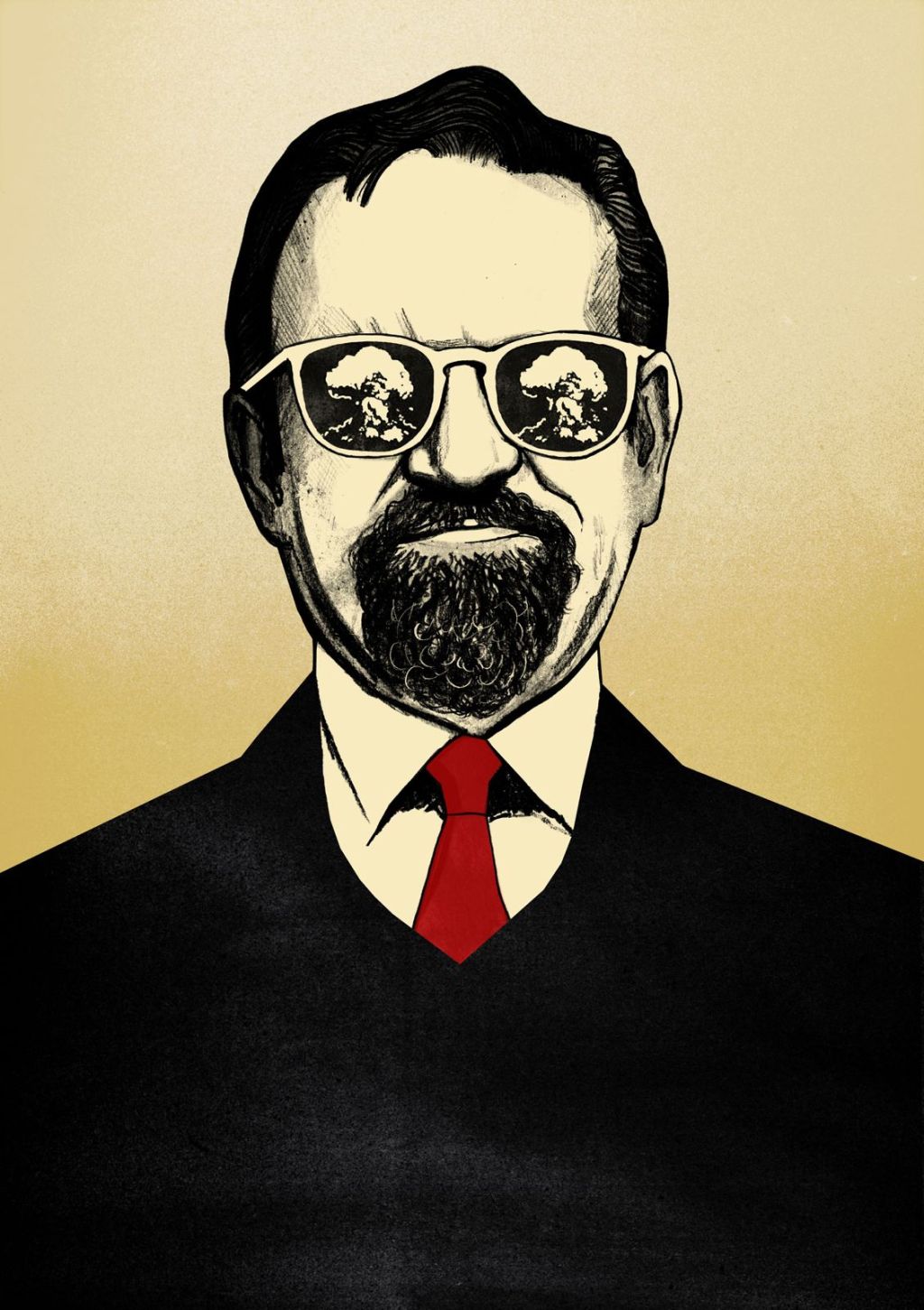
When you are a student and – as I was – what used to be called a ‘pseud’, you risk being bewitched by the theories, eccentricities and obiter dicta of particular dons. One such was the poet J.H. Prynne, who has recently died. Not being in his college at Cambridge, I was never his pupil or acolyte, but many of us made a cult of his arresting lectures on poetry. I remember Prynne declaiming and discussing Wordsworth’s Lyrical Ballad ‘Old Man Travelling’, for example. I cannot honestly recall a single thing he said, but I remember his slight lisp, and the man himself, tall and stern-looking, with long, lank hair and perpetual orange tie, reading without apparent emotion, yet with depth. We fans of his lectures tried to read Prynne’s own poems but were almost all rebuffed by their intended incomprehensibility. We used to debate whether he was a great mage or, as some alleged, a solipsistic charlatan, but we could never decide. I still cannot, but I am grateful to him for leaving us with the lasting impression that poetry mattered, not as a charming adornment to language but as its essence.
A month ago, I complained in this column (14 March) that we were not allowed to see the new Supreme (and now hereditary) Leader of Iran, Mojtaba Khamenei. Had he undergone occultation, like the Twelfth Imam, or was he no longer with us? These questions remain unanswered, although the country’s President claims he and the top brass have recently met Mojtaba to discuss the military situation. This is supposed to show continuity at the top and confer authority upon those who claim to have had these meetings. Who knows the truth? But it interests me that the western media are so keen to prove how Donald Trump is getting it all wrong that we do not recognise that a country unwilling or unable to produce for public view its theoretically most important person must be in desperate trouble.
I am collecting things which young people, to the bewilderment of older generations, cannot do, refuse to do or do not know. My evidence is based on the testimony of the young themselves. They (yes, yes, I don’t mean all of them, but you know what I mean) do not know how a cigarette lighter works, how to change gears in a car, read a map or calculate change in a shop. If they are British or American, they cannot read any foreign language, dead or alive. Nor can they read verse out loud. They cannot write a letter with pen and paper or a cheque. They avoid soap in favour of gels, refuse to make a cold call to anyone, and do not answer their doorbells. They will not sleep in youth hostels because they reject dormitories and require ensuite facilities (many hostels are consequently closing). When confronted with food, they tend to photograph it rather than eat it. When they meet people they do not know, they do not look at them, shunning what they call ‘the Boomer stare’. They cannot change a fuse, buy a newspaper or even, in some cases, wield a corkscrew. Some cannot read non-digital clocks. They know nothing by heart, do not watch live television and do not go to the cinema or give dinner parties. I hereby invite anyone under 30 to produce retaliatory lists of what we oldies cannot do.


Comments