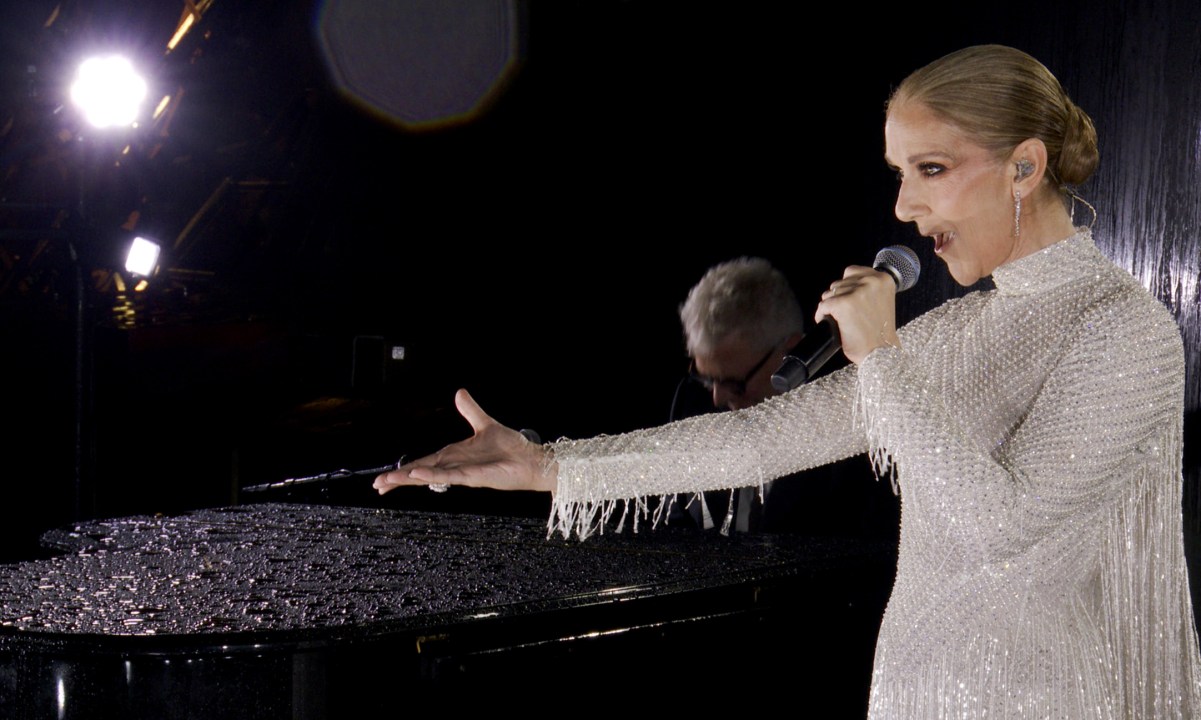
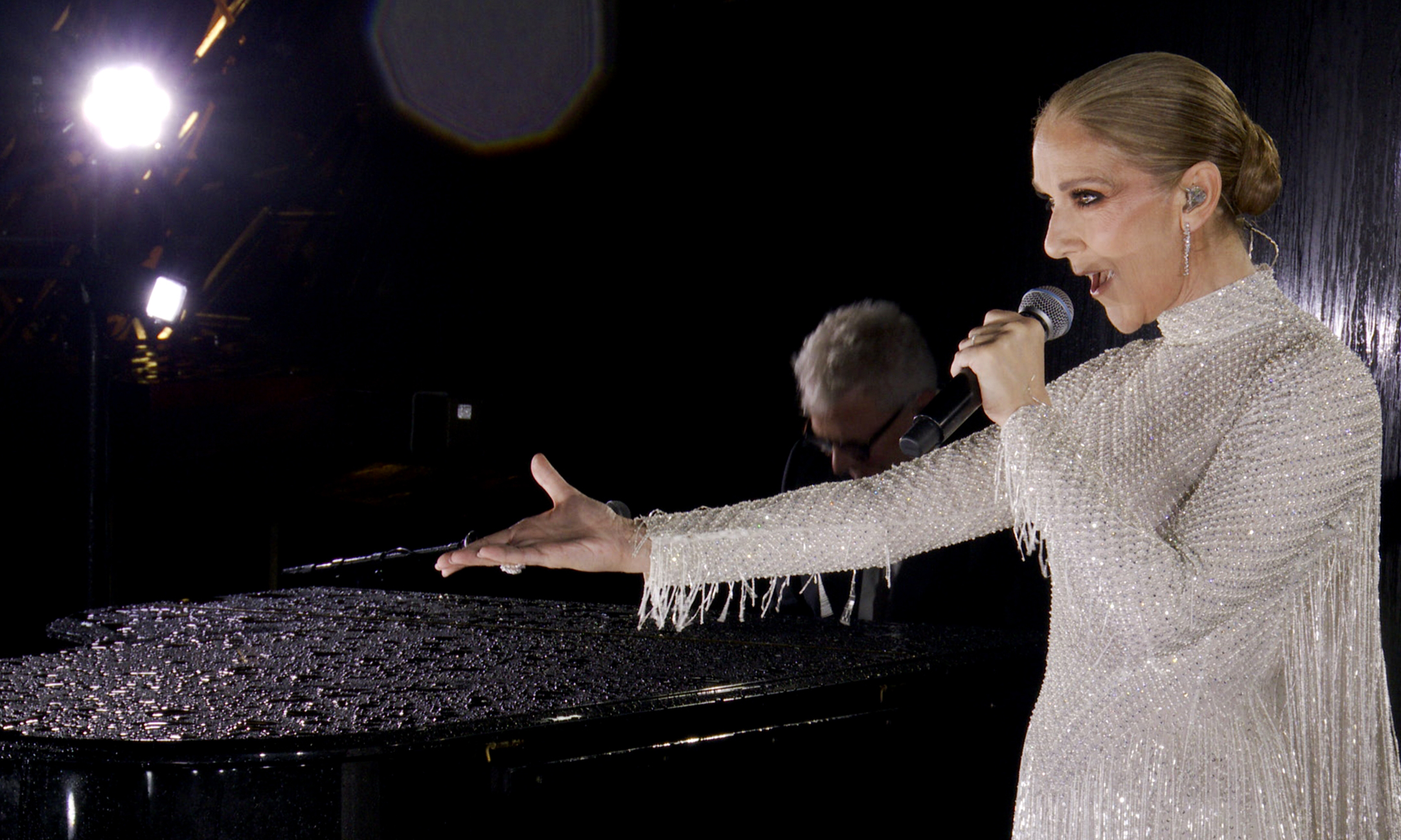
It’s the most talked about comeback in France since Charles de Gaulle came out of retirement in 1958. The general may have launched the Fifth Republic, but Céline Dion is limiting herself to ten evenings at the Paris La Défense Arena between September 12 and October 14. Dion is French Canadian, but the French have adopted her as their own, as they did with the Belgian Jacques Brel and Britain’s Jane Birkin.

Dion has been plagued by ill-health in recent years – suffering from an incurable autoimmune condition called Stiff Person Syndrome – and hasn’t sung live for six years. She made an exception for the 2024 Paris Olympics, appearing briefly to sing “Hymne à l’amour” at the Opening Ceremony, but the ten dates this autumn mark Dion’s return to the big stage.
To say the French are excited is an understatement. Broadcasters have broken off from talking about Trump and Tehran to discuss the second coming of Dion. The conservative newspaper Le Figaro captured the mood of the nation on Tuesday morning when it described Dion’s comeback as causing “excitement and elation…in these times of global turmoil, moments of joy take on a special significance.” France has had few moments of collective joy in recent years, save for the sight of Brigitte Macron slapped her husband on the presidential jet.
Otherwise, it’s been one disaster after another, economically and socially, and so the news that Dion is dusting off her glittery gowns has whipped the French into a frenzy. Rumors began to circulate last week when black and white posters began appearing around Paris on which were scrawled the titles of some of Dion’s finest power ballads: “The Power of Love,” “My Heart Will Go On” and “Pour que tu m’aimes encore.” Dion then teased her fans still further by publishing on Instagram a series of photos of herself in Paris down the years. Either she was sorting out her holiday snaps, or she was on the comeback trial.
The news was confirmed on Monday evening – her 58th birthday – in a social media post that was broadcast live on French television. “This year, I’m getting the best birthday gift of my life,” said Dion. “I’m getting the chance to see you, to perform for you once again.”
The Eiffel Tower celebrated the news with a giant illuminated message: “Céline Dion, Paris, Je Suis Prête” (“Céline Dion, Paris, I’m Ready”).The ten shows will all be at the 40,000-capacity Paris La Défense Arena in the west of the capital, an indoor stadium that is home to the Racing 92 rugby club.
Céline Dion is an acquired taste for us cynical Brits
Céline Dion is an acquired taste but her popularity in France is easy to explain. There are few global Francophone singing sensations; Johnny Hallyday, for example, was a God in France and a joke in the Anglo-Saxon world. In her teenage years Dion sang only in French and it was on French television in the mid-1980s that her career began to take off; she has also benefited from a successful artistic partnership with one of France’s most popular songwriters, Jean-Jacques Goldman.
There’s another reason why France has taken Dion to their hearts: she doesn’t do politics. Dion is a diva and she sticks to what she does best, rather than parroting the clichéd progressive shibboleths beloved of so many French musicians. On the eve of the 2024 parliamentary elections in France, 500 artists signed an open letter expressing their opposition to Marine Le Pen’s populist National Rally, the party supported by more than ten million French. Among the signatories were some of the biggest names in French music, the likes of Eddy de Pretto and Clara Luciani.
Music, they declared, “contributes to the collective building of a sustainable, livable, desirable and fairer future. These are all concepts incompatible with the ideas of the far right.”
Curiously, the artists had nothing to say about the far-left La France Insoumise, the party which according to 92 percent of French Jews, is responsible for the disturbing rise in antisemitism across the country.
Last month a music and arts festival in La Flèche, a town in the Loire Valley, was canceled at short notice. The reason? The town’s inhabitants had voted for a National Rally mayor in the municipal elections, and this outrageous act of democracy was unacceptable to the artists booked to appear. Something similar happened in Perpignan in 2023 when two bands refused to play in the southern city because of its National Rally mayor.
Dion doesn’t pontificate, she performs. That’s why she is so popular. French singers could learn a thing or two.



Comments