Berlin has become one of the most contentious political battlegrounds in central Europe. And in this case, we are not talking about any national policy matters under chancellor Friedrich Merz, but about the city itself.
Negotiations for control over Berlin’s state parliament begin today after the far-left Die Linke won Berlin’s state election – the city is technically one of the 16 federal states in Germany – with a 25.7 per cent voter share in September. Just like in other metropolises, the citizens of Berlin are primarily concerned by the rising cost of living and a housing shortage. Urban populations tend to lean progressive and often turn to the left when social issues become most pressing. Die Linke inadvertently received help during the vote from the conservative Christian Democrats, whose governing mayor Kai Wegner’s scandal-ridden tenure ended with him ultimately pulling out of the electoral race this year.
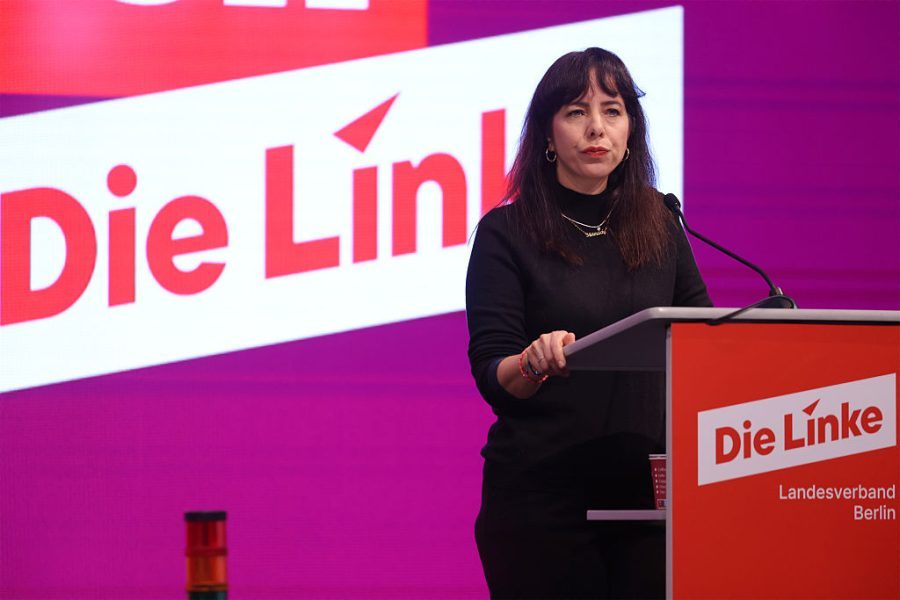
Die Linke’s frontrunner for September’s state election in Berlin was Elif Eralp, whose socialist parents faced persecution in Turkey and fled the country following the 1980 coup d’état. Eralp’s party led a smart election campaign, and not just in areas of the city where Turkish and Arab immigrants live. Earlier this year, she had received coaching from Morris Katz, one of the key figures behind Zohran Mamdani’s 2025 campaign in New York. Eralp improved her skills to speak freely and connect better with potential voters, while Die Linke was willing to centre its campaign around the frontrunner, which the far-left party rarely does.
Die Linke was hit by the first of several scandals on the night of the election
At the heart of the campaign were Eralp and the call for the nationalisation of housing companies. Critics say that Berlin would never be able to finance such an endeavour, but it attracted citizens frustrated by increasing rents and a shortage of available apartments. Around election day, it seemed that said nationalisation strategy might be the biggest point of contention moving forward.
To now become mayor of Berlin, Eralp’s Greens must strike a coalition deal with at least one of the other parties vying for power in the city. The local groups of Greens and Social Democrats who came in fourth and fifth in the election, respectively, have shown their willingness to form a coalition with the far-left party and act as kingmakers for Eralp, even though leading members of these two parties from other areas in Germany voiced their concerns about partnering with Die Linke.
But since voting booths closed, Berlin has experienced considerable tumult. Die Linke was hit by the first of several scandals on the night of the election, when Issa Remmo, head of a well-known Arab clan, showed up at a local Die Linke election party in the district of Neukölln. The party had to distance itself from Remmo immediately, but in the aftermath, it was revealed that Ferat Koçak, a Die Linke representative in Germany’s national parliament, had been in contact with Remmo’s son, asking him for help circulating one of Koçak’s videos online.
Then things went from bad to worse. Die Linke’s regional youth organisation called the state police a ‘criminal clan’ and Eralp herself came under fire because of her previous membership in Rote Hilfe, an organisation classified as extremist by domestic intelligence services. Eralp was able to partially defuse the crisis but had trouble explaining the positions of Vanessa Emde, who was elected to the Berlin house of representatives for Die Linke in September. Emde, a writer and director, has been accused of negating Israel’s right to exist. At a political event in May she said that ‘there is no right to exist for states – humans have a right to exist.’ She also called for a ‘democratic one-state solution’.
Emde’s newly found fame amid Die Linke’s election success once again put a spotlight on potential anti-Semitic tendencies within the party. Greens and Social Democrats stated that a requirement for the beginning of coalition talks would be a framework agreement for how to tackle anti-Semitism.
On the above-mentioned election party in Neukölln, the district where Emde won her seat in the house of representatives, a photo surfaced showing her alongside Ibrahim Ibrahim. Ibrahim is a member of the United Palestinian National Committee (VPNK), an umbrella organisation for the collaboration of Hamas supporters and the Popular Front for the Liberation of Palestine in Berlin. Berlin’s intelligence service classifies VPNK as an extremist organisation.
Ibrahim, who once called former Hamas leader Yahya Sinwar a ‘martyr hero’, came to further prominence this week – thanks to Eralp. She gave Der Spiegel an interview on Monday, and as is common practice in the German press, Eralp and her team had the chance to review her answers in the aftermath and make corrections. Her team sent the magazine a text document back but forgot to delete the comments that were written for internal discussions.
One comment revealed that Eralp is fearful of Hamas sympathisers like Ibrahim. She referenced a previous recommendation by the state criminal police office that she should never name specific names in relation to organised crime and that the same could apply to people with contacts to Hamas. ‘I cannot put me and my family in danger for Der Spiegel. What do we do now? Rescind the entire interview?’ Eralp wrote.
Der Spiegel decided to take that accidental revelation and turn it into a cover story, questioning whether someone who fears Hamas sympathisers should be in charge of the security of all Berliners. On Thursday, Eralp confessed in an online video that the threats against her have increased since election night. ‘But I don’t let myself be intimidated, because I know we together have to stand up for a better Berlin,’ she added.
Any tailwind Eralp and her party had following the elections in September seems to have disappeared. The 45-year-old has been increasingly on the back foot. Whether coalition talks with Greens and Social Democrats end successfully is completely up in the air.






Comments