Like all parents, I find the prospect and experience of my child getting sick very unpleasant. Well, I say like all parents, but the fact that childhood vaccination rates in England are falling, including for very serious diseases, suggests otherwise. And it’s time that we do something about it.
Why should people who haven’t protected their children against dangerous diseases receive government subsidies to put them into nurseries where they might make other children seriously ill?
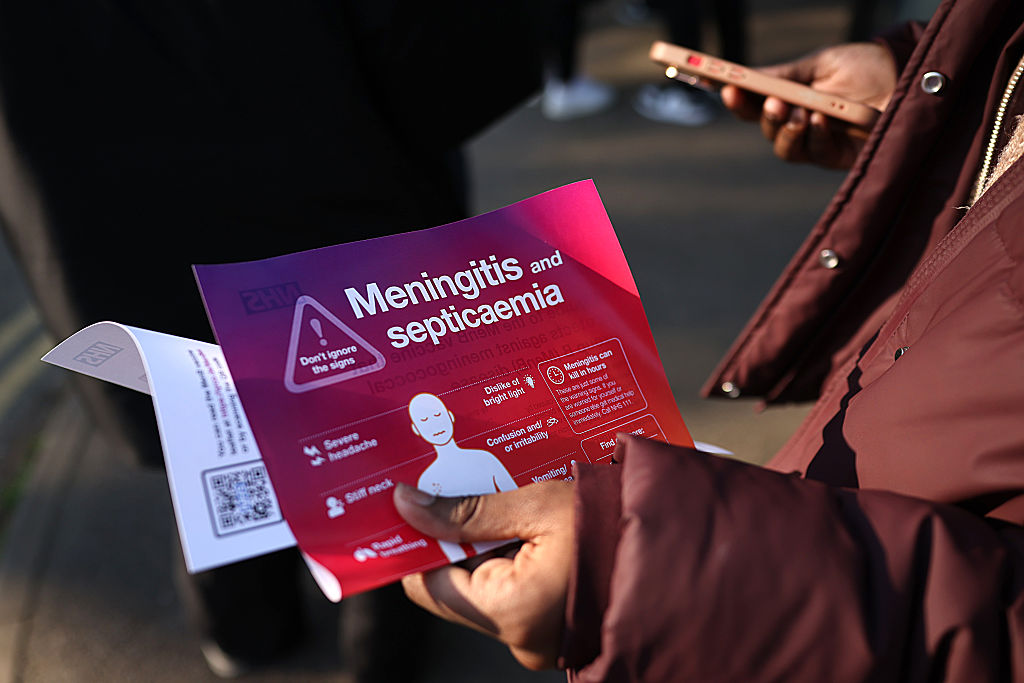
Parents who do not vaccinate their children are concentrated in different areas in England rather than evenly spread out. In the London borough of Hackney nearly 40 per cent of one-year olds did not receive the six-in-one vaccine last year, which protects children against diseases like the highly contagious whooping cough. An extremely similar proportion were also not vaccinated against Meningitis B, the same disease that is currently spreading in Kent and that killed a schoolgirl last week. The story is the same for the second Meningitis B vaccine dose, given at two years old. In fact, the majority of London’s children live in a borough where under 95 per cent have received their second dose of the Meningitis B vaccine. Other parts of England that fall significantly short of the government’s vaccine target include Thurrock, Salford, Manchester, Bradford, Luton and Leeds.
Having significant numbers of unvaccinated children is not cost free for the rest of us – and it is not cost free for the unfortunate children whose parents choose to put them at risk. That unvaccinated children are geographically clustered is also unhelpful for preventing the spread of illness.
Take measles, which is very contagious and makes people who catch it infectious for as long as ten days. Children are vaccinated against measles through the MMRV vaccine which they now receive in two doses at age one and 18 months. There are two doses given because the first dose only successfully protects against measles for 93 per cent of children. The second dose raises the number of children protected to 97 per cent, but still leaves a small number of children unprotected, who are kept safe by the vast majority being successfully vaccinated.
But when parents fail to take up the measles vaccine, the population of people vulnerable to measles is significantly increased and measles can begin to spread from person to person. This is especially dangerous for babies aged under one, who have not yet had the chance to receive their first dose of MMRV. In an outbreak of measles in Liverpool last year, where vaccination rates against measles are below target, a child died and 16 others were severely ill.
Parents who do not vaccinate their children not only put their own children at risk, but also everyone else’s. Not only is this unacceptable, but I believe the issue is solveable with new public policies.
It is true that some parents do not vaccinate their children out of deeply held beliefs. Perhaps they believe that childhood vaccines are dangerous or are avoiding vaccines for religious reasons. Incentivising these people to vaccinate their children will always be challenging.
However, there will also be many parents who are only softly anti-vaccine. There will also be many who simply cannot be bothered to take their child to the necessary appointments – the drop-off rate between the first and second dose of such vaccines indicates this could be the case. Parents like this can be incentivised to change their behaviour if we make the choice not to vaccinate a child costly.
At the very least, the government should withdraw all free childcare hour offers from parents who have not vaccinated their children. Why should people who haven’t protected their children against dangerous diseases receive government subsidies to put them into nurseries where they might make other children seriously ill? For parents who use the childcare offer, it is worth thousands a year. We should also consider withdrawing Child Benefit (worth around £1,350 a year for an eldest child) from parents who do not vaccinate their children, and possibly even all benefits.
Parents who do not take up the free childhood vaccines that are offered to them are imposing significant costs on the rest of us. They should experience consequences for their choices. The prospect of losing thousands of pounds worth of entitlements every year will sharpen some parents’ minds and lead them to conclude that they should take a trip to the GP to get their child their jabs after all.
Comments