The outcome of the Prime Minister’s make-or-break speech yesterday morning was never really in any doubt, was it? It’s break. Did anybody except Keir Starmer himself think it could possibly win the nation over? He is, after all, one of the weakest of the country’s public speakers, whose attempts at warmth, sincerity and human feeling lack the easy bonhomie of a supermarket self-checkout. Keir’s speech merely reinforced all his bad qualities, reminding us of his unique ability to make our blood boil while simultaneously boring us to tears.
Yes, Burnham is more likeable than Keir Starmer, and seems more like a human being – but then, so is Davros
In such dire circumstances, it is natural and understandable that Labour would start to think longingly of alternatives. But is Andy Burnham really the shining beacon that will lead Labour from the dark, or just another ghost-light?
It’s rather odd, in fact, that such an unexceptional figure as Burnham has been built up as a saviour, to the extent that several sitting Labour MPs have emotionally offered to lay down their own seats and their own careers for him, like heroines in a Victorian melodrama. This is embarrassing behaviour, and seriously underestimates the electorate’s propensity for bants. The good people of Norwich, I suspect, would be unable to resist rewarding the noble sacrifice of Clive Lewis with a by-election win for Reform or the Greens.
There is something very dramatic and ironic about Burnham’s exile outside Parliament; we all love a good, frustrating ‘so near and yet so far’ story. If Burnham was actually still an MP, would he still seem so beguiling? The prevailing wail in Labour of, ‘if only Andy Burnham was here to save us’ masks the fact that he isn’t, actually, all that.

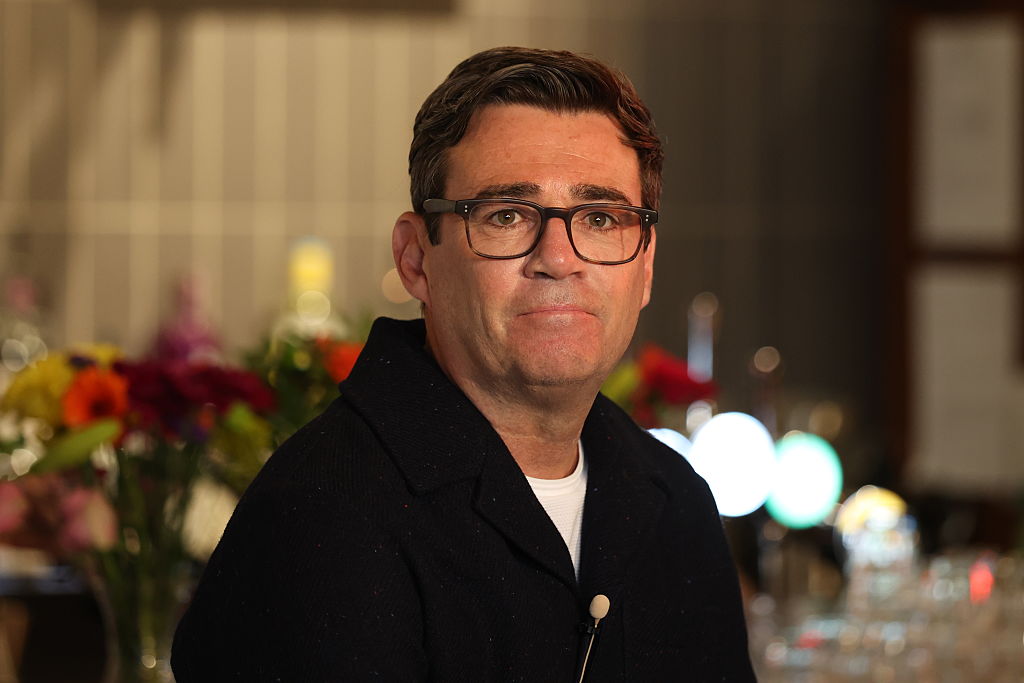
Like Starmer, and so many others in Labour, Burnham possesses the same unbearable high sanctimonious tone, the same ‘more-in-sorrow’ demeanour, as if they are the only good people in existence. Yes, Burnham is more likeable than Keir Starmer, and seems more like a human being – but then, so is Davros. He is certainly more presentable than Keir, and handsome in a cow-eyed way, with that resting boy-band expression that makes him look always as if he is about to burst into tears; you can picture the dreamy young Andy on the cover of Patches or My Guy.
But look a little closer and this ordinary, everyday, boy-next-door image will not wash. Burnham joined Labour aged 15, and has never had a job outside politics, going straight from Cambridge to researching for Labour MP Tessa Jowell. People that join political parties before they can even vote – see also Nicola Sturgeon – I find highly suspicious characters. What kind of teenager eschews copping feels and sneaking cigs to sign up for evenings of photocopying and days of door-knocking?
This sentimental party allegiance was memorably displayed in the 2015 Labour leadership election, during a debate televised on Newsnight, when Burnham – quizzed about a hypothetical situation where the leader couldn’t win an election and should then resign – stated ‘the party should come first’. His rival Liz Kendall rather frostily chipped in that ‘country should come first’. It was a revealing moment, suggesting that for Burnham the saintly and beneficent Labour party is automatically always the top consideration. And we have forgotten his uninspired performance and subsequent drubbing in that election, when he came a distant second to – of all people – Jeremy Corbyn.
Since then, of course, Butmham has – or so we are told – shone as the mayor of Manchester, reviving that benighted city with ‘Manchesterism’. He has, in fact, been so successful at this that last week’s local elections saw Labour retain control of the council – but lose 30 per cent of their vote share to the Greens and Reform.
Then there is his record as a minister in the Blair and Brown governments. It was Burnham who, as health minister, rubber-stamped the application by the Mid-Staffordshire hospital to become a foundation trust, despite the hospital already showing signs of serious failings – failings seemingly ignored by Burnham. Following the MRSA outbreak at that hospital, and also at Morecambe Bay, he faced significant criticism from campaigners and victims’ families, particularly for not instituting a full public inquiry with statutory powers (this was later convened by the coalition).
While I find the idea of blaming politicians directly for disease deaths to be somewhat ridiculous, I also find it rather telling that this has all been forgotten. The same kind of people that regularly railed against the succeeding Tory government for deaths ‘caused by austerity’, on far flimsier figures, never said a word. As with so much stink around Labour people (see also Alastair Campbell), it just seems to have disappeared from the public consciousness, or was allowed to disappear by the broadcast media. Because Labour are the nice people like them, aren’t they?
Still, with his northern earthiness and relatable jackets, mayor Andy now seems like Labour’s last hope. We are about to be spoiled with a 12,000 word policy document – thrillingly titled ‘The Productive State: A Framework for Manchesterism’ – from the closely Burnham-affiliated Labour thinktank Mainstream. The production of reams of paperwork is something both Burnham and his ally Angela Rayner seem to get very excited by. I think they think it makes them look serious.
The recent churn of prime ministers has caused many to wonder if the country has become ungovernable. I would suggest that in fact we have just had a sequence of incredibly poor politicians and delusional parties in the role. Even if he could, somehow, become the next one, I really don’t think Andy Burnham would break that pattern.



Comments