
Richard Bratby has narrated this article for you to listen to.
‘What we want is proper comedy!’ bellows the male chorus in the opening seconds of Prokofiev’s L’amour des trois oranges – in this case, a bevy of Monty Python bruisers in nylon frocks. The audience stirs. We’re being invaded by outsize schoolkids and what looks like a Scandinavian Eurovision entry, pushing through the stalls to the roars and whoops of a more-than-up-for-it student crowd. The previous night, I’d had four hours of manicured Handel and now a solo trombone was blowing raspberries in my face. ‘Stuff your tragedy! Take us out of ourselves!’ Yes, please! Do that. After prolonged exposure to da capo arias, a blast of raucous, multicoloured nonsense felt like shock therapy.
And Mark Burns’s staging at the Royal Northern College of Music really was funny; the genuine snorting-despite-yourself article. It’s an extraordinary score, composed in 1921 as the last jewelled shards of the Russian fairytale tradition were being fed into the modernist shredder and a young composer could make a reputation simply by writing for a huge orchestra and going a bit dada with the dissonance. Scriabin-ish whole tone harmonies smoulder in the wreckage as ostinatos bustle and squeal; early audiences naturally assumed that Prokofiev was a Bolshevik. ‘All I wanted to do was compose an amusing opera,’ remarked the composer, disingenuously.

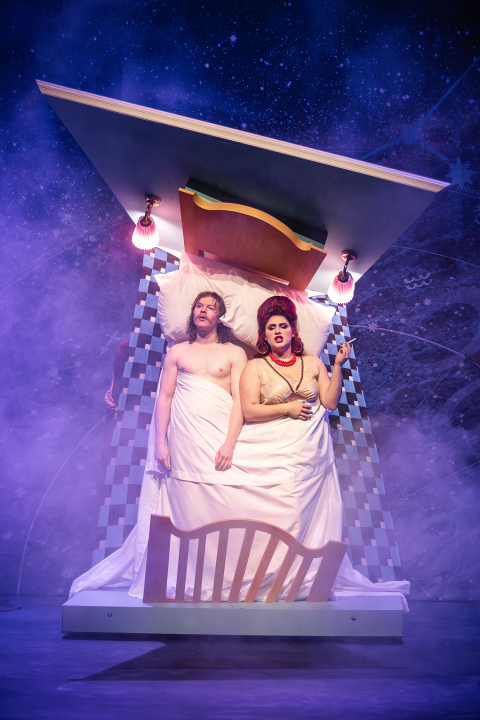
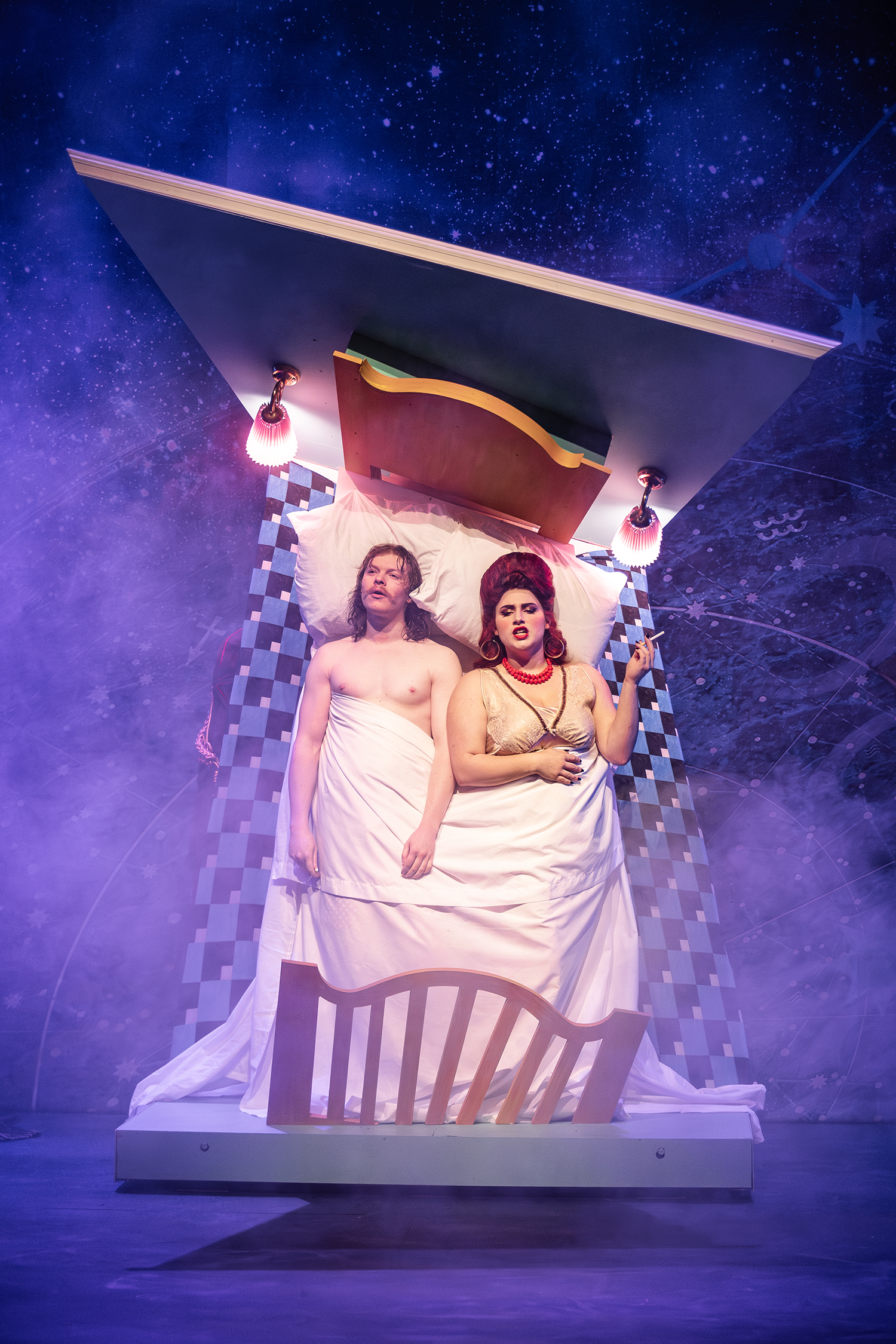
Anyhow, Burns and his student company threw the whole toybox at it. This was an end-of-term show with a vengeance: it’s unusual to see a student production done so lavishly, or with such verve. Lee Reynolds conducted, and the orchestra played like all their Christmases had come at once. On stage, Burns and the designer Adrian Linford suggested chaos through tight discipline, filling the commedia dell’arte world of Carlo Gozzi (Prokofiev’s original inspiration) with some very British fun and games. Cue Alice in Wonderland visuals, pantomime dames and a live-action game of Pac-Man. A giant Scrabble board spelled out vital clues, and the demonic lackeys of the witch Fata Morgana (Ellie Forrester) were dressed as Dennis the Menace.
I’ve seen shows from major companies that didn’t have a fraction of the invention, energy and wit of this L’amour des trois oranges. It’s a crying pity that a college production like this plays for four nights and is gone; in an ideal world, a summer festival with an eye for a hit would import the whole shebang. Still, it’s hard to imagine even the gamest pros topping the freshness of the RNCM’s student cast: the handsome baritone of Christian Loizou (an oddly touching King), the sunny lyricism of Libby Montgomery (Ninette) and the real show-stealer, Sam Rose’s cartwheeling, Mohican-wearing Trouffaldino.
Rafael Rojas, as the Prince, made a startling transition from snowflake zero to soaring tenor hero, while Edward Wenborn and Jemima Gray, as the villainous (and faintly pervy) lovers Léandre and Clarisse are clearly born to play these kind of roles. Despite everything, these cartoon figures in their nonsense kingdom somehow feel alive, and with performers like these they’re oddly engaging too. Gozzi believed that realism killed comedy. The world of L’amour des trois oranges is absurd but the characters within it don’t know that. Their behaviour is crazy, but it’s consistent – and so, in their own way, they convince us. It shouldn’t work, but it does.
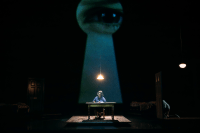
In Handel’s Ariodante – at least in Jetske Mijnssen’s slick new staging at the Royal Opera – the reverse applies. Artifice is the defining quality of baroque opera seria; a set of conventions so utterly detached from believability that when a character suddenly announced a complete change of heart, the Covent Garden audience simply laughed. This was supposed to be a tragedy, remember, and Mijnssen addressed it by layering subtle psychological realism over the ramshackle plot, with the betrayed Ginevra (Jacquelyn Stucker, on heart-rending form) undergoing a slow mental collapse into alienation and self-harm.
That worked well enough, as long as the score and the action followed the same basic trajectory, though it was far, far too long. For four hours, elegantly dressed characters strolled around chilly off-white sets and the singing (particularly in Act Two’s sequence of melancholy showstoppers) was as glorious as you’d expect from a cast that includes Emily d’Angelo (a luminous Ariodante), Elena Villalon (Dalinda) and the countertenor Christophe Dumaux, as an enjoyably louche Polinesso. Stefano Montanari alternately conducted and led from the violin, with no loss of sensitivity or colour.
But when Handel did his usual reverse ferret into a happy ending, Mijnssen was wholly unable to make the swerve. The music broke out in jubilant trumpets, while the action on stage powered straight ahead with the misery. Evidently, the idea of a consensual wedding was inadmissible. The traumatised victim-bride is one of the stock dramatic figures of our own day and if you were at the Royal Opera’s Semele or Opera North’s Susanna you’ll have seen it twice already in recent months.
Comments