
In her closing speech at the Tory party conference in Birmingham today, Kemi Badenoch said that a Conservative government would abolish inheritance tax (IHT) for family homes and that couples would be able to leave a sum of £1 million to their families tax-free. This came after speculation that she would commit to scrapping inheritance tax entirely.
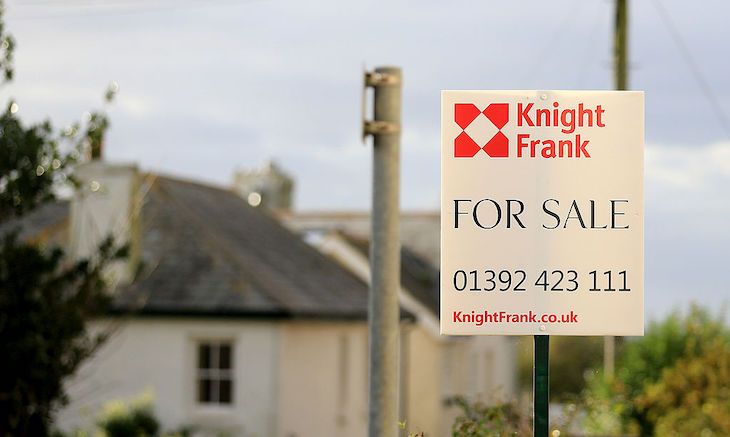
Paul Johnson, formerly of the Institute for Fiscal Studies, has already pointed out that this would incentivise older people to avoid downsizing because they would then be exposing any freed-up capital to inheritance tax. But what exactly is a ‘family home’? If it’s simply whatever your parents own, and pass onto you, it could range from a three-bedroom £70,000 pebbledash terraced house on the outskirts of Sunderland to a £35 million townhouse in South Kensington. This open-ended definition means that this IHT exemption could produce a jump in property values similar to that which occurred with farmland in the 1990s.
The sentimental value of helping people hang on to their ‘family homes’ will no doubt prove popular
In 1992, Norman Lamont increased agricultural and business property relief to 100 per cent. In 1995, this was extended to let farm business tenancies, meaning that anybody who owned farmland would pay no inheritance tax on it even if they did not work on it. What followed was a massive spike in the price of farmland as wealthy people bought it up to avoid inheritance tax. Between 1991 and 2016 the real value of an acre in England and Wales tripled. Jeremy Clarkson, an attendee of this year’s Tory conference who has recently recast himself as a celebrity farmer, sought to be a beneficiary of this largesse, telling the Times in 2021 that he bought ‘Diddly Squat’ in 2008 mostly to avoid paying inheritance tax.

If the Tories do something similar with ‘family homes’ it will encourage very wealthy people to buy the most expensive home they can afford as a store of value. This will be even more appealing than purchasing farmland as their purchase will not come with the administrative burden of managing tenancies with farmers. It would further fan the British disease of investing in property – one of the least productive economic investments – instead of encouraging investment in the stock market where money can be used by businesses to invest. Indeed anybody with money in the stock market or other productive enterprises will be incentivised to pull it out and put it into lifeless bricks and mortar.
No matter how bad the policy is, the sentimental value of helping people hang on to their ‘family homes’ will no doubt prove popular with this policy’s target audience: southern voters who are being drawn to the Lib Dems. George Osborne won a bump in the polls against Gordon Brown when he announced that the Conservatives would raise the inheritance tax threshold to £1 million. More recently, it was almost impossible for Labour to get a fair hearing for their policy of closing the farmland loophole. All is fair in love and war, but the Tories cannot press ahead with this while accusing their opponents of vote-chasing populism.






Comments