September is here, and the mists and mellow fruitfulness have arrived as promptly as John Keats could have wished. His medical career peaked 210 years ago. He was working as a surgical dresser at Guy’s hospital, a coveted junior post, and in July 1816 passed the examinations qualifying him as an apothecary, a role then beginning to be called by its new name of ‘general practitioner’.
The annual European Society of Cardiology meeting finished in Munich last weekend. A new ‘superhuman’ AI tool capable of spotting heart disease in less than two seconds was presented there. This is exciting, but Keats would have been sceptical – and dubious about the business of medical breakthroughs. He lived long enough to experience the greatest diagnostic advance of his age – the stethoscope – which proved of no use in saving his life.
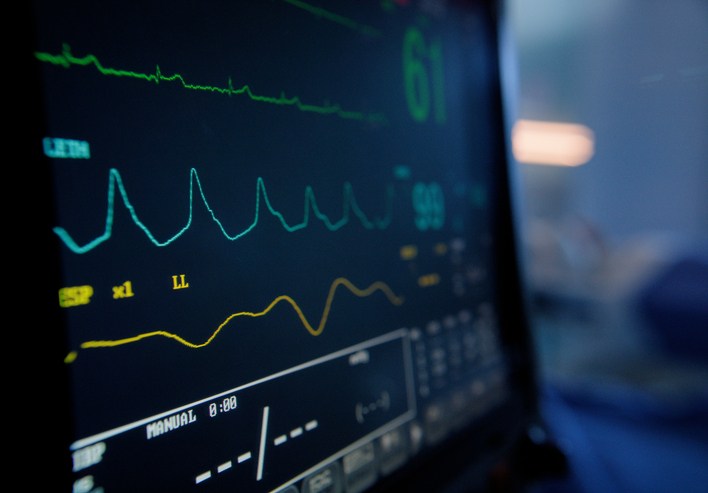
The ECG, the recording of the heart’s electrical activity, is a familiar part of our lives. Film and TV adore its regular spikes, and in the hospitals we share the same blind devotion. On my more acute wards every patient is wired up, the monitor next to them showing their ECG in real-time.
Restraint matters. Information is not care
The whole place is a cacophony of their beeping alarms, so omnipresent as to be ignored utterly by the staff. Their chief function is to prevent patients sleeping. Only in very rare cases are the monitors actually needed, and even then their function is fictional without anyone watching them. Generally I switch them off, because they’re designed so you cannot mute them. Invariably someone switches them back on and immediately ignores them a minute later. Their beeps and flickers provide a surplus of information that creates a dangerous shortage of attention.

What the AI did was impressive. Looking at ECGs, it was able to identify a high proportion of those whose ventricles weren’t pumping well – systolic heart failure – or whose heart valves were stiffened or leaky. Until now this information hasn’t been reliably visible on an ECG: valve problems needed a stethoscope, pump function an echocardiogram – an ultrasound of the heart.
Certainly this is a breakthrough in extracting information; whether it’s helpful in caring for people is another question. AI has been getting better and better at reading what’s happening to our hearts. The cameras in our phones can read our heart rhythms in the minute facial flushing that accompanies each beat but is invisible to our own eyes. Watches can do the same by looking at the capillaries in our wrists.
When we want longer-term recordings of the electrical activity of the heart, we still commonly arrange for patients to wear the bulky 24-hour monitors that have been around since the 60s. This is despite the easy availability of new alternatives – lightweight stickers, for example, that attach unobtrusively for a fortnight or more.
There may be benefits in cheap screening for heart failure and valve disease. There will certainly be drawbacks. Algorithms may cost little but the consequences cost more: echocardiograms, appointments, repeat scans, labels, anxiety and treatment. Machines often over-call disease, partly because their designers don’t want to get blamed if their alarms are silent or muted. Diagnostic tests need judging by what they do to human lives, not their ability to sound an alarm.
In Keats’s case, the panicked breathlessness of pulmonary tuberculosis could be eased by poppies. When he went to Italy, he had his opium removed from him by his friends, worried he would use it more definitively. The poet was a tough man, a pugilist. He had worked at one of his world’s leading centres of medical research. And as a surgical junior, he took his regular turn spending a week wholly responsible for everything that came to the hospital – skull fractures, amputations, gunshots.
Dr James Clark, who treated Keats in Rome, was an enthusiastic adopter of the stethoscope. The new tool gleaned an abundance of information; it yielded little harvest. For over a century stethoscopes increased what doctors knew without increasing their power to help. Clark put Keats on a starvation diet and bled him. Spontaneous recovery from tuberculosis was possible; sapping Keats’s strength did not improve his chances.
In life, Keats worried at the ability of surgeons like himself to cause harm – to ‘cut amongst the most important parts as though they were only skin’. Restraint matters. Information is not care. Sometimes the hook must spare the next swath, and all its twined flowers.




Comments