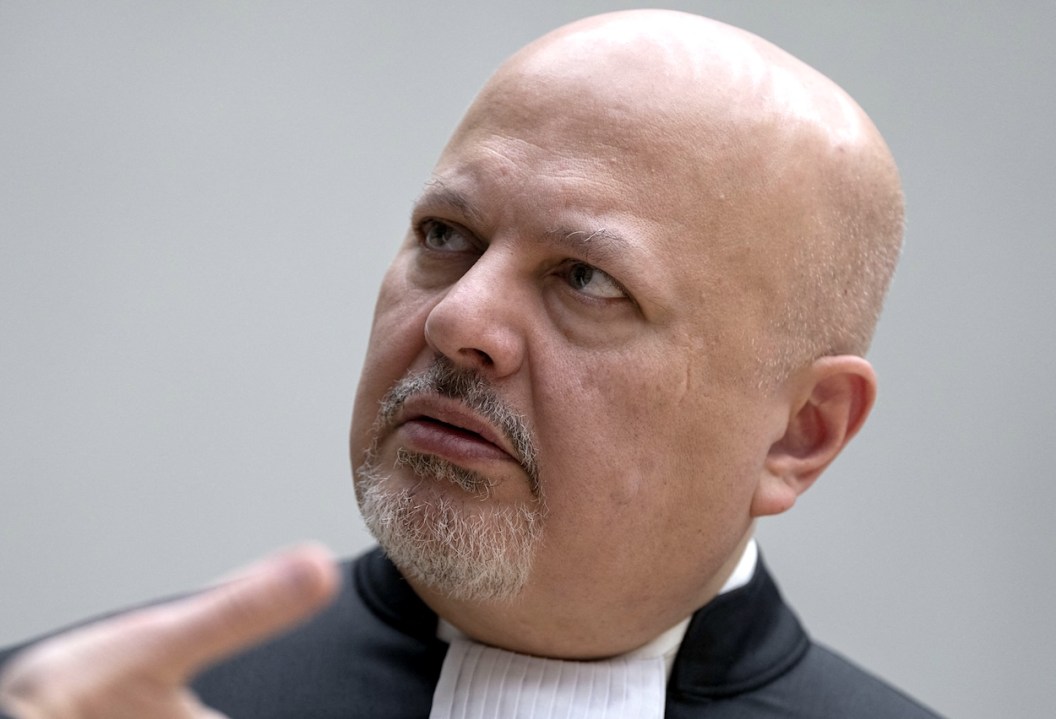
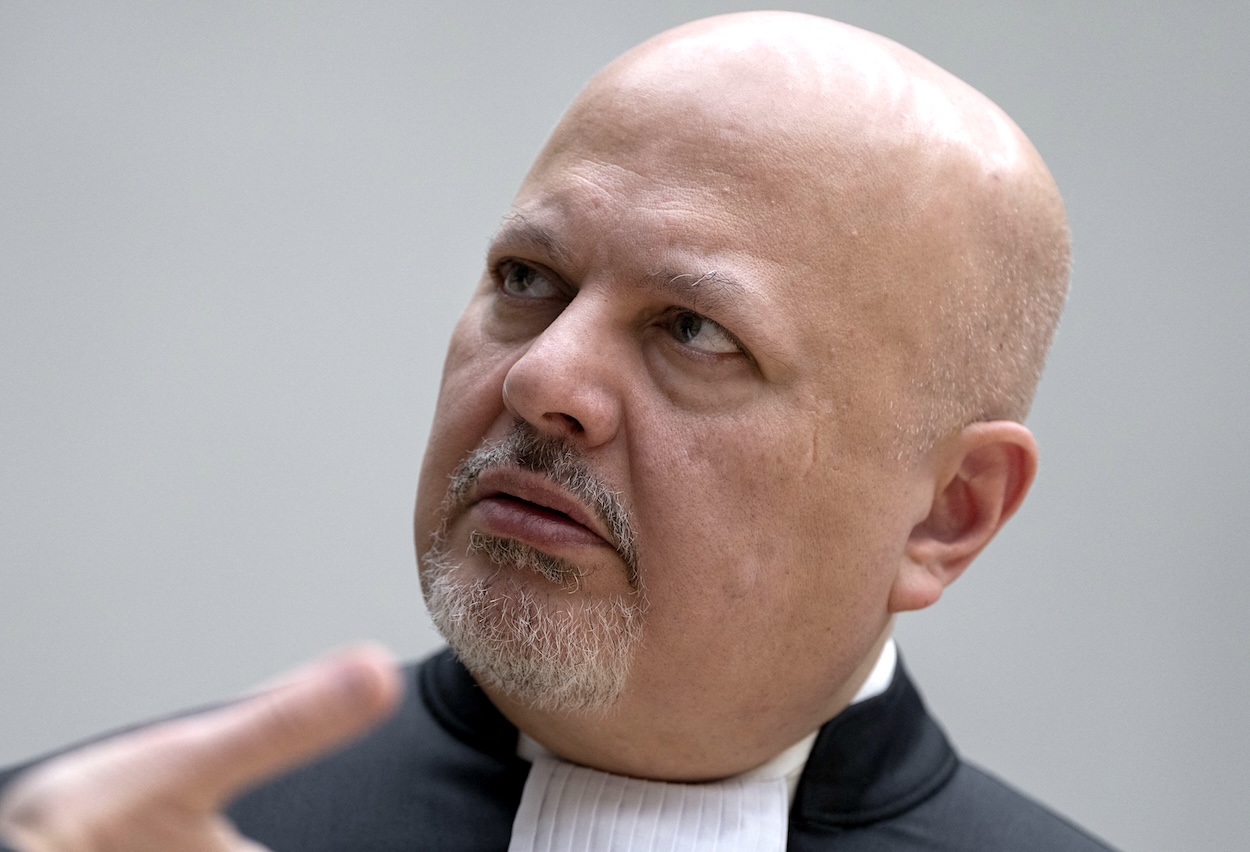
Last month, the International Criminal Court’s chief prosecutor, Karim Khan KC, was suspended after an investigation into a series of sexual harassment allegations. A leaked copy of that investigation reveals that the woman behind the allegations, who went public last week in an interview with CNN, says that Khan repeatedly subjected her to non-consensual sexual acts including groping, attempted kissing and digital and genital penetration. Khan has denied all her claims.
Today, a committee of diplomats from 21 of the ICC’s 125 member states will vote on whether to make Khan’s suspension permanent and what, if any, disciplinary action to take.
This piece is not about the allegations; the only people who know what actually happened are Khan, the complainant and any witnesses. It is, rather, about the insight the case offers into how nations and their intermediaries try to shape the narratives, credibility and outcomes of global justice institutions, namely the ICC and the International Court of Justice.
The picture that is revealed is not merely murky. It undermines any claims that the ICC and its counterpart, the ICJ, have to being impartial arbiters of truth. In reality, they are tools used by states to help pursue their policy agendas. In the specific case of the allegations about Khan, it seems clear that Qatar has been seeking to use the ICC to further its own agenda towards Israel – which is especially concerning given that Qatar positions itself as a mediator in the Gaza conflict and broader Middle East.
The allegations against Khan first emerged in October 2024. The most striking aspect of his defence is that Qatar appears to have effectively been his crisis PR manager. This has involved utilising media organisations funded by Qatar, such as al-Jazeera, and publications understood to be close to Qatar, such as Middle East Eye, to who Khan gave an interview in which he responded to the harassment allegations in detail. He was also interviewed by the former Al-Jazeera journalist, Mehdi Hasan, on his platform Zeteo.
Allies of Khan have said that the woman’s allegations against him are a smear by Israel in response to his 2024 decision to issue an arrest warrant against Benjamin Netanyahu and the former Israeli defence minister, Yoav Gallant. It has been reported that evidence has been sought linking the complainant to Israel, although none has been found; had any emerged, you can be sure it would have swiftly been made public.
Earlier this year, the Wall Street Journal reported that one witness statement related to the case claimed that the Qatari government promised to ‘look after’ Khan if he moved against Netanyahu. According to the WSJ, the statement was then sent to the FBI. The statement also asserts that an intelligence operation in defence of Khan targeted two Americans: the senior ICC official who first reported the allegations, Tom Lynch; and the late Senator Lindsey Graham, who Khan said in an interview with Middle East Eye told him on a conference call in May 2024 that the ICC ‘is for Africa and thugs like Putin’, and not for Israel and the US. In addition, it has been reported that the Dutch counter-terror agency, the NCTV, has interviewed other ICC officials targeted by the operation.
A lawyer for Khan told the WSJ: ‘Our client was not offered or given (and would not have sought or accepted) any “promise” by any state (whether Qatar or any other) to “look after” him if he applied for the arrest warrants.’
But Qatar’s embrace of Khan is far from unique. It built strong ties with the ICC’s first chief prosecutor, the Argentine Luis Moreno Ocampo, who served from 2003-2012. Publicly available travel records, conference agendas and other meetings show a set of personal, financial and reputational links between Ocampo and key Qatari figures. Ocampo was in post during the Arab Spring, a series of uprisings which Qatar sponsored when it saw the regional advantage they could facilitate, and which it then used to position itself as a regional player.
Ocampo’s diary shows increasing engagements in Doha around this time. In May 2011, he travelled there for a conference funded by the Qatari authorities, overseen by Attorney General Ali bin Fetais Al-Marri and formally framed as part of a push to deepen engagement between the ICC and Arab states.
After Ocampo retired from the ICC, he became heavily linked to initiatives associated with the Qatar Foundation, the organisation chaired by members of the Al Thani family. His biography appeared on the website of the foundation’s education conferences and he was reported as participating in programs tied to Education Above All, the flagship project led by Sheikha Moza Bint Nasser, the former emir’s wife, formalising his role in Qatar’s global soft power ecosystem.
In 2016, the Panama Papers exposed Ocampo’s use of offshore financial structures, indicating that during and after his tenure at the ICC he controlled companies registered in jurisdictions known for their secrecy and received substantial payments through overseas accounts. Ocampo has said that he ‘did not do anything wrong’.
Qatar has not had only an arms’ length involvement
Qatar has not had only an arms’ length involvement. It has had a direct involvement in the International Court of Justice as a party to one of its most notorious cases. After getting independence in 1972, Qatar was in dispute with its neighbour Bahrain over maritime and territorial borders. The case eventually went to the ICJ in 1991. The case has become iconic not only because it dragged on for a decade but because Qatar submitted 82 forged documents to the ICJ, including fake maps, stamps, and falsified archives. It is a damning comment on the ICJ’s jurisprudence that not only did the ICJ not condemn Qatar, but some arguments for the final decision even relied on the forgeries.
Qatar’s dealings with the ICC, the ICJ and their personnel should prompt searching questions about where diplomacy and international law ends and where covert influence and state power begins – and specifically about who ultimately controls the levers of supposedly ‘independent’ international law.



Comments