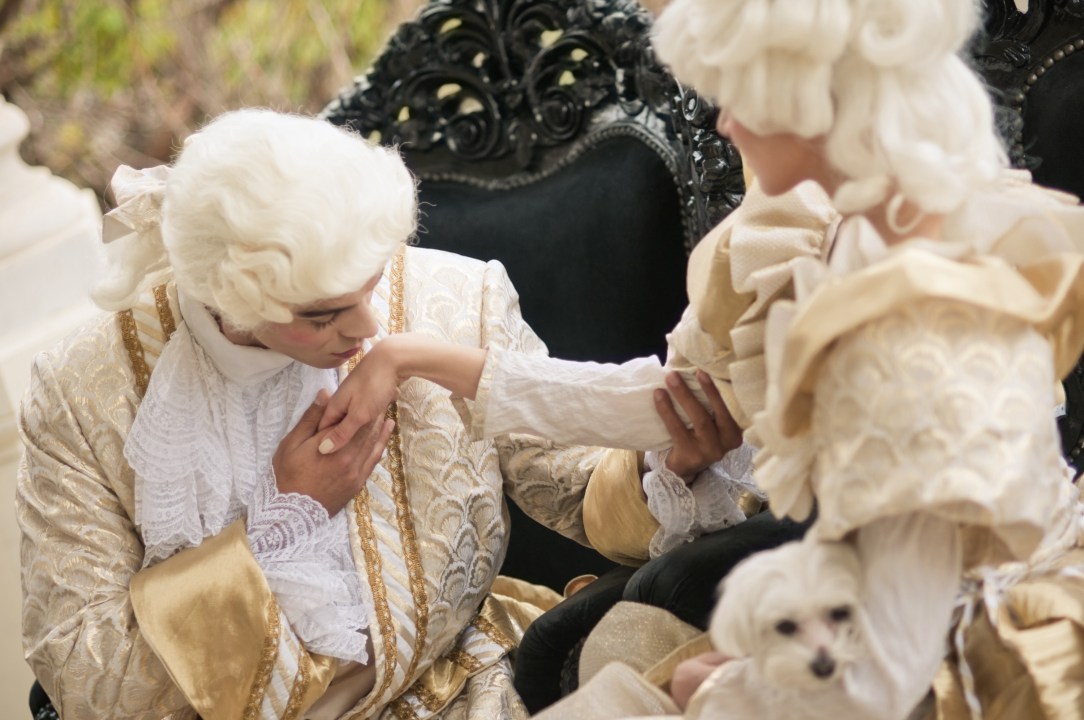
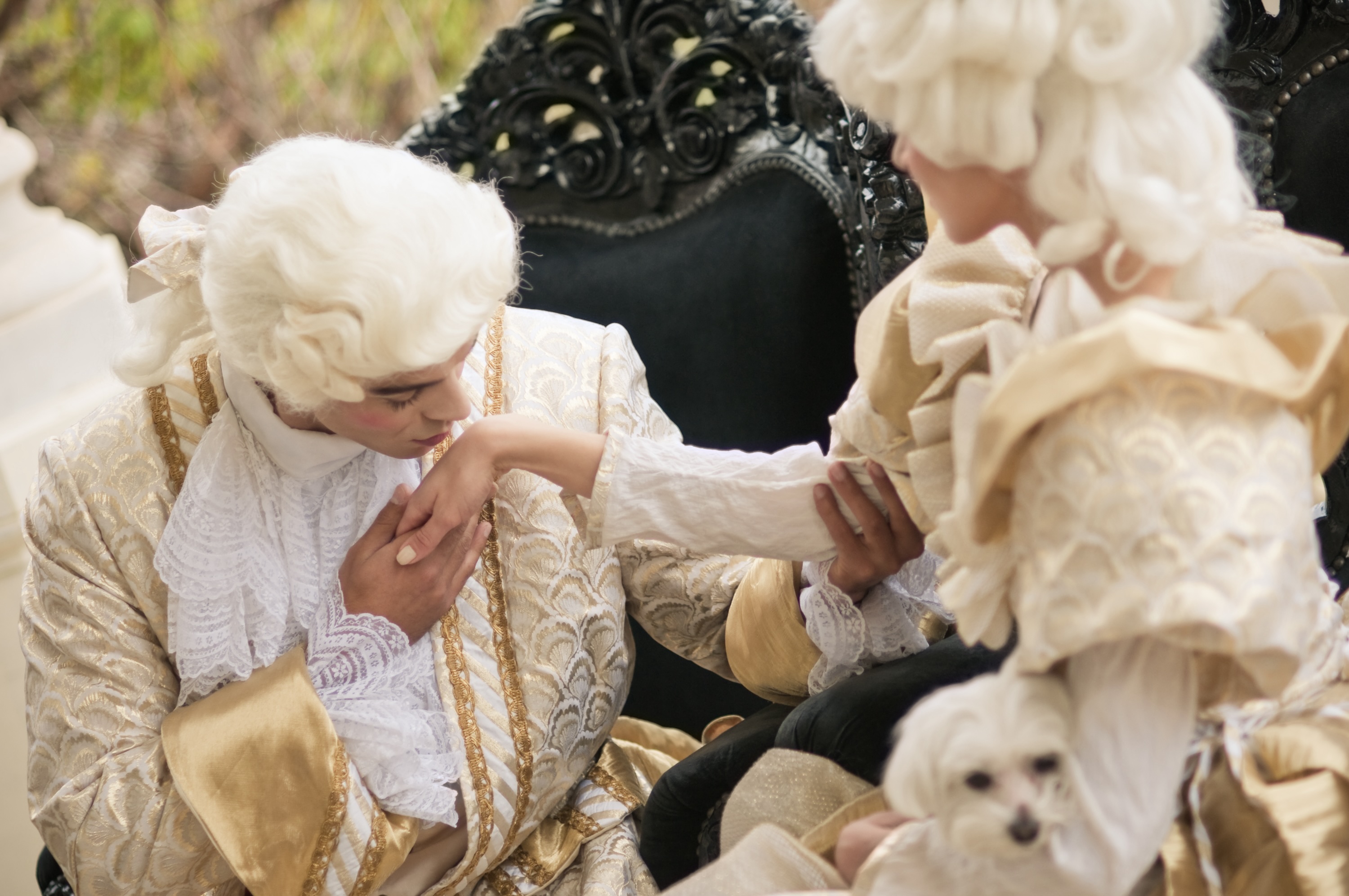
It was once the norm that a good greeting was typically accompanied by a gregarious physical act, such as doffing your hat or kissing the back of a hand. Increasingly, Brits seem only able to muster a feeble nod or grunt.

‘Physical touch is very important for the cohesion of a community,’ the Berlin-based philosopher Byung-Chul Han remarked in his 2023 lecture ‘On Eros’, in which he discussed what love means in modern society: ‘The squeeze of the hand is what creates trust. Despite, or because of, digital interconnectedness and communication there is very little touching in our society.’ Han correctly observes that ‘the pandemic has intensified that lack of touching’, noting that the hormone oxytocin – which ‘belongs to the class of happiness hormones’– is ‘secreted when touching’.
The plight of the UK’s happiness hormones deficit was brought home to me during recent travels in France and Germany. To walk into a French boulangerie or a German bäckerei for your bread without issuing a general ‘bonjour’ or ‘guten morgen’ to the staff and other customers is bad form and rarely occurs. Subsequently, the visit culminates with a formal exchange of pleasantries along the lines of: ‘Thank you and have a good day.’
Along with the verbal ballet, in France you have all the cheek kissing – two in the North and three in the South. Germans are much more tactile than is appreciated and ready to give a sturdy handshake, slap on the back or affectionate grip of the arm/shoulder. Han notes that in German, oxytocin is also called Bindungshormon – the ‘bonding hormone’.
The UK needs more ‘bonding hormone’ secreted, especially given currents trends of people not even saying hello to anyone outside their innermost circles. This is especially true among younger generations who glide by in morose silence, with little to no interaction between strangers to ease the pressures of digital life as happiness hormone levels plunge.
But even in France and Germany there isn’t much hand kissing going on nowadays. Though we did get a glimpse of it coming back into fashion after the election of Pope Leo XIV, who is more willing to let his hand be kissed than Pope Francis. Admittedly, it’s more the papal ring being kissed, but it’s a start and points to how the ubiquitous handshake between both men and women in modern life often just doesn’t cut it.
Hand kissing has various benefits, not least a degree of flexibility that the handshake simply can’t manage
Sometimes – especially when dealing with the likes of a rare bird such as a pope – you want to make more of a point to the other person about how much you appreciate them. Cue the kiss on the back of a hand, as in the days of D’Artagnan and The Three Musketeers.
Hand kissing has various benefits, not least a degree of flexibility that the handshake simply can’t manage. It shows affection, while not necessarily being connected to eros and desirability. This is helpful when a man wants to show his appreciation to an ‘out of bounds’ female while avoiding the cold sterility that can come with a handshake. In such instances, a chaste kiss on the hand helps steer both parties away from sexual tension, transcending the messiness of ‘the chase’ and allows both parties to show respect and appreciation for the other, free of any potential agenda.
Hand kissing is also a way to show respect to the sacredness of a woman’s body, avoiding the objectifying culture of Instagram. That said, when a man and woman are both single, a kiss on the hand could hint at stronger feelings that might be arrived at should both parties consent to courting and the strings of the harp of love emit their beguiling melody. Most importantly, though, kissing the back of a hand allows for panache and style. Life is so utterly boring these days.
Acts such as a kiss on the back of a hand are a way to ameliorate the pain of modern life. ‘I think we are becoming more and more depressive because we are no longer able to touch the Other,’ Han says. Hear, hear.


Comments