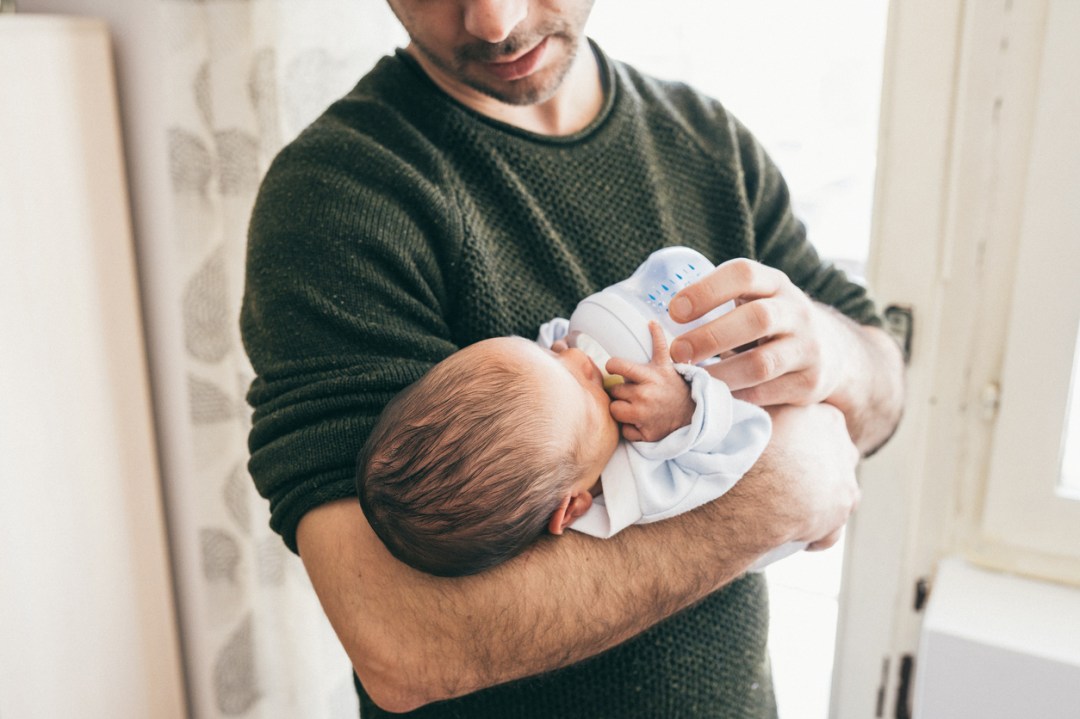
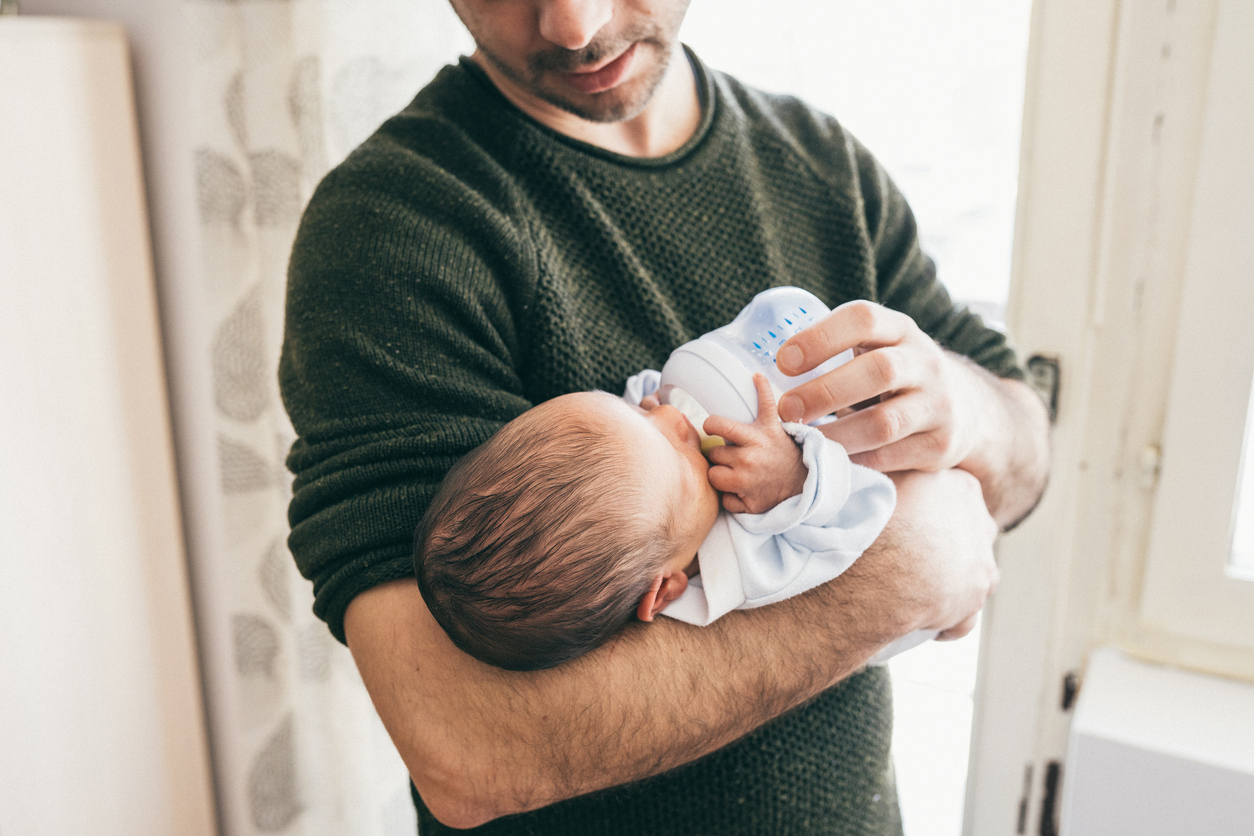
Should single men be allowed to buy a baby? Obviously not, you might think. But since 2019 British men have been legally allowed to obtain a child though the surrogacy process.
When a baby is born to a surrogate, they are often taken from their mother shortly afterwards, to prevent infant and mother bonding (in this country it is illegal to take a puppy from its mother before it is eight weeks old). A man can then apply for a ‘parental order’, in which a court will legally make them the child’s parent, without the full checks which an adoption would require. In the UK it is illegal to ‘pay’ a woman to be a surrogate but ‘reasonable expenses’ are typically between £10,000 to £15,000 – and can exceed £20,000.
We know that men are vastly more likely to abuse unrelated children than women are. We know that 91.3 per cent of child sexual abusers are male. And we know that paedophiles relentlessly seek out opportunities to access victims
And this only applies in the UK. Almost three-quarters of parental orders are now granted in relation to babies born abroad. This means that people are going overseas and buying babies via commercial surrogacy, circumventing the British ban on this practice. A British ‘surrogacy agency’, My Surrogacy Journey, now operates in Mexico City, where they arrange for Brits to pay Mexican women around £14,000 to go through pregnancy and birth before selling their baby.
Kay King, My Surrogacy Journey’s ‘head of ethics’, defended this policy to me, saying ‘we operate in Mexico City because [they] have one of the most progressive laws around surrogacy.’ When I asked her what she meant by this, she explained that Mexico City doesn’t even require the equivalent of the UK’s parental orders. Instead, birth certificates are produced which list the surrogate along with ‘parent one’ and ‘parent two’. King clearly thought Mexico City’s lack of even the most cursory legal oversight was a good thing. She did tell me that all the ‘surrogates’ they work with in Mexico ‘are financially, psychologically and clinically screened… we would not work with surrogates who were financially reliant on surrogacy for their financial wellbeing.’
This didn’t convince me. If these women truly longed to ‘purpose their reproductive rights for the benefit of family building’, as King put it, then money wouldn’t need to change hands at all. It reminds me of the ‘happy whore’ narratives, where people try to convince themselves that women aren’t driven to sex work by desperation.
The truth is that surrogacy is bad for mothers. They are more likely to develop new mental health problems both during and after pregnancy. This is unsurprising – to carry and birth a child knowing that you are going to immediately hand it over to a stranger is to reject every natural maternal instinct. What may be more surprising is that surrogacy is physically dangerous too. Research from 2024, which studied 860,000 births over a decade, found that surrogate mothers are over three times more likely to experience severe complications including sepsis, pre-eclampsia and postpartum haemorrhage.
Surrogacy then, even when the baby is going to a loving married couple, can be a harmful practice. But in Britain, since 2019, single men have also been allowed to buy babies. In that time 170 men have applied for parental orders.
This is even worse than allowing men to work in nurseries. We know that men are vastly more likely to abuse unrelated children than women are. We know that 91.3 per cent of child sexual abusers are male. And we know that paedophiles relentlessly seek out opportunities to access victims. The chance of single parent abuser being caught will be very low, given they may well be the only adult who has regular contact with the child.
I spoke with Helen Gibson, Founder of Surrogacy Concern who told me that:
‘With a growing number of known cases of sex offenders procuring children from surrogate mothers internationally these figures should alarm us all; a mother is the primary safeguarder of a child and removing her permanently from their life so the baby can be placed with a lone male goes against all best practice for the care of newborn infants. We understand why those who cannot have children wish to do so, but this should not be a route open to single men.’
Gibson is right. In our pursuit of a society where we never say ‘no’ to anyone, we have created a legal structure which allows men to buy babies. Many of those 170 men may well be good at caring for their children, but the risk they pose on average to these babies is far too high. It’s time to start saying no. It might be very sad for some people that they can’t have children, but life is full of sadness and disappointment. We should not sacrifice mothers and babies in a vain effort to ensure that no one ever feels they missed out.
Ideally, in my view, given the harm it does to mothers and babies, all surrogacy would be banned – as Gibson says, ‘separation is cruel to the baby’, and we should put ‘children’s needs… above the demands of adults.’ But such a ban is unlikely in the near future. So at least the government should act to ban single men from buying children. The alternative is handing babies over to the very worst abuse.




Comments