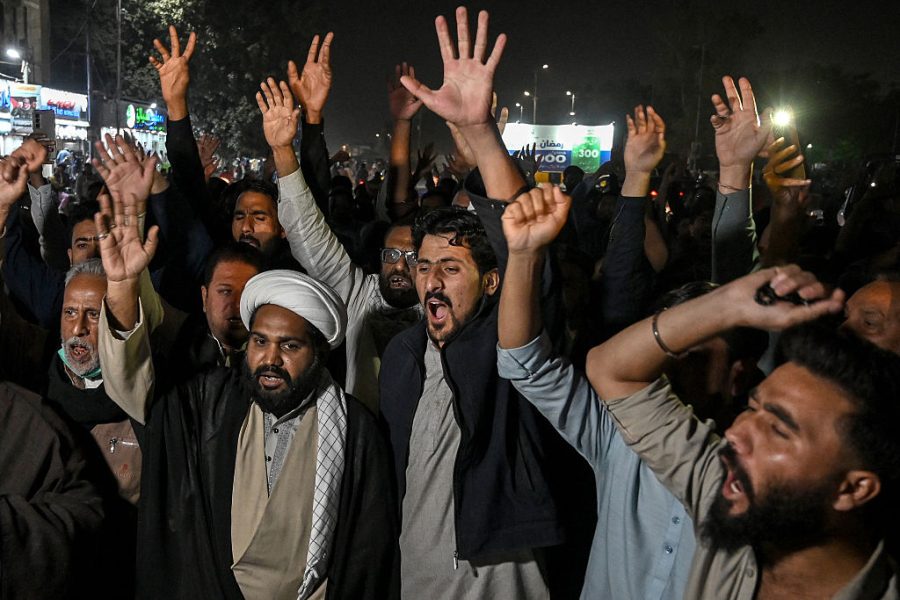
At least 31 were killed and over 170 wounded in a suicide bombing targeting a Shia mosque in Islamabad on Friday. The deadliest attack on Pakistan’s capital since 2008 comes just months after a bombing targeting one of the district courthouses jolted the city in November. These successive terror raids in the capital – already on high alert and full of security – signify that the militancy, largely confined to the country’s western frontier in recent years, is now vying for Pakistan’s heartland.
The Islamic State claimed responsibility for Friday’s bombing, releasing a blurred image of the purported attacker. The jihadist outfit has frequently targeted Shia Muslims, dubbing them ‘heretics’. The group’s South Asian faction, Islamic State Khorasan Province (ISKP), has launched numerous attacks on the Shia community in the region, from Kabul and Kunduz in Afghanistan to Peshawar and Quetta in the volatile western Pakistani provinces of Khyber Pakhtunkhwa and Balochistan.
Pakistan under Asim Munir has become an even more precarious security state
Even as the ISKP is growing in power in the country, most of the terror attacks in Pakistan have been carried out by the jihadist group Tehrik-e-Taliban Pakistan (TTP) – an affiliate of which claimed the November bombing in Islamabad – and the separatist Baloch Liberation Army (BLA). Pakistan has accused India of funding these groups, with their allegations becoming more vociferous following the clashes between the two South Asian nuclear rivals in May. Pakistan has also blamed Afghanistan, with which it has also clashed in recent months, for providing safe havens to these militant organisations.
While Islamabad, predictably, also pinned Friday’s attack on New Delhi and Kabul, the country’s ongoing security crisis is a direct consequence of the state’s support for jihadist groups. This is in spite of the current leadership’s best efforts to distance themselves from the country’s longstanding policies and to paint a contrasting picture of Pakistan.
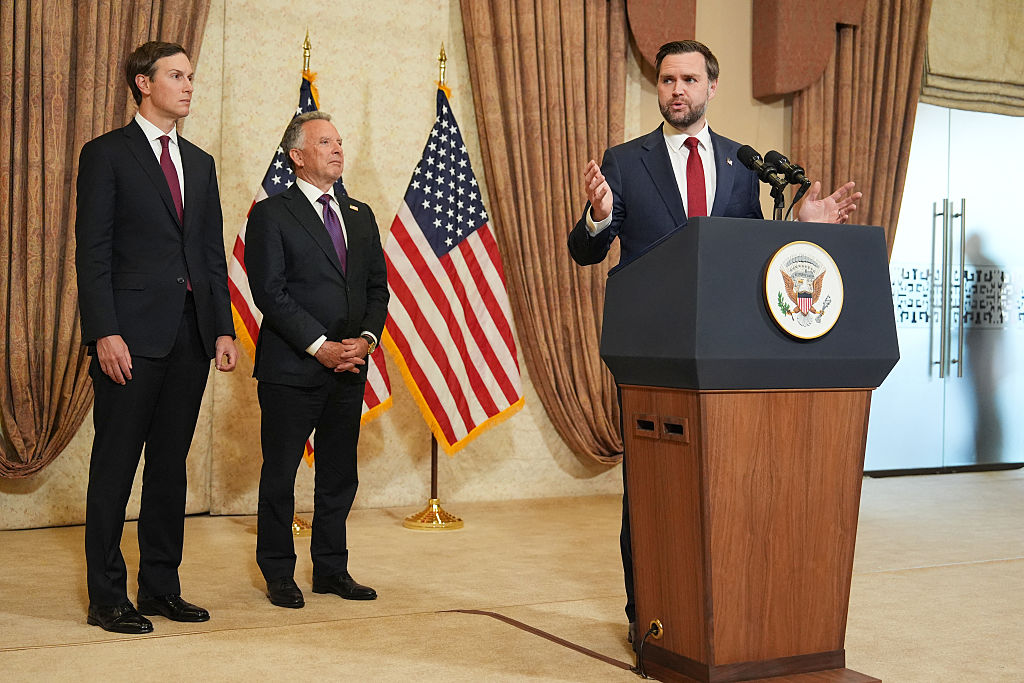
Despite the rise in militancy on its western front, Pakistan has nevertheless managed to host international delegations and world events in the capital, as well as the eastern provinces of Punjab and Sindh, in recent years. The highlights were the Shanghai Cooperation Organisation summit in 2024 and last year’s cricket Champions Trophy, which took place amid heavy security.
Of course, shutting cities down to host large-scale events is hardly a sign of sustained peace, not to mention the mammoth toll such arrangements take on Pakistan’s stuttering economy. This weekend’s planned celebrations for the traditional Punjabi festival of Basant, being held in the country for the first time in nearly two decades, had to be cancelled following the Islamabad bombing, delineating the gap between Pakistan’s posturing and its reality.
Similarly, where Pakistan has been seeking to paint a picture of religious inclusivity by planting 42-feet tall Christmas trees and state leaders hosting Diwali celebrations, blasphemy cases in the country are at an all-time high. Individuals are still being sentenced to death for sacrilege against Islam via the country’s profane sharia codes. Numerous mosques affiliated with the Ahmadiyya Muslim community continue to be demolished with the help of the police in line with Pakistan’s constitution, which has excommunicated the Ahmadi sect.
The Islamic State’s apostatising and targeting of the Shia sect echoes the sectarianism and religious discrimination codified in the Pakistani penal code. While Pakistan doesn’t officially outlaw Shia Islam, the state has bolstered anti-Shia outfits like Lashkar-e-Jhangvi and Sipah-e-Sahaba, which have since allied with the TTP and ISKP. The political wings of these jihadist organisations regularly participate in elections.
In addition to a resurgence in jihadist activity across Pakistan, separatist militancy is rising fast in Balochistan, the country’s largest province. Longstanding grievances of the Baloch people are used by groups like the BLA not just to target army installations but also Pakistani citizens. They have also aimed their attacks on Chinese infrastructure and personnel, most notably the China-Pakistan Economic Corridor (CPEC), deeming Beijing, alongside Islamabad, as colonisers. Pakistan has responded to this by arbitrarily offering Balochistan’s natural mineral resources to foreign powers at the behest of the country’s all-powerful army chief, Field Marshal Asim Munir.
Already under the autocratic control of its military establishment, Pakistan under Asim Munir has become an even more precarious security state, appeasing world powers, clashing with neighbours, and overseeing turbulence domestically. While Munir has ostensibly sought to rein in the jihadists targeting Pakistan by claiming that only the state can declare jihad and using terms like khawarij – meaning ‘outside the fold of Islam’ – to discredit these groups, he has also espoused inflammatory, racially discriminating rhetoric that echoes his own Islamist vision.
The growing alliance between India and Afghanistan might give Munir and Pakistan the fodder to pin the blame elsewhere. But the roots of Pakistan’s mounting insecurity lie in the security and foreign policies enforced on the country by its military leadership.
While wooing Donald Trump might have given Islamabad the diplomatic spotlight on the world stage in recent months, continued insecurity would mean that any long-term investment – economic or political – would continue to evade Pakistan. For prolonged stability and any semblance of prosperity, Pakistan would need to undo the Islamist hegemony enforced by the omnipotent, self-serving military and start taking the interests and wellbeing of its people seriously.




Comments