
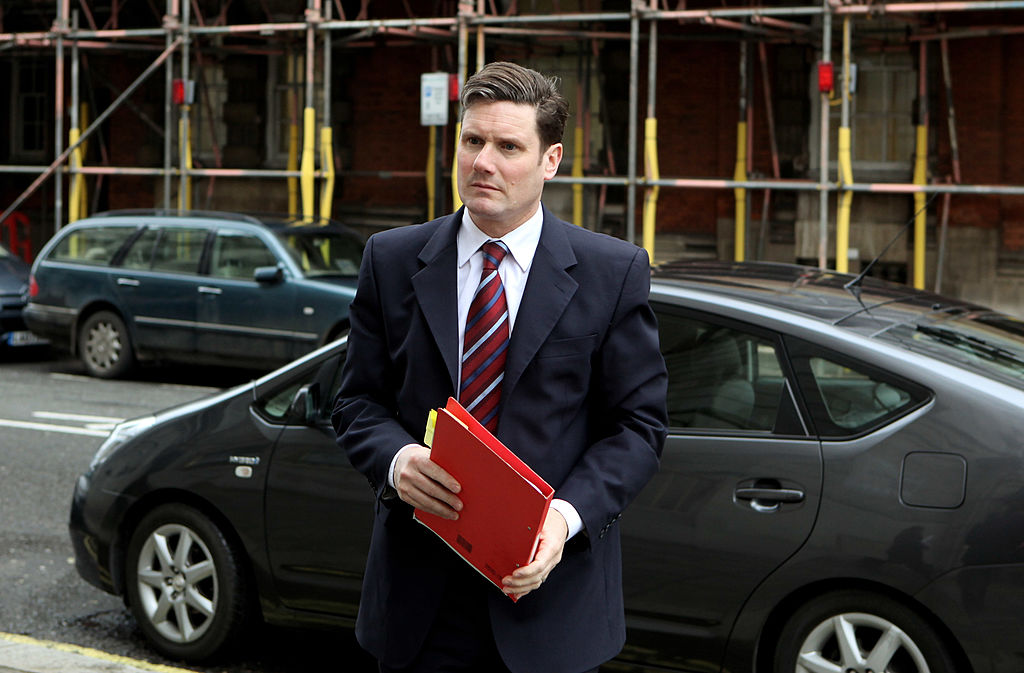
Sir Keir Starmer is the most distinguished barrister to occupy the premiership since H.H. Asquith more than a century ago. His legal career, however, has repeatedly bowled him difficult balls he has struggled to defend. The latest googly is that in 2007 he was leading counsel for an intervention to the House of Lords by a number of parties, including the Law Society of England and Wales and Liberty, seeking to re-examine the deaths of Iraqi civilians.
The submission bearing Starmer’s name argued that, ‘the duty of effective investigation has not been fulfilled… they were perfunctory, lacking independence and wholly inadequate. Any suggestion that they satisfied the requirements of Article 2 ECHR is unarguable.’
Starmer undertook the case pro bono, clearly thinking it of considerable legal and moral importance. His junior colleague was fellow Doughty Street Chambers occupant Richard Hermer, now Lord Hermer, Attorney General for England and Wales. They were assisted by Phil Shiner, a solicitor whose firm, Public Interest Lawyers, generated thousands of complaints against armed forces personnel. Shiner was struck off in 2017 and convicted of fraud in 2024.
Starmer undertook the case pro bono, clearly thinking it of considerable legal and moral importance
One of the soldiers accused was Sergeant Richie Catterall, serving with 1st Battalion, The King’s Regiment. During an arrest mission in Basra in November 2003, he had shot dead an Iraqi, Muhammad Salim, armed with an AK-47 whom Catterall believed to present an immediate threat; he was cleared of any wrongdoing by his commanding officer and by the Royal Military Police.
Although Starmer’s submission that the ECHR applied to UK forces in Iraq was dismissed by the House of Lords, that decision was overturned in 2011 by the European Court of Human Rights. The Iraq Historical Allegations Team began a third investigation into Catterall, on a charge of murder, but exonerated him three years later. The Iraq Fatality Investigations opened a fourth inquiry in 2015, but found Catterall innocent in 2016 and exposed false claims by Iraqi witnesses.
Sergeant Catterall was investigated and exonerated four times for the same incident over a period of 13 years. In that time, he was diagnosed with post-traumatic stress disorder; suffered the breakdown of his marriage; was medically discharged one week short of 22 years of service which meant he could not immediately draw his full pension entitlement; began drinking heavily; made four or five suicide attempts; and suffered a stroke.
It is important not to oversimplify matters. It is not wholly fair to draw a line from Starmer’s actions in the 2007 case to the appalling way in which Sergeant Catterall has been treated by the justice system. However, there were deep-seated problems in the process only exposed by Shiner’s egregious and criminal behaviour. For that reason, and because Sir Keir Starmer is now Prime Minister and head of a government seeking to repeal the Northern Ireland Troubles (Legacy and Reconciliation) Act 2023 and replace it with the Northern Ireland Troubles Bill, we are entitled to question his attitudes, instincts and goodwill.
Service personnel, whether on combat missions overseas or deployed actively within the UK, as they were in Northern Ireland for 38 years under Operation Banner, cannot expect absolute immunity from investigation or from the consequences of their actions, especially if those actions lead to people dying. Just as we rightly and vehemently reject any attempt to draw a moral equivalence between soldiers of the Crown and terrorists or insurgents of any kind, so we acknowledge that we must hold ourselves to higher standards.
Those standards must take into account the extraordinary pressure and risk under which service personnel operate. We cannot expect soldiers to conduct detailed risk assessments of what will inevitably be split-second decisions with life-or-death consequences. Instead, we should judge whether they acted reasonably, proportionately and with honest intent.
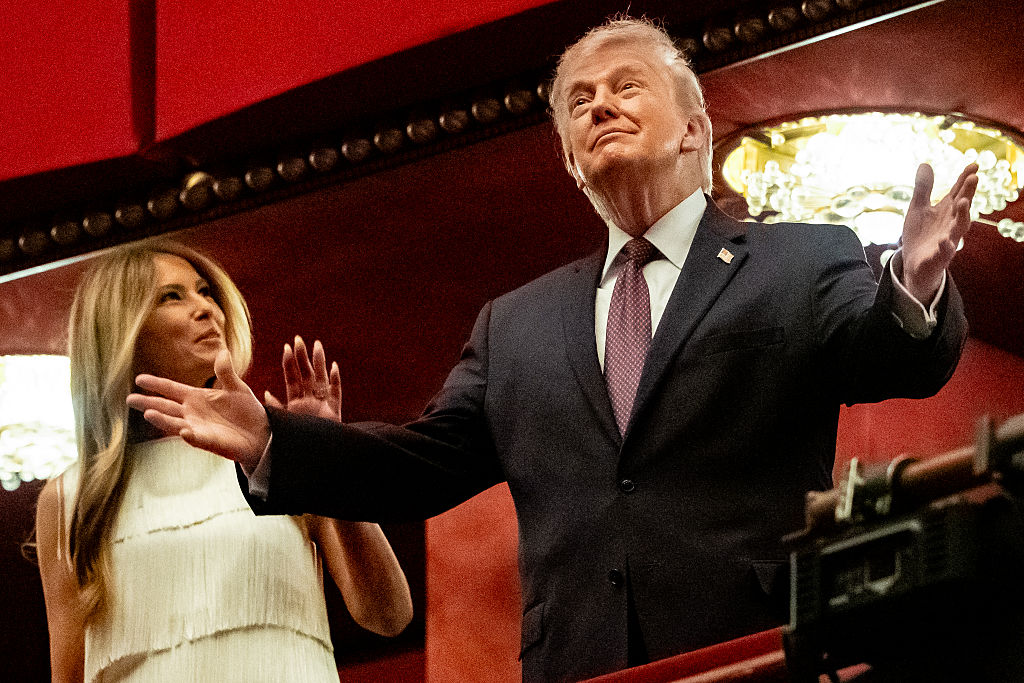
The 2007 case also speaks to an uncomfortable sense that the Prime Minister and his Attorney General – the latter is, remember, the government’s chief legal adviser – have taken their respect for international and human rights law to the point of fetish. Equally, it is not necessary to be as sceptical of the so-called ‘rules-based order’ as President Trump, who told reporters from the New York Times that the only constraint on his behaviour was ‘my own morality. My own mind. It’s the only thing that can stop me.’
International law is not simply a version of domestic legislation and procedures with a passport. It is much more nebulous, more political, more contested, less universally accepted and observed and, of course, it has no enforcement mechanism or sanctions in the way that domestic law has. Taken to its logical conclusion, it can also be damaging to a country’s national interests, as we are seeing with the farcical unravelling of the agreement to cede sovereignty of the Chagos Islands to Mauritius.
Neither Sir Keir Starmer nor the British government should protect service personnel who have committed offences. But our soldiers, sailors and airmen deserve the benefit of the doubt and they deserve a government which understands the unique circumstances under which they serve and the sacrifices they are potentially prepared to make. Starmer’s enthusiasm for this case leaves a bad taste in the mouth, and contributes to an ever-more-powerful feeling that he and Hermer see adherence to international law as a self-congratulatory virtue test within a rarified caste of initiates.
We all know what service looks like, and it looks a lot more like Sgt Richie Catterall’s 22 years in the British Army than it does the hand-wringing of brow-furrowed barristers.


Comments