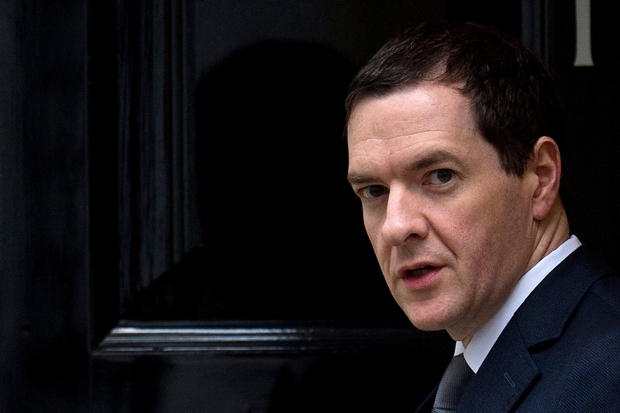
In a bid to calm the markets and allay business fears, the Chancellor has said this morning that the UK is ready to face the future ‘from a position of strength’ and indicated there will be no immediate emergency Budget.
He said there would be problems ahead, including an ‘adjustment’ in the UK economy but added that it was ‘perfectly sensible to wait for a new prime minister’ before taking any such action. George Osborne had not spoken since the Leave campaign won Thursday’s referendum. It is hoped that his decision to stay on for Brexit will steady the markets and the value of sterling. Meanwhile, the UK has had its credit rating outlook cut to ‘negative’ by the ratings agency Moody’s which said the result would herald ‘a prolonged period of uncertainty’. Price rises The Guardian reports that food prices are likely to go up as a short-term consequence of Britain’s voting to leave the EU, owing to the UK’s dependence on imports, according to the president of the National Farmers Union. Meurig Raymond said the EU referendum result had been a ‘political car crash’ and that UK farmers who receive up to £3 billion in subsidies from the EU each year were headed into ‘uncharted waters’. But he warned that one of the most immediate impacts would be from the combination of the UK’s reliance on food imports and the pound hitting a 31-year low on Friday after the leave vote. Meanwhile, the boss of one of Britain’s biggest high street retailers has signalled that clothing prices could rise next year as the impact of Brexit boosts inflation. Lord Wolfson, the chief executive of Next and a prominent Vote Leave supporter, spoke against the backdrop of a collapse in the value of the pound that will increase sourcing costs for retailers who import goods in dollars. Wolfson said many retailers will have currency hedges in place, which offer short-term insurance against swings in sterling, but that will only delay the impact on high street prices for the time being. Brexit and businesses Businesses have warned that Brexit will trigger investment cuts, hiring freezes and redundancies as the consequences of leaving the EU threaten to destabilise markets further this week. The survey by the Institute of Directors found that the majority of businesses believed Brexit was bad for them. Simon Walker, director general of IoD, said: ‘We can’t sugar-coat the findings. Many of our members are feeling anxious. A majority of business leaders think the vote for Brexit is bad for them, and as a result plans for investment and hiring are being put on hold or scaled back.’ Housing The Telegraph reports that London estate agent Foxtons has warned its full-year profits and revenues will be lower than expected due to ‘significant uncertainty’ in the housing market. Its shares promptly fell 16.7 per cent in early trade. In a trading statement ahead of its interim results on July 29, the company said uncertainty in the market would now be prolonged following the UK’s decision to leave the EU. Armed forces To mark Armed Forces Day, which took place on Saturday, 19 motor insurers have agreed to ensure that those in the armed forces posted abroad are able to keep their No Claims Bonus for up to three years. In addition, insurers will waive fees normally charged if armed forces personnel need to cancel a policy at short notice when they are to be posted overseas. James Dalton, director of general insurance policy at the Association of British Insurers, said: ‘People in the armed forces make a unique pledge to serve their country. UK insurers recognise this and have committed to allowing armed forces flexibility with their motor insurance when they are posted abroad. It is important that armed forces personnel talk to their insurer about their policy, particularly preserving their No Claims Bonus or any fees that might be waived when they are stationed abroad.’
Helen Nugent
Brexit, businesses and price rises


Comments