


There’s an old meme about a guy who wants to have sex with his toaster. Before the internet, the guy keeps this fetish to himself and gets called politically incorrect names if he doesn’t. After the internet, he finds a community of people who also want to get freaky with household appliances. Eventually, his ability to connect with other toaster-lovers destroys his life.
The internet, the great enabler that it is, tricks you into believing that it’s normal – healthy, even – to want to have sex with a toaster. Others argue that even more pernicious than showing us we’re not lone perverts, the internet has addicted us to novelty. Maybe nature created a few born toaster-lovers, but the other 99 percent of those boinkers only reached that point after exhausting all other expressions of sex, readily available from the firehose of pornography online.
I don’t think these other theories are wrong. But I suspect that there’s also something else at play. Some people like the idea of toaster-loving, not toaster-loving in and of itself. That toaster-loving is appealing precisely because they will never act it out – it is a fantasy for them.
The internet, the great enabler, tricks you into believing it’s normal to want to have sex with a toaster
I think that we’ve undergone a sexual revolution of the imagination, that the internet has changed the way we desire. If we live our lives as “content-consumers” – really, as audience members – why wouldn’t that also impact our sexuality? It’s already changed everything else.
This is sexuality in a world shaped by fandom. Fandom gives its audiences something else to do beyond consume: they become authors and sometimes characters in the worlds they love.
Fantasy has always been part of sex and romance, especially the one-sided kind – erotic novels, pornography, celebrity crushes, even risqué ads. Whether your fantasy was about a celebrity, a fictional character, or even someone you knew, it used to be a fairly contained experience – a private story between you and your own mind, or occasionally between you and a partner. The internet has made it easy to give our fantasies public lives and, importantly, created low barriers to entry.
My sister, who is mercifully free of my terminal internet brain rot, recently told me Instagram keeps showing her people who “self-ship” with SpongeBob SquarePants characters: that is, people who imagine themselves in relationships with them. She was surprised that people were shipping these characters, not that self-shipping is happening at all. Self-shipping has become as ambient online as AI-generated fruit and meme slop. It is everywhere.
Now, I should qualify this: self-shipping is a practice, not a sexual orientation, and it isn’t always sexual or romantic. I’m interested here in the cases where it becomes a way to express – and experience – desire.
As a zillennial – someone who is right on the cusp of zoomer and millennial – my sister grew up with “self-insert” fan fiction, where “authors” write themselves into existing stories, and Y/N, “your name,” stories that often cast readers as the favorite character’s love interest. The ethics of RPF, or real person fiction – fan fiction which treats real people as characters – has penetrated the mainstream. So, too, have the absurdities followed when people view real people as their “f/os,” or fictional (or sometimes, fictive) others.
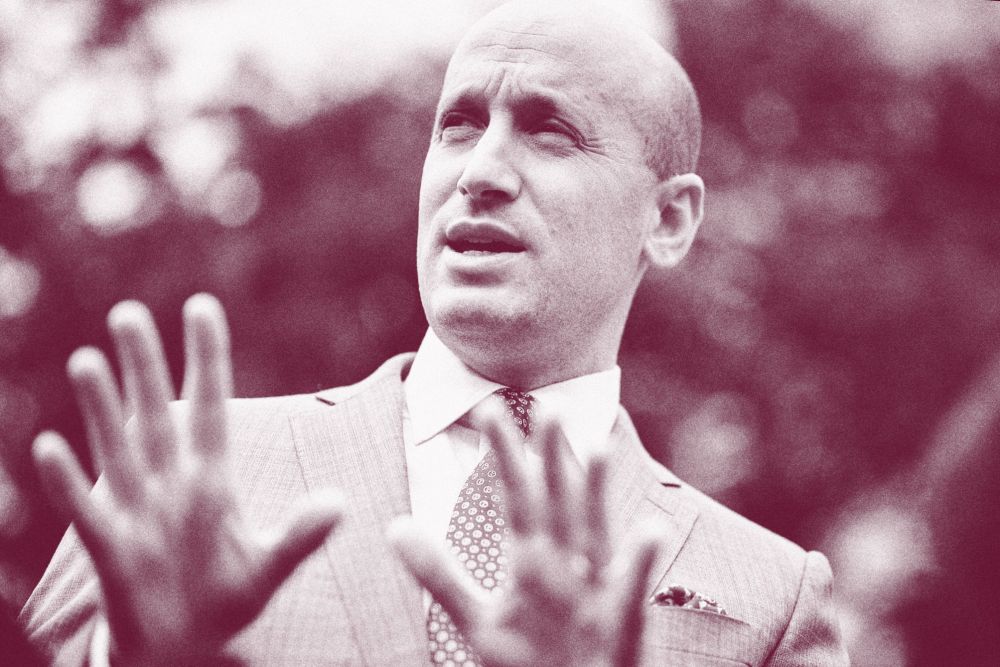
Just this week, there was a perplexing debate on X about a young user who shipped herself with the late right-wing political commentator Charlie Kirk. What interested me wasn’t the argument surrounding this – save that for the annals of an X replies section – nor was it that this woman (or girl, as it were) had a celebrity crush on Kirk. It was that she discussed it in the language of fandom: as a “ship,” casting herself as Kirk’s love interest. It’s similar to having a celebrity crush, yes, but the expression is different enough to be worth noting.
The language gives this sort of crush an explicitly fictional form – Kirk is not just a celebrity crush and she’s not just a girl. She is both character and author in an ongoing fan fiction.
I’ve spent my life in fandom, and these communities have never been more visible, as T.M. Brown recently reported in an article for CNN about the fan-fiction website AO3 (“Archive of Our Own”). But I would go a step further than Brown and say that in a world where little else is constant, fandom is, and its habits seep out everywhere, including in sex and romance.
Typically, we understand fantasy’s role in sexuality as a stand-in for something we would take if it were offered. But it seems like imagination is the whole point – an experience more cerebral than sensuous, closer to storytelling or roleplaying than daydreaming about something we would like to do, but for whatever reason, can’t. That doesn’t mean everyone who is attracted to a fictional character wants the relationship to stay fictional, or that it rules out wanting a physical relationship with a real person. But for some people, the fantasy is a satisfying experience on its own.
As I’ve written elsewhere, labels have emerged to help give language to this phenomenon, like “fictosexual,” someone who is attracted to fictional characters, and “aegosexuals,” people who can be aroused by sexual scenarios but have little desire to take part in them. These labels give voice to a sexuality that wants to be experienced primarily in the imagination.
It’s tempting to say this is downstream of pornography use or AI adoption. This desire exists independent of both porn and large language models – and indeed, one might argue that the appeal of both emerges in a society already amenable to parasocial relationships of any variety.
I don’t believe these communities explain broader declines in dating, marriage and sex. Rather, I suspect it’s even more basic than that: we experience nearly everything as though we are members of an audience. How do you show love for media? You become a fan. And how do fans express their sexuality? Through their imaginations.






Comments