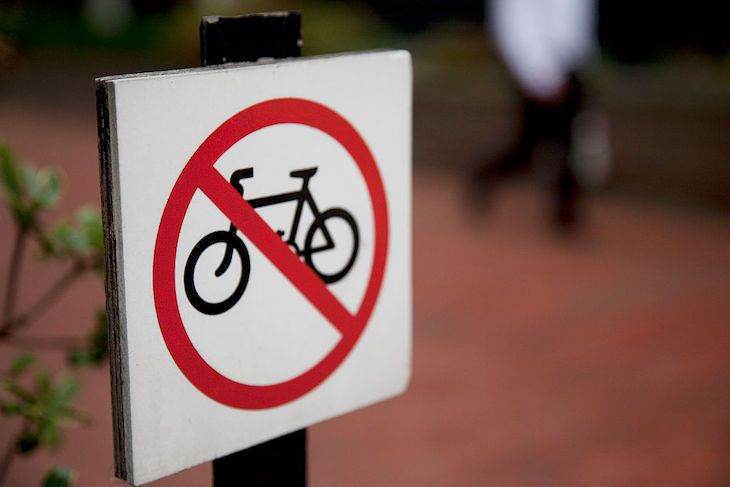
A motorist who was found guilty of murdering a cyclist in Greater Manchester was jailed for life this week. Simon Richardson attempted to flee the scene of the crash and dragged headteacher Michael Mullins one mile down the road, after the victim became trapped under his Volvo SUV. Richardson will serve at least 25 years behind bars.
A few years ago, the conflict between drivers and cyclists seemed like an exaggerated media invention
This incident, in April, was just the most extreme example of how poisonous the culture war between motorists and cyclists has become on Britain’s roads. In another court case last week, a driver escaped jail despite leaving a cyclist with a fractured skull and bleeding on the brain during an “unprovoked attack” in September 2024 at Edinburgh’s Cowgate.
If you ask any regular push-bike rider, they will have a mounting roster of stories about irate drivers and close shaves. And they are likely to agree that the atmosphere on the roads is getting worse.
For many motorists, these problems spring entirely from the ‘entitled’ attitude of cyclists. They believe that huge squads of mainly middle-aged men, with too much money and not enough manners, are taking over the roads and disrupting other people’s lives in order to indulge their hobby.
As a cyclist, I’m perfectly aware that we have a capacity to annoy.
Everyone thinks their own journey is the most important. Nobody likes to be held up by slower vehicles. It is particularly hard to take when that traffic is made up of people who are clearly not on their way to work or a hospital appointment, but are wearing bulging, multi-coloured lycra outfits and seem engrossed in conversation.
Views about cyclists have hardened because of some of the behaviour we see regularly in our cities. In London, the rush of bicycles from every direction, few of them stopping at red lights, has become an alarming and disorientating phenomenon.
There are occasions when recreational cyclists and commuters do not behave well. But they have become tainted by association with other groups that travel on two wheels.
There are delivery riders who cover their faces and seem to pay little attention to the rules of the road. Then there are gangs of youths on e-bikes, many of which are illegal to ride on the public highway. These groups have no more connection to the average club cyclist or commuter, though, than boy-racers, putting lives at risk by doing doughnuts in a built up area, have to careful drivers.
Social media has compounded the sense that there is a war on the roads. An increasing number of online accounts are whipping up an anti-cyclist mood among drivers, just as some posters appear to be encouraging anti-driving attitudes among cyclists.
The YouTuber Cycling Mikey and the broadcaster Jeremy Vine have both been accused of deliberately provoking incidents with cars while riding their bicycles. They claim their posts are aimed at highlighting wrongdoing and educating road-users, but the editing and dramatic headlines can seem calculated to generate rage and gain views.
Similarly, more and more accounts on Facebook and other platforms are filled with dashboard footage of groups of cyclists, often riding perfectly safely, accompanied by insults, threats and hostile comments. You do not have to be a regular lycra-wearer to worry that this dangerously heated atmosphere could ultimately contribute to deaths and injuries.
There are probably differences across the country, but my experience is that cyclists are a mixed bunch, who often do not conform to the stereotypes attributed to them. Like a lot of riders, I started cycling by myself during the Covid lockdowns, and I finally joined a club last year. The people I ride with are from all kinds of backgrounds and have different attitudes, but they aren’t elitist or supercilious, nor are they aggressive towards drivers. The weekend groups are sometimes composed mainly of men, but more often they are mixed.
Yes, cycling is a pastime, and we are not on the road out of strict necessity, but that could be said of most road-users.
You can spend a lot of money on bikes and equipment, but it’s not particularly expensive to get started. Meanwhile, the physical benefits are undisputed. And using this form of transport has made me a more attentive, considerate driver.
The most striking thing about cycling, though, is that it just makes you feel good.
This advantage should not be disregarded casually, given that Britain’s welfare bill is ballooning, thanks in large part to a surge in mental health diagnoses. Admittedly, the hobby brings the added stress of weather-watching in the days leading up to a big ride, and the frustration of trying to diagnose mysterious noises from your bike that seem to get worse with every pedal stroke. But set against this is the sense of wellbeing you get from fresh air, scenic countryside and good company.
A few years ago, the conflict between drivers and cyclists seemed like an exaggerated media invention, or something that was confined to congested roads in cities. Unfortunately, the increasing aggression has been palpable lately, even when cycling on the quieter lanes of Northern Ireland. Most drivers are still tolerant and patient, while most cyclists are careful and considerate, but the flashpoints and anger are increasing.
This is probably a symptom of the overwrought world we live in, where rage has become a commodity to be monetised by social media. There are many things, in truth, that we can justify getting angry about. A few people enjoying a Sunday bike ride or cycling into work are surely not worth the raised blood pressure, much less getting involved in an accident. Our roads are busy, stressful and dangerous enough, without treating other road-users, whether they are cyclists, drivers or pedestrians, like our enemies.





Comments