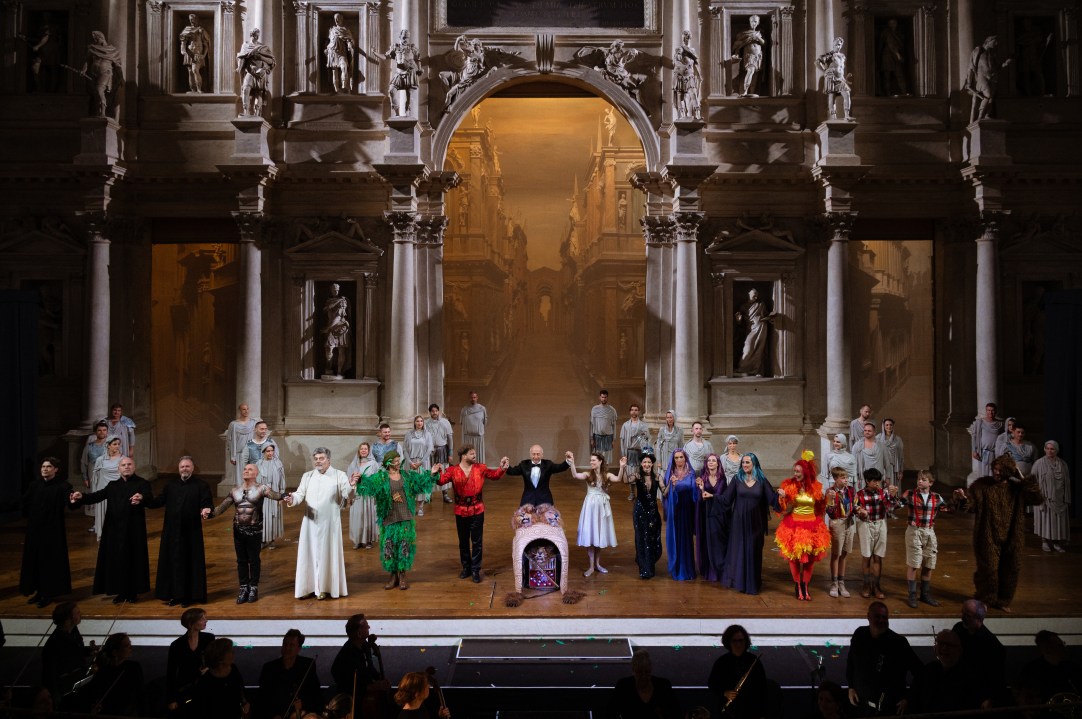
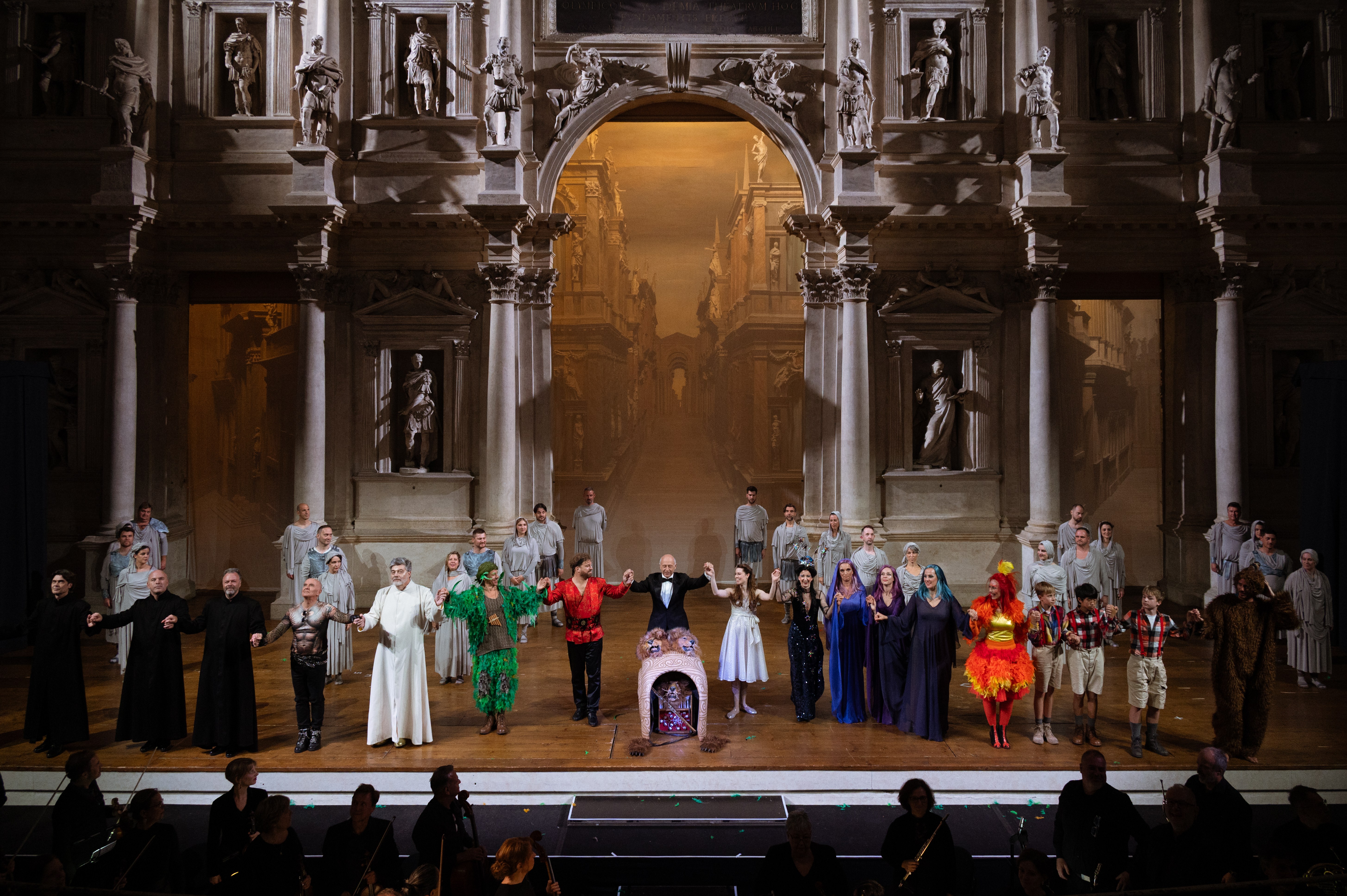
Opera directors: aren’t they the worst? All those gratuitous updatings and half-baked concepts, when they should really be following the composer’s intentions. Right? Ivan Fischer would presumably agree. In 2008 he launched an opera company, based around his Budapest Festival Orchestra, with Fischer acting as both conductor and stage director. The aim, he says, is to offer an ‘alternative to the usual trends of the international opera scene’, in a venue – the 16th-century Teatro Olimpico in Vicenza – that ‘reduces our temptation for regietheater’. (Note to non-opera nerds: ‘regietheater’ is what angry American record-collectors call any Wagner staging without horned helmets.)
This being Fischer, he’s building from an incredibly high base. For starters, there’s Palladio’s amphitheatre, with its magnificent original stage decor (there are baroque cathedrals that are less spectacular) and remarkably clean acoustic. There’s the BFO, one of the finest orchestras on Earth. And then there’s Fischer himself, whose standing means that he can rustle up a world-beating cast for pretty much anything he chooses. The 2026 production was Die Zauberflöte, and the singer biographies were a rollcall of top European opera houses.

Unsurprisingly, it sounded sublime. We all knew that the BFO gives great concerts, but it turns out they’re also the opera orchestra of your dreams; the pit band, in fact, of the gods. Virtuosity is a given when Fischer conducts the BFO, as is the joyful individuality of the woodwind playing – bassoon tone like ripe plums; sweet, songful flutes and oboes, and clarinets that are lean and plangent up top and at least 80 per cent cocoa solids down low (a register where miracles can happen in Die Zauberflöte).
The German soprano Samantha Gaul was the loveliest Pamina
I’ve yet encountered
So there was that, but there was also the buoyant, instinctive warmth of the string sound. It’s wonderful enough hearing Fischer caress a BFO violin line in the concert hall. Hearing the whole section phrase their melody in direct response to the words on stage (seriously, the actual colour and inflection): well, that was musicianship on an exalted level, made all the more exquisite when the cast was as strong as this.
Admittedly, when you’ve got Franz-Josef Selig as Sarastro, you expect intelligence coupled to vast depths of black velvet. But it was an additional treat to have a Papageno (Markus Werba) whose singing was as generous as his characterisation, and fun to watch him go all Lang Lang – head tossing, fingers flying – when he played his bells. Rare, too, to hear a Queen of the Night (Alina Wunderlin) who swept her high notes so effortlessly into a lyrical line, with a thrilling little tingle of vibrato at the peak to remind us that this was music, not acrobatics.
And having slept on it, I still think that the German soprano Samantha Gaul was the loveliest Pamina I’ve yet encountered – intensely touching to watch, endlessly tender and expressive to hear and carrying herself (physically, as well as vocally) with the grace of a ballerina. If the Tamino was a little colourless, that wasn’t wholly the fault of Julian Prégardien, whose mellow, buttery tenor warmed up as the evening progressed. He was wearing a red samurai tunic with an embroidered dragon: baffling until you recall that Schikaneder’s stage directions specify ‘a splendid Japanese hunting costume’. Full marks to Fischer, as director, for observing the letter of the text.
But if Fischer deserves all possible credit for the musical glory of this Zauberflote, it’s only right to appraise his stage direction too, and that’s where things get sticky. In using the Teatro Olimpico, Fischer has deliberately accepted severe design restrictions, and for much of the performance, scenery was simply projected on to the 16th-century stone screen. Sometimes it was very effective: the Queen of the Night sang against the blue and gold of a starscape from an illuminated manuscript.
Perhaps adequate lighting is genuinely impossible in such an historic venue, though I couldn’t help thinking of a couple of British-based lighting designers who, at the very least, would not have left singers to deliver crucial scenes in unlit shadow. The costume and set designs, meanwhile, suggested pantomime playfulness, and they had a thrown-together charm, with Papageno trailing green feathers wherever he went. Too often, though, they just looked ropey. The monstrous serpent appeared to be a repurposed draft-excluder. There was a bear costume that made Bungle look like something from Grizzly Man.
It’s possible that a director with more experience and stagecraft could have handled the onstage interactions more consistently. They might have utilised the empty spaces, found a role for the chorus beyond marching on and off; in short, done more to prevent the finest performance of Die Zauberflöte I’ve ever heard from looking like a bodged-together school play. But there you go. It seems that conductors, however great, do have limits to their abilities. And that opera directors have their uses, after all. Who knew?





Comments