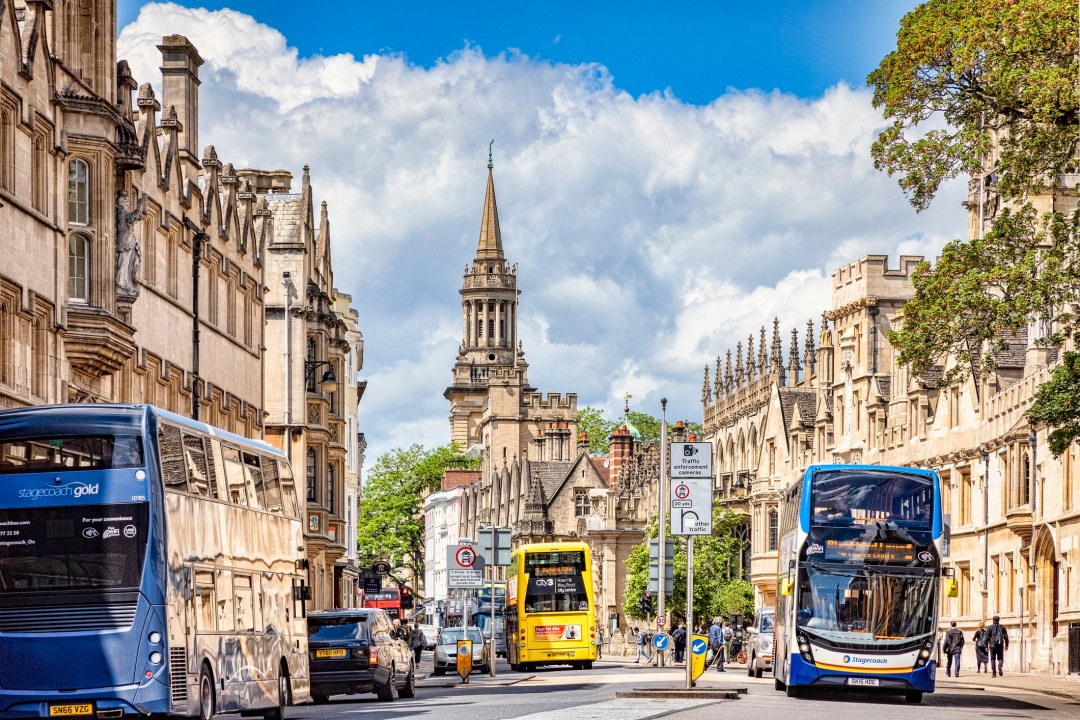
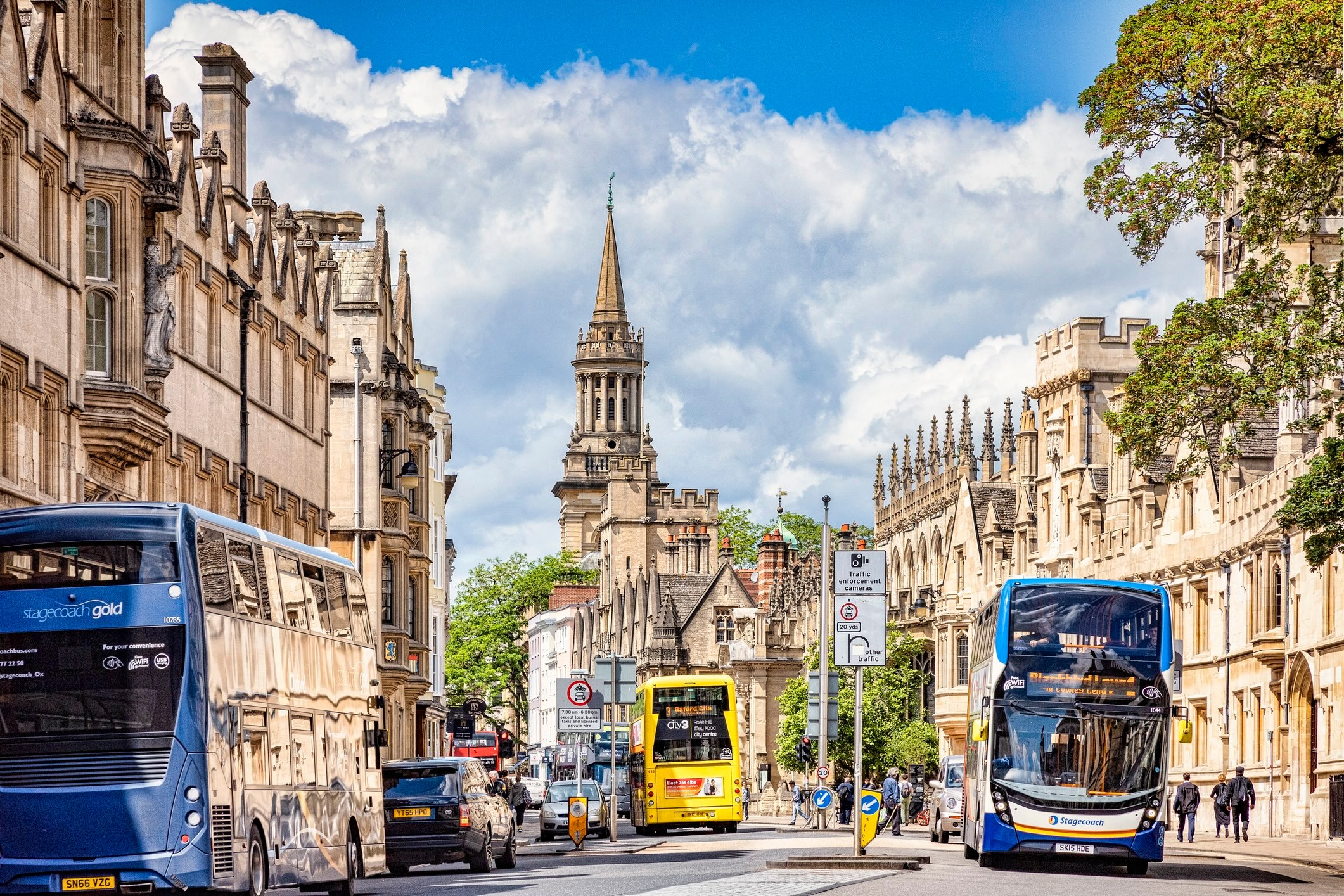
Amid the myriad conspiracy theories swirling around last month when Harry and Meghan withdrew their children from an Oxfordshire prep school after a mere two days, there is one that has not been sufficiently priced in. If the school itself was based in North Oxford – as has been rumoured – then Hal ‘n’ Megs would have first fallen foul of the congestion charge that has been half-heartedly implemented in the city, and, as of 28 September, the deadly traffic filters. These have been rumoured for years but, only now have they finally reared their ugly heads. Their advent was delayed because of a similar piece of appalling town planning – the years-long closure of the Botley Road, Oxford’s main artery to the west – but now they have finally arrived.

They are, to put it mildly, unpopular. Part of the reason for their lack of favour is that it would take an All Souls fellow to understand the whys and wherefores of what on earth is going on. The initiative can be summarised briefly as several major streets in Oxford being closed to most traffic from 7am to 7pm every day, but there are 20 different forms of exception of exemption, which include everyone from the disabled to various blue light workers.
However, the vagaries of the scheme swiftly become yet more complex when the small print is examined. If you are an Oxford resident, you are allowed 100 passes per year that will allow you to travel unimpeded into the city. If you live in Oxfordshire, your allocation dips down to 25, and if you live outside the county, then Tough Luck.
Except, of course, Oxford remains one of the most popular destinations in Britain for tourists both domestic and international. So the powers that be – who really ought to be punished for this – have come up with a fiendishly complex solution that continues to allow drivers to visit the Westgate Centre, that temple to Mammon that houses most of the city’s major shops and, naturally, its John Lewis.
Rather than do what might seem sensible in a historic city such as Oxford and simply ban private vehicles from the centre altogether, it is now possible, with a certain degree of application, to drive to your destination, albeit in a far more circuitous, roundabout way than usual, avoiding the usual irritants of students, political protesters and otherworldly academics and writers in the process.
If this comes across like a British version of Grand Theft Auto for the unfortunate drivers, albeit with less shooting and nudity but just as much swearing, then that is the fault of Oxford City Council, an organisation that seems to exist purely to aggravate those who have to live in the place that they keep coming up with not-so-bright ideas about. Certainly, the reaction from those whose livelihoods have already been affected by the filters have been near-universally negative. Not only will it be considerably harder for everyone from shopkeepers to hospitality staff to get to their places of work from now on, but it will be equally tricky for the paying public to do so, too.
It would take an All Souls fellow to understand the whys and wherefores of what on earth is going on
It is, admittedly, not the single worst transport plan that has ever been proposed for Oxford. That came in the Forties, when the urban planner Thomas Sharp and various other aesthetic traitors tried, quite seriously, to put a bypass through the middle of Christ Church Meadow in order to divert traffic from the centre of the town. The scheme was eventually defeated after decades of debate and controversy, but the main reason why was because most of the Cabinet had studied at Oxford (with a disproportionate number at Christ Church itself) and reacted about as badly to the desecration of one of the city’s most beautiful green spaces as a bishop might to Christ Church Cathedral being turned into a nightclub.
Sharp’s scheme is still remembered as a byword for awfulness, and rightly so. The traffic filter plan might not be in the same level of stupidity, but instead it has the dreary imprimatur of municipal planning upon it, which should be regarded with a mixture of suspicion and horror. The whole development has played into the hands of those who believe that it is another example of lockdown-by-stealth, and that the whole so-called ‘15 minute city’ concept, in which all the various amenities that one needs can be found a quarter-hour’s walk from one’s house, is just another means of separating us from our rights as citizens. What these rights are might be hard to define – if someone starts muttering about ‘Magna Carta’, my advice would be to walk swiftly away, backwards if needs be.
Of course, as a non-driver, I could be accused of not having any skin in this game. And, to be fair, I don’t even cycle round Oxford any longer. But I am dreading the roads being mired in an endless gridlock of traffic as one hapless driver after another attempts to find the sole route to their destination that will not end with their being landed with a hefty fine. Perhaps, in solidarity with these unfortunate motorists, the time has finally come for me to get behind the wheel of a car, so I can see how miserable this traffic filters scheme is first-hand.
Just over a century ago, William Morris founded a motoring business in the city that became the most successful car manufacturer in the country. Were Morris – later Lord Nuffield – alive today, I imagine that he would quake at what Oxford has done with his invention and beg to be returned to his eternal rest. Many of the city’s unfortunate drivers – even Harry and Meghan – will undoubtedly feel the same before long. And who can blame them.





Comments