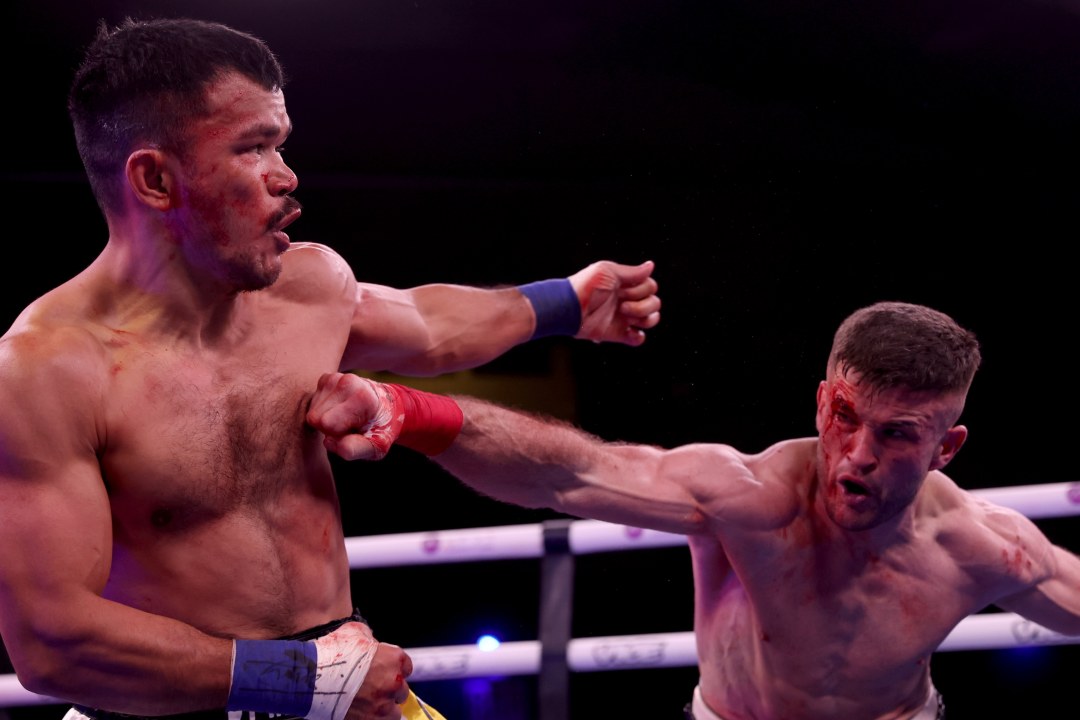
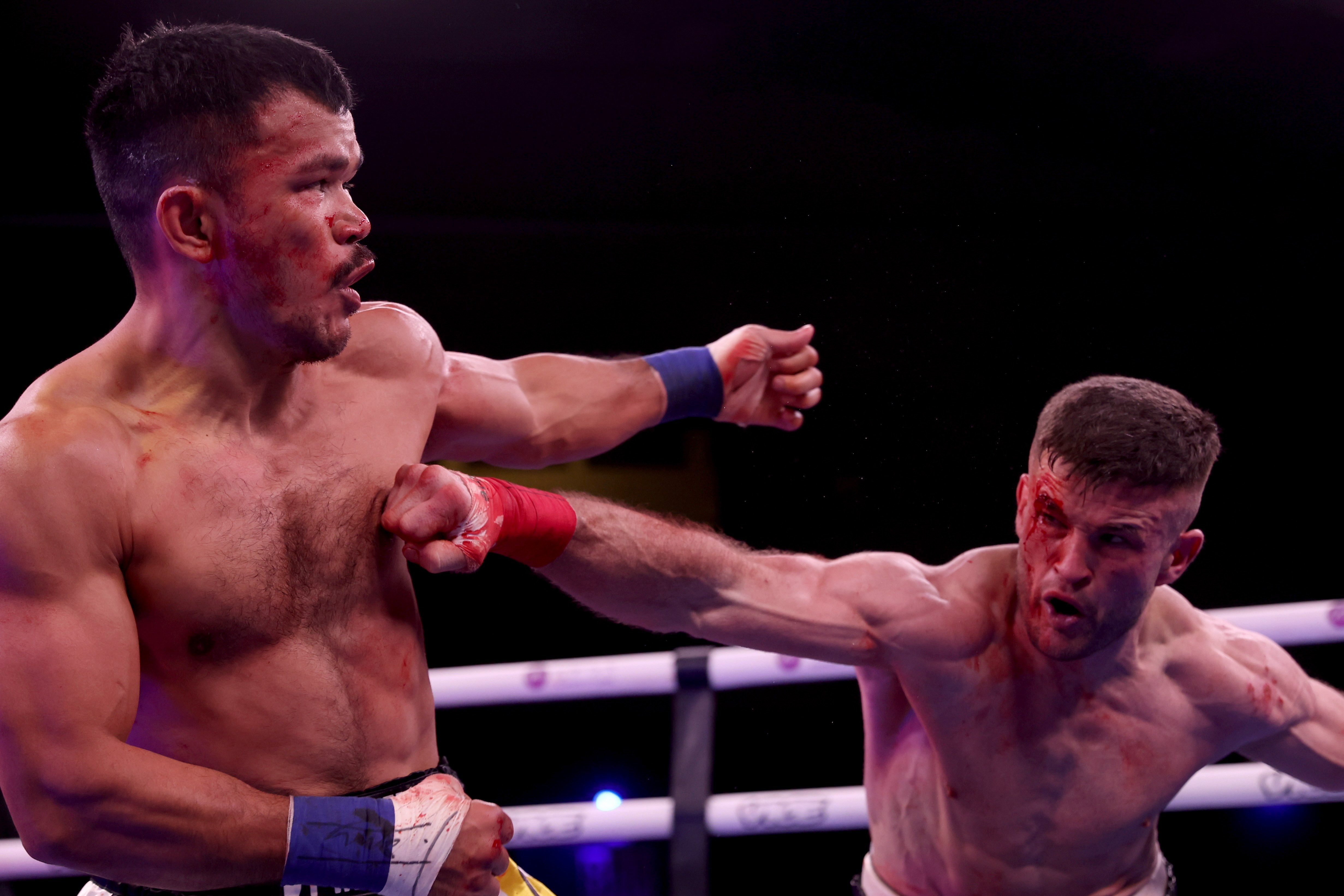
Anyone who watches the former IBF featherweight and Commonwealth boxing champion Lee Selby enter the ring for his next big fight, in London in November, may be forgiven for thinking all that being bashed around the head has left him with a touch of amnesia. It will seem as though he’s forgotten his gloves.
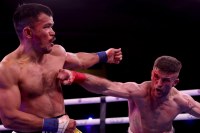
In fact Selby – who remains as sharp as his jab – is simply partaking in his second career, as a bare knuckle boxer. For those not up with the increasingly esoteric world of sport, the sweet science of bruising, as traditional boxing was once called, is fast being over-shadowed by the sweet science of blood-letting. Held over just five rounds, rather than trad boxing’s 12, and in a smaller, triangular ring, 90 percent of bare knuckle fights end in a knockout or stoppage due to one of the fighters having sustained a cut.
With UFC, arm-wrestling, the bizarre world of slap fighting and all other manner of macho battles on the up, there’s no question that bare knuckle boxing fits right in. The sport, a scrappy, amateur affair a few years ago, is now getting the sweaty sheen of professionalism thanks in large part to its largest organizational body, BKB, which has signed an exclusive broadcasting deal with TikTok and is now pulling in some serious boxing talent the likes of not just Selby, but Victor Ortiz, Paulie Malignaggi and Jojo Diaz. Tyson Fury, aka The Gypsy King, has been spotted ringside and may, if the deal is right, climb over the ropes.
That would be fitting. Bare knuckle boxing has deep historical and cultural roots with the Romani and Irish/Scottish Traveller communities, long serving as a traditional way of settling disputes: dueling, in other words, without the fatalities. Usually. Perhaps this is why some are a little sniffy about bare knuckle boxing’s rise: isn’t it the stuff of illegal scraps in empty car parks? Doesn’t it lack the dignity of gloved boxing, what with all that blood, and the likelihood of seeing one of the competitors go down hard? Isn’t it just too brutal, too gladiatorial, too bread and circuses?
Of course, those who know their boxing history are aware that the bare fisted variety is the original kind – it’s the oldest combat sport as well as the latest. Bare knuckle boxing was part of the ancient Olympics before falling out of favor and resurfacing in 17th century England. Traveling fairs had boxing booths, with some beefy fellow challenging the locals (many English idioms, from ‘toeing the line’ to ‘coming up to scratch’, come from this time). Later amphitheaters were built to host the bouts – some of which would last hours – and the greatest fighters, women and couples included, were nationally known. All this was bare knuckled.
Doesn’t it lack the dignity of gloved boxing, what with all that blood?
It wasn’t until the Victorians, whose prissiness drove bare knuckle boxing underground, and the introduction – 160 years ago next year – of the Marquess of Queensbury rules, that gloves were made mandatory. It was all part of a PR campaign to reposition boxing as a sport for gentlemen.
Certainly bare knuckle boxing in the 21st century is seeing its own image overhaul. If the fights of a few years back were more amateurish, and so lacked technique – really not far from the kind of thing you might see outside a nightclub on a Saturday night – the skill level has risen drastically as more money has gone into the sport.
Selby himself says it wasn’t that long ago that he also turned his still mostly straight nose up at the whole idea of bare knuckle boxing. But he’s since found it has required new talents. The physical cost in bare knuckle boxing is so high – both the damage that an unpadded fist can cause, but also to the fist itself, with fighters experiencing considerable swelling with the first few rounds – that while the pace is more furious, the action is also necessarily more tactical. It’s for this reason that bare knuckle boxing bouts are far more unpredictable than the gloved kind, in which the favorite nearly always wins. For front-runner and challenger alike there’s little room for error.
As Selby notes, get caught out by an unexpected gloved punch, and invariably a fighter can go on. Get caught by an ungloved one and it can be a one-way trip to the canvas. Selby’s tactic? He says he tries not to get hit.
As for the apparent brutality of it all, in all fewer punches are thrown in bare knuckle boxing. For this reason there are some studies suggesting that it may in fact be less damaging to the boxers than being continually knocked around the head by gloved fists. If you know your hand is protected, you’re more likely to punch harder too. All the same, Selby is not so naive as to deny that a lot of bare knuckle boxing’s appeal to the audience lies in its superficial ruthlessness. Do they want to see blood? Yes, he says, and they’re going to get it.
There is, at least, a kind of honesty in that too: however you dress it up, boxing of any stripe is two people trying to whack seven shades of excrement out of each other. If traditional boxing has long been considered “the noble art” – for its instilling the virtues of discipline, resilience, respect and courage – then bare knuckle boxing, with its higher costs to the fighters, is surely worthy of the same name.


Comments