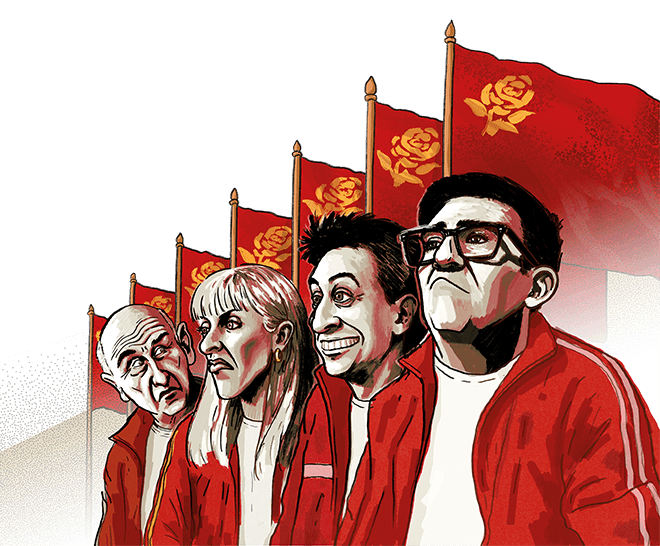
When the Social Democratic Party was launched in 1981, its prospectus was dismissed witheringly by the liberal thinker Ralf Dahrendorf as a plan for ‘a better yesterday’. Andy Burnham has gone one better. He plans to rerun Labour’s last term in office. But this time with feeling.
The Prime Minister’s address to his party conference was many things – fluent, passionate, moving, politically effective. But one thing it was not: forward-looking. The quality of the delivery invited comparison with Tony Blair but, unlike Blair, our current PM was not promising modernisation. He was instead seeking to revisit the Blair years and pursue the road not taken by Labour in 1997 – the long march left.
The heart of the Burnham programme is a rejection of the New Labour belief that an accommodation had to be made with Margaret Thatcher’s own modernisation of Britain’s economy. The Blairites believed that they needed to demonstrate moderation and discipline before Labour could be trusted to govern again. They had to accept the erosion of union power, embrace a bigger role for the market and reject their own activists’ obsessions before they could pursue their central project of public-sector reform. Above all, a vigorous private sector had to be supported to generate growth – with taxes set at a level that encouraged entrepreneurship – and education policy reformed to match global competitors.
Every single one of those Blairite principles was comprehensively trashed by Andy Burnham this week. Thatcher’s (and John Major’s) privatisations should be reversed; the historic crime of council house sell-offs atoned for. Far from reforming the National Health Service, with greater market discipline, accountability, choice and contestability, its monolithic model should be extended with the creation of a new bureaucratic behemoth – the National Care Service. Paid for with more public money.

Because, whatever the merits of amending the pension triple lock, the Burnham proposals will cost additional billions at a time when public debt is still escalating. The PM clearly regrets that he was never able, as health secretary in 2009, to build back Bevan, but now he is seeking to make good on those ambitions just when the nation’s finances are growing weaker by the day.
The repudiation of Blairism and the embrace of an older, more left-wing path for Labour were there in the promise of state control of utilities and state direction of investment. Largesse for the trade unions was announced by John Healey in a speech which celebrated the solidarity displayed during the miners’ strike but said next to nothing about the real problems of rising energy prices and the real opportunities offered by technological transformation. We are entering an age where AI is transforming our world but the Chancellor would rather channel Dennis Skinner than Demis Hassabis.
The prostration before the household gods of the left continued with Ed Miliband’s endorsement of the campaign run by Gaza independents to put Israel in the dock, and Burnham’s own suggestion that he would like an electoral system more congenial to Zack Polanski’s dreams of power. Blair knew that bowing to left-wing pressure groups moved Labour further away from the mainstream, further away from government and further away from deserving power. But for those within Labour who chafed against the constraints he imposed, who wanted to empower the ‘broad’ left and who hated his resolute stand against Islamism and with Israel, the Burnham revisionism is sweet indeed. It’s a northern soul revival calculated to appeal to Labour’s ideological heartlands.
But while the Burnham Restoration has a certain shrewd political logic – uniting left-wing voters under a ‘progressive banner’ just as the right is divided – it is a policy disaster for the country. The central challenges facing the nation are either ducked or made worse. The few promising policies of the Starmer era are diluted. The worst are exacerbated.
Every Blairite principle was comprehensively trashed by Andy Burnham this week
Britain suffers at the moment from low growth, ballooning debt, high energy costs, low investment, inadequate preparation for technological change, uncontrolled migration and invertebrate defences. On these huge and unavoidable problems the government is hopelessly unequal to the task. Its policies will add costs to business, hike taxes on enterprise, deter investment from abroad in infrastructure, do nothing to reassure lenders, drive up the cost of debt, force energy bill payers to subsidise yet another quango, leave oil and gas unexploited in the ground, make data centres unaffordable, generate a hostile environment for entrepreneurs, offer innovators only more regulation, make it easier for terrorist sympathisers to enter the country, do nothing to stop small boats, keep the military underfunded and dismay our allies in the fight against extremism.
There is a sad irony in that the more sensible ministers within the Starmer government – Wes Streeting and Shabana Mahmood – who agitated for Starmer’s removal are now themselves diminished figures. Streeting’s plans for NHS reform are dead. And he has to endorse a spending settlement which leaves the country unable to defend itself. The Home Secretary, meanwhile, has had to row back on reforms that would have toughened migration rules and has now been forced to introduce a fast track for more Hamas sympathisers to settle safely in Britain. She will know these are mistakes. But her voice, and her supporters, have been eclipsed by the new power in the land.
The King in the North has given his bannermen cause to cheer like never before. But for the rest of us, winter is coming.





Comments