So far, Andy Burnham’s premiership has been characterised by compromise and obfuscation. When choosing his Chancellor, instead of picking Shabana Mahmood on his party’s right or Ed Miliband on the left, he went with the reassuringly un-ideological John Healey. Rather than committing to spending 3 per cent of GDP on defence, he postponed any decision until a spending review next year. His broader agenda for his premiership will only be revealed in a ‘Ten-Year Plan’ in November. For a country confronted by as many challenges as Britain, this is an appalling lack of clarity. A reckoning with reality is required.
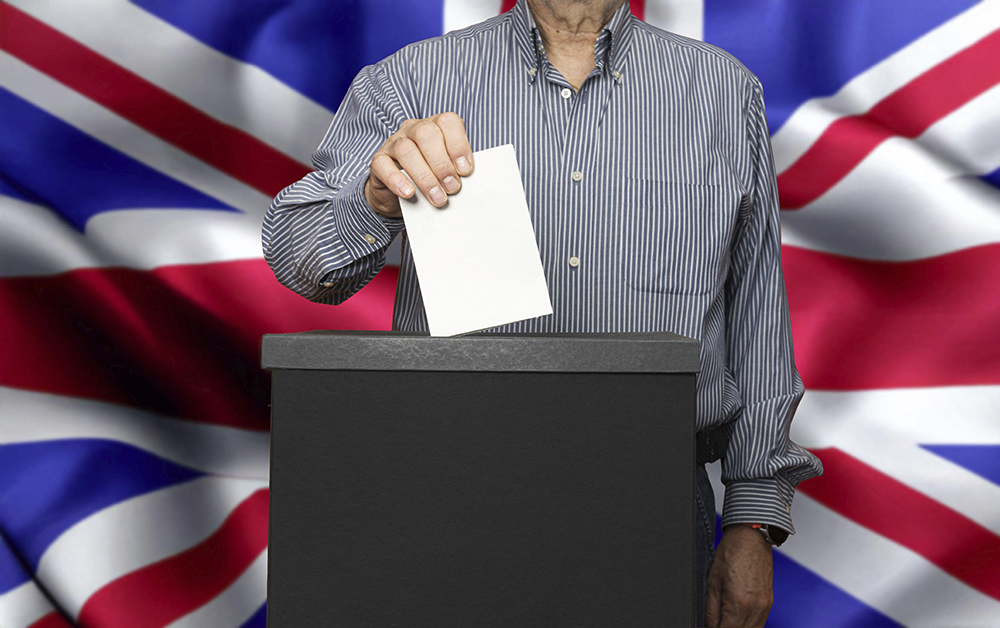
One thing that Burnham has been clear about is an early election – he has ruled it out. ‘I don’t think people want it,’ he said, in an interview just after he became Prime Minister, promising that instead he was ‘going to work to the 2024 manifesto’. He has a majority of 166 and three years left of this parliament. Even if Labour’s poll ratings have risen since Burnham entered No. 10, they remain below the 33.7 per cent Keir Starmer won in 2024 – itself the lowest for any majority government. History provides plenty of examples of premiers who went early and came a cropper, from Stanley Baldwin to Theresa May.
The ‘Burnham Bounce’ may be small, but he is as of this moment probably as popular as he will ever be
Yet prime ministers have also paid the price for not taking the plunge. As a committed critic of Thatcherism, Burnham will know that James Callaghan miscalculated by not going for an early election in October 1978, when his personal popularity was high and inflation was falling. His failure to do so opened the doors to the Winter of Discontent and 18 years of Tory rule.
Even more pertinent for Burnham is Gordon Brown’s example. He was in the cabinet when Brown decided not to go to the country in 2007, for ever after lambasted by the Tories as a ‘bottler’ as his popularity collapsed. A snap election might be Burnham’s best chance of keeping Labour in – and keeping the right out.
Despite the row over early prison releases, Burnham’s first few months in Downing Street have been unflustered – especially compared with the rioting, scandals, party infighting and U-turns that marked Starmer’s first few months. Yet even as the Prime Minister excites the party faithful at Labour’s conference in Liverpool this week, he must be aware that things could only get worse. The ‘Burnham Bounce’ may be small, but he is now probably as popular he will ever be.
On 28 October, John Healey will deliver his first Budget. With inflation spiking, his fiscal headroom is diminished and further painful tax rises are looming. There are fears that Vladimir Putin will use his recent Russian ‘election’ victory as a springboard to threaten Eastern Europe, while Burnham’s commitment of RAF support to Saudi Arabia in its conflict with the Houthis highlights how the Middle East crisis threatens living standards at home. Despite progress, both NHS waiting lists and small boat crossings remain high. Burnham has a chance to bank his early popularity before events overtake and engulf him.
Doing so would also capitalise on his opponents’ disarray. To his left, Zack Pol-an-ski’s momentum has been lost and Ed Davey’s Liberal Democrats remain an irrelevance. On the right, Reform’s summer of scandal has dragged down Nigel Farage’s ratings. Plans for government remain unfinished and candidates unselected. Likewise, the Conservatives’ recovery under Kemi Badenoch is only in its infancy.
An election could also liberate Burnham from inherited constraints. While pledging fealty to Starmer’s manifesto, he reaches beyond it. He wants public control of utilities, the biggest council house-building programme in decades, more regional devolution, a closer relationship with the EU. Ending ‘40 years of neoliberalism’ is surely incompatible with a commitment not to increase national insurance, income tax or VAT. He needs his own manifesto and mandate, even at the risk of dozens of his MPs.
Yet with politics so fractious, Burnham needs to gain the support of only around three-tenths of the country to win a majority. He may lose ground across the North to Reform, across the South to the Tories and across Scotland and Wales to the SNP and Plaid Cymru. But he would have every chance of returning to Downing Street with a reduced majority or at the head of a progressive coalition, emboldened to pursue the most left-wing agenda of any government in decades.
On the evidence so far, Burnhamism is little more than Starmerism with a human face, the same hollow triangulation and unwillingness to grip Britain’s perilous position. For better or worse, if the new Prime Minister wants to break from his predecessor, to win support for his own policies and empower himself to tackle our myriad national crises, he must show a boldness that Starmer was never capable of.



Comments