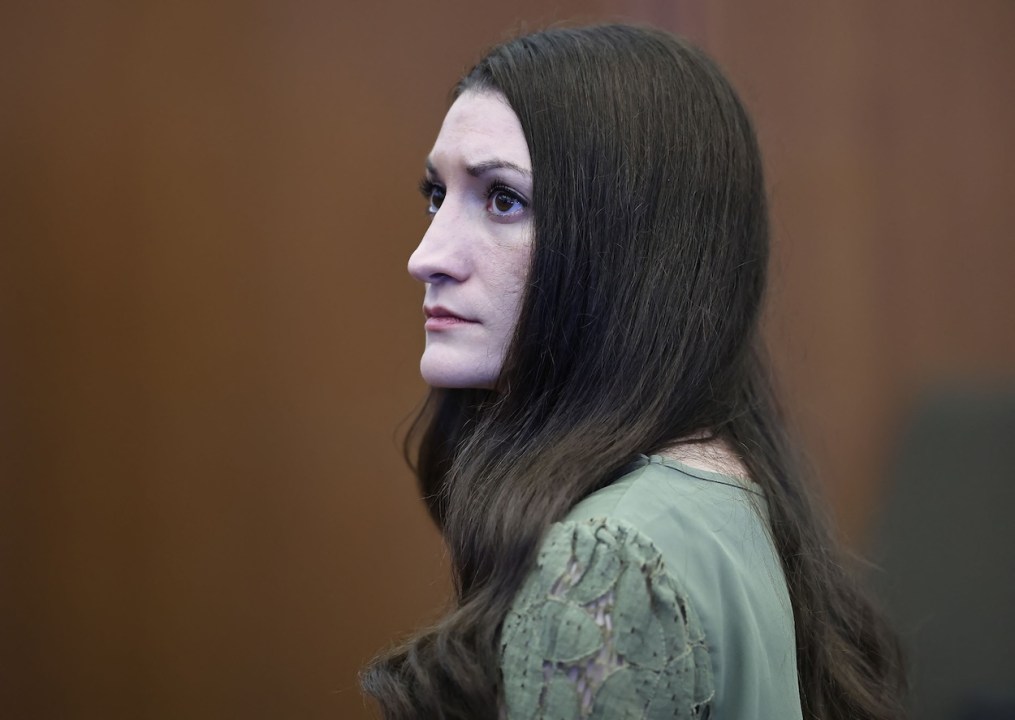
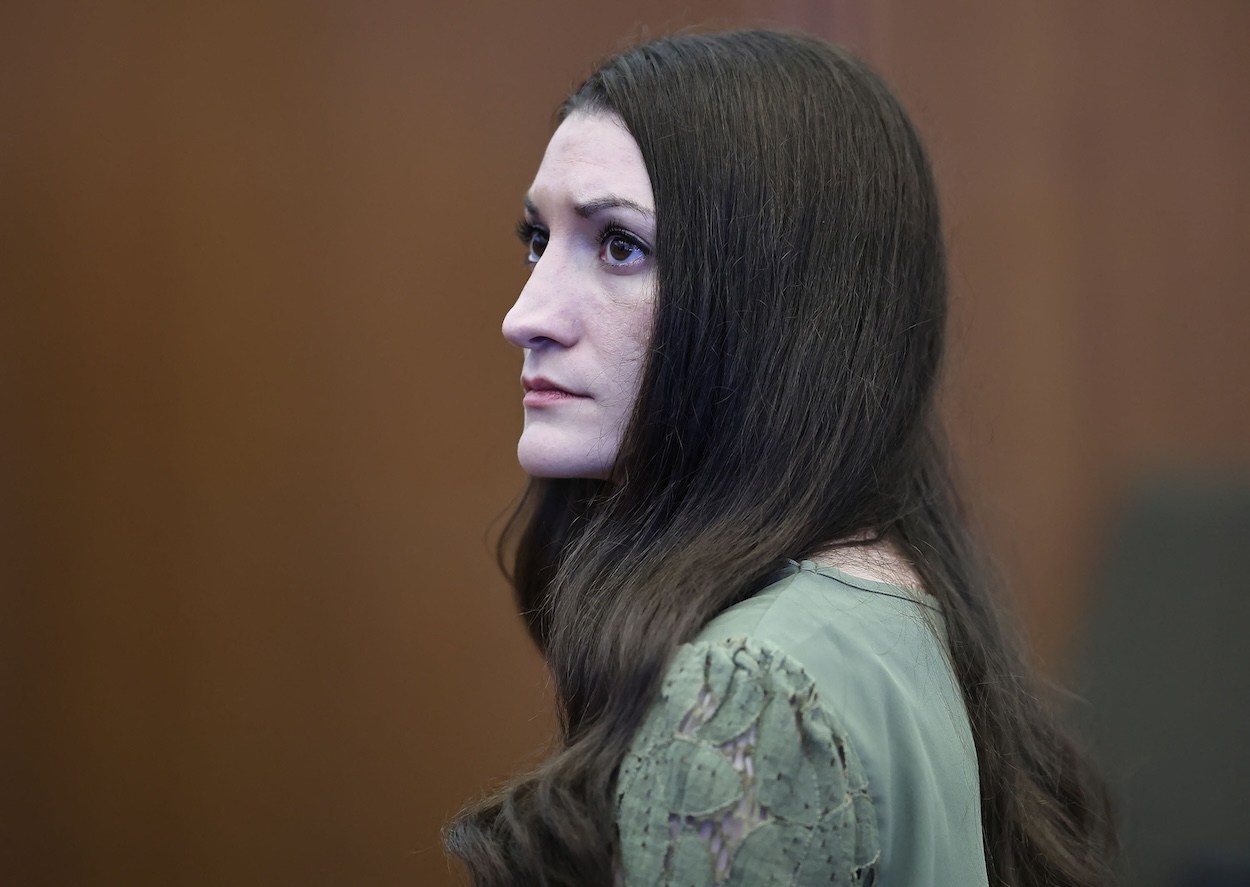
In January 2023, Lindsay Clancy strangled her three children in her basement and then tried to kill herself. On August 20 this year, several hundred women dressed in pink lined the street outside Plymouth Superior Court, where she was being tried for murder. Some called out “I love you,” as her lawyer went past. One of them shouted, “Team Lindsay.”
Many mothers have frightening thoughts; very few become killers like Clancy
The gathering had been organized by Renee Kimball, who had never met Clancy and had driven down from Maine. She had been following the trial via a livestream. She told Court TV it was neither a protest nor a rally, and that the point was “to show Lindsay support; to show her peace, to show her calm.” When a radio reporter asked why she had come, Kimball said: “I think that every one of us women believe that could be any one of us, any one of us who have dealt with mental health: anxiety, depression, postpartum,” Kimball said. “I think we just know that any one of us could be sitting in her chair.”
Kimball knew about anxiety, depression and motherhood, but she did not know what was happening in Clancy’s mind in her basement when she killed her children. Yet the statement, “I recognize that feeling,” has somehow become, “she could be me.” Personal experience is being used as evidence about the mind of a complete stranger. The comparison works in reverse too. To make Clancy representative of ordinary women is to make ordinary women more like Clancy.
During the trial, a woman in Wisconsin, also a stranger to the Clancy family, set up a fundraiser for her parents. By September 4 it had raised more than $1.1 million from about 33,500 donations. The page said the money was for the parents’ expenses, and that it was not asking anyone to agree about Clancy’s case or about the outcome of her trial. The money poured in. In early September a retired nurse was arrested outside the courthouse after allegedly filming the jurors. Asked what she had come for, she said: “To see Lindsay. To see Lindsay, and I did see her.”
Clancy was a labor and delivery nurse. Cora was five, Dawson three, Callan eight months. While her husband was out collecting food and medication, she strangled the children with exercise bands. Then cut her wrists and neck and jumped out of an upstairs window but survived and paralyzed from the waist down. Callan died in hospital three days later.

Clancy has never disputed killing her children; the jury was deciding whether she was criminally responsible for their deaths. Inside the courthouse, 12 strangers were hearing the evidence. After a little more than six weeks, the case ended in a mistrial.
One reason these women seem to sympathize with Clancy is that frightening maternal thoughts are common. In a 2024 study in the Journal of Clinical Psychiatry, researchers followed 763 pregnant women in British Columbia and interviewed them twice after they had given birth. Nearly all, 96 percent, reported unwanted thoughts of accidental harm coming to the baby. More than half, 54 percent, reported unwanted thoughts of harming the baby deliberately, most often through neglect. The researchers found that for most women these intrusive thoughts decreased or disappeared by six months.
A second study of 388 women from the same cohort found no evidence that these thoughts were associated with an increased risk of harming the baby. Women who reported them were no more likely to be physically aggressive towards their children than women who did not. These studies show how wide the gap is between frightening maternal thoughts and killing a child.
“That could be any one of us,” blurs this enormous distinction. Many mothers have frightening thoughts; very few become killers like Clancy. Her lawyers argued that she had suffered from postpartum psychosis – a much rarer phenomenon than dark thoughts, affecting an estimated one in a thousand women – and that she was therefore not criminally responsible for killing her children. Clancy’s supporters seem to think she is not ethically responsible either. They ignore Cora, Dawson and Callan, whose deaths are merely incidental to the suffering that Lindsay – and all women – are going through.
Women spent generations fighting to be treated as full moral agents, not as creatures governed by emotion or reproductive biology. “Any one of us,” is a reversion: it is predicated on the idea that women lack full judgment, responsibility and self-command.
That argument was once made in public, in courts, and in Congress. In 1887 the United States Senate debated whether women should be allowed to vote. Senator George Vest of Missouri argued they should have no such right. “Women are essentially emotional,” he said. “It is no disparagement to them they are so.” What the country needed, he went on, was “to put more logic into public affairs and less feeling.”
The amendment was defeated, and American women did not get the federal vote for another 33 years. The women’s suffrage movement made many arguments, but running through them was a demand that women be treated as political actors capable of judgment in their own right. The pro-Clancy activists invoke the language of solidarity, but that does not make their argument progressive. Instead, they are dragging old prejudices back into the present.
Inside the courthouse, the question was different: what did the evidence actually show about Clancy? The prosecution called more than 70 witnesses, and testimony ran for 21 days. The jurors then deliberated for seven days. Three times they told the judge they could not reach a unanimous verdict. Whatever each juror believed, they could not agree on whether Clancy was criminally responsible.
A second jury may eventually reach an answer. Outside the courthouse, not everyone accepted the inverted feminism. On Thursday, a woman dressed in black stood apart from the supporters, separated by a state trooper. “This is a funeral we’re attending,” she said. “Three babies’ lives were lost.”






Comments