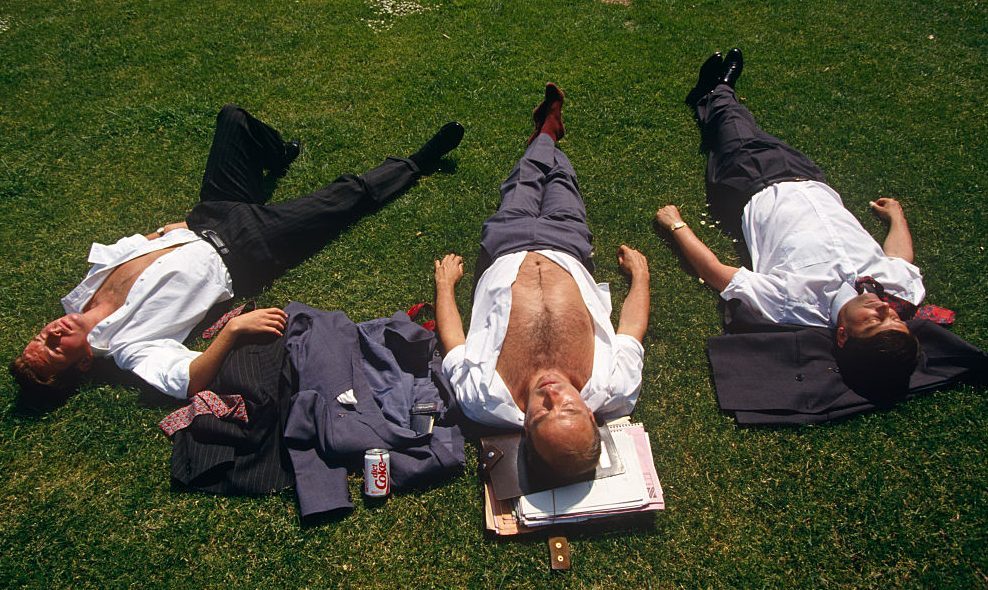
Thank God for the end of August. The end of half-arsed work and half-arsed holidays. One in six of us holidayed over this bank holiday weekend, chasing the last gasp of the summer. This week is back to school, back to business and, oddly enough, back to work for the masses of employees who’ve spent most of the summer idling at a desk.
Why do we put up with the mouse-wiggling?
The chatter of lunch breaks in the park or after-work beer gardens veers one way or another to the same topic: workers moaning about being trapped in the office and getting nothing done. It seems we haven’t progressed much in the twenty-seven years since Office Space was released. The complaints are the same: ‘No one was meant to live in a cubicle… I just stare at my desk, but it looks like I’m working… In a given week I probably only do about fifteen minutes of real, actual work.’ In August, these sentiments plague every office job more than usual.
The Spectator’s Predictor
Who will win the Holborn and St Pancras by-election?
The heatwaves don’t help. LSE researchers found that the June heatwave led to 24 million working hours being lost. Two-thirds of employees who sometimes work from home say they wouldn’t come to the office if the aircon wasn’t working. August can only be expected to have been worse. The tetchiness has infected every workplace, from browbeaten insurance men staring at their inbox, waiting to be sent home early by their line managers, to marketing girlies logging whole days of ‘mousewiggling’, moving their cursor across the screen to imitate activity and avoid the wrath of digital monitoring. There’s not even the Friday booze trolley to compensate for it any more.

It’s not even as if the office is full as it is. In recent years, some British offices have dropped to occupancy rates as low as 30 per cent, dropping to 17 per cent on Fridays. Brits work from home more than their continental peers, yet somehow we still manage to make less of the time we’re actually there. One in five workers admit to clocking off anyway.
So why do we put up with the mouse-wiggling? We’re not brazen enough to be like the French, who all upsticks to their gîtes for the whole of August. But even the work-obsessed mad men of New York and the Washington bureaucrats flee to the Hamptons and Delaware beach towns for a fortnight. And we’re definitely not like the Tokyo salaryman, who is forced to endure, battle-ready, still clad in his suit, in heat pushing 40°C. We’ve landed in no man’s land.
In Britain, we’ve established a typical hand-wringing culture about work and leisure. The whole business has been formalised under the corporate term ‘annual leave’ rather than ‘holiday’. It’s all too common to get a jargon-filled automatic email reply from another office reading ‘I’ve been on leave since EOD Monday,’ as if they had returned from a dangerous army deployment rather than working for a digital marketing start-up from their bedroom.
For working parents, August is the long slog of the school holidays. Plenty are ready to crack up by the middle of the month. Half of parents want the summer holidays cut to four weeks. Childcare over the break now costs, on average, more than £1,000 per child and half a million families say they hit ‘peak stress levels’. It’s no surprise, then, that two in five workers admit to pulling a sickie at some point over summer, including a third of parents who’ve used one specifically to cover a childcare gap. Why wouldn’t you if you could squeeze an extra ‘working from home’ day to look after your sprog and wiggle the mouse in full knowledge that half your colleagues have similarly slinked off?
Perhaps what’s oddest about our Potemkin productivity is that most Brits have holidays to spare and still don’t use them. Only a third of workers take their full holiday allowance. If you average across London workers alone, there are seven unused days per person. Plenty have the time and simply can’t afford to go anywhere with it. Hotel and accommodation prices have risen 40 per cent in the past five years, while seaside tourism spending is down almost a third over the same period.
This is no longer the world of Stanley Middleton’s Holiday, where 1970s families and tourists rubbed along cheek by jowl in crumbling east-coast boarding houses. A week of ‘annual leave’ in the summer might stretch to an all-inclusive day in Faro or Fuengirola, but that’s about it. We can’t even blame it on the school holiday. In France they run eight weeks, and parts of Italy stretch to fourteen – and both appear to manage with a shrug.





Comments