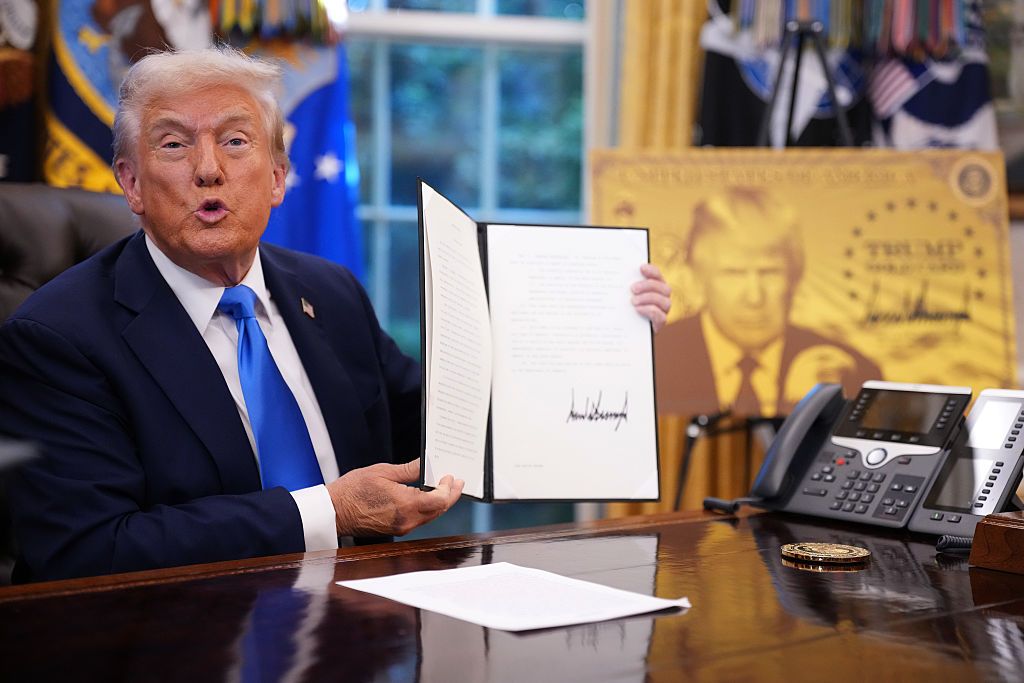
The Trump administration has proposed a fee of more than $100,000 for most H-1B visas. The usual suspects have come out with the usual reactions. Doug Brand, a senior immigration official in the Biden administration, called the move “catastrophic,” and the libertarian Cato Institute has warned of “devastating” consequences.
In lieu of abolishing the program altogether – my preference, but something only Congress can do – such a fee is long overdue. It’s chump change compared to the added value a truly exceptional foreign worker could generate, and at the same time would make the program less attractive as a means of importing cheap white-collar labor to undercut Americans.
The real purpose of the H-1B program is to provide firms with lower-cost foreign labor at scale
This latest proposed fee is different from the $100,000 fee the administration announced last fall on foreigners arriving in the US on an H-1B visa – that was enjoined by a federal court. The current proposal would apply to all H-1B visas subject to the numerical caps (universities are cap-exempt), not just new arrivals. That’s important because many foreigners who get H-1B visas are already in the US on some other visa, often as foreign students, and so would not have been subject to the earlier proposed fee.
The specific amount of the new fee would be $103,265. (no cents!) Now, I don’t have $103,265 sitting in my checking account, but Amazon, Google, JP Morgan, Apple, and the other top importers of H-1B workers certainly do.
Industry lobbyists have been telling us for years that the H-1B program is essential to enable the “best and brightest” foreign talent to come to America. At a time when tech companies are offering multi-million-dollar signing bonuses to star talent, what’s a measly $103,265 fee to help the government run the immigration system if you’re going to land one of the world’s best and brightest minds?
But that’s assuming the H-1B program is actually for the best and brightest. It certainly isn’t. The US Chamber of Commerce spent years retailing the same “best and brightest” fairy tale as the other pro-immigration lobbyists. But the Chamber – the leading voice for big business in the nation’s capital – in its lawsuit to stop last year’s proposed fee suddenly made an about-face and argued that, no, H-1Bs aren’t the best and brightest after all!
That’s because the real purpose of the H-1B program is to provide firms with lower-cost foreign labor at scale. H-1B workers are paid significantly less than comparable American workers, which is why the visa is so often used to replace American workers with foreigners.
Perhaps the most notorious case of this was when Disney fired its entire (American) IT staff in Orlando and replaced them with H-1Bs – whom the fired workers were required to train as a condition of receiving a severance package. This is legal and has happened hundreds of times across the country.
Congress would have to change the law to prohibit use of the H-1B visa to replace Americans, but the proposed fee would at least make that a less attractive option by making the foreign workers more expensive.
And the fee wouldn’t even necessarily cancel out all the wage discount from employing H-1Bs. If you divide the proposed fee by the usual six-year period of an H-1B visa, it comes out to about $17,000 a year. But the average H-1B salary in “computer-related occupations” a few years ago was more than $30,000 less than the median wage for that occupation. In that case, you’d have to double the proposed fee (to $206,530?) to truly make the H-1B visa less attractive as a means of importing cheap labor.
But even the more modest proposed fee would certainly affect hiring decisions in many cases. Of course, some employers would just turn to other ways to import cheap labor that aren’t covered by the new fee, such as the L-1 visa.
But there’s evidence that concern over higher H-1B costs and stricter enforcement is causing some firms to do more hiring domestically. If the proposed fee goes into effect, it will only accelerate that process, to the benefit of American tech workers.





Comments