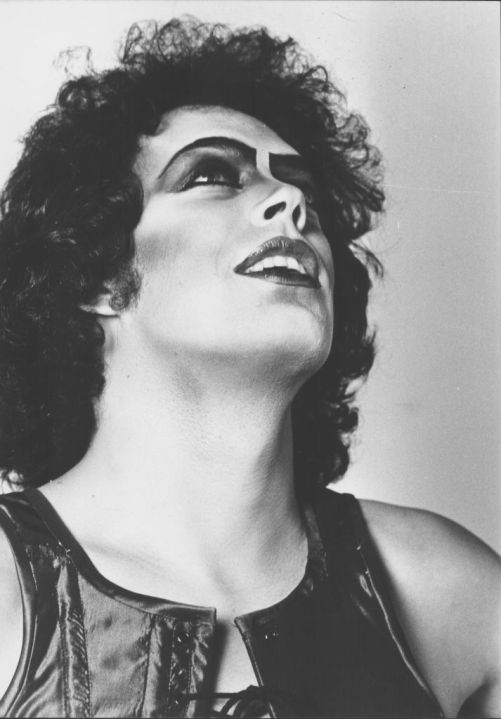
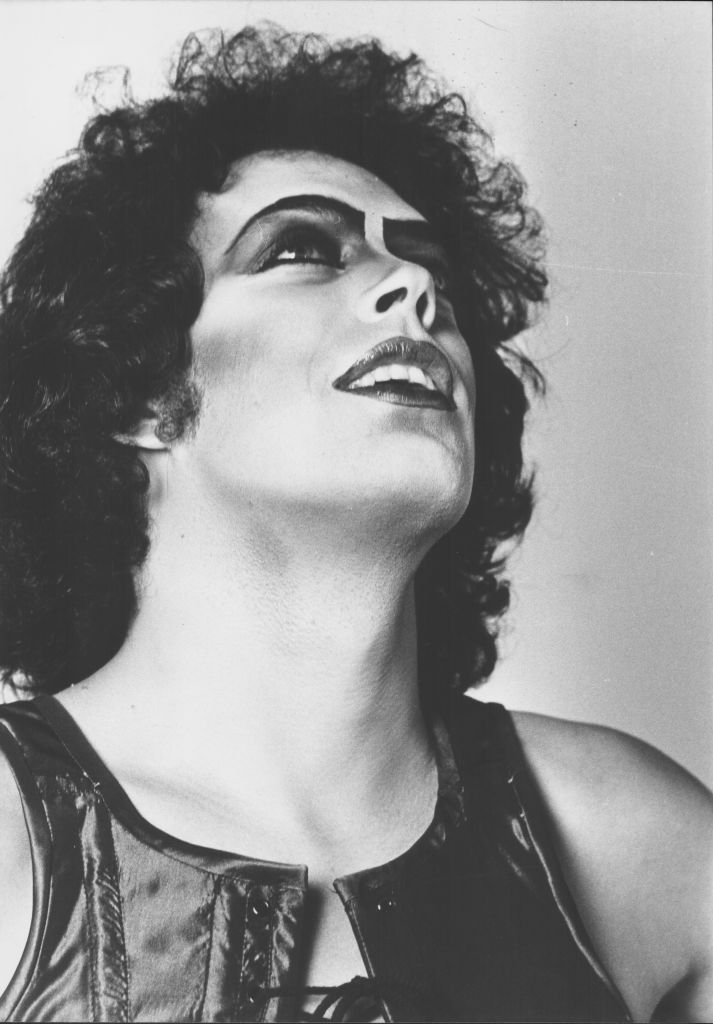
“Do Tim Curry proud,” my friend Simon said to me when he heard I was writing about him. Simon is, admittedly, a Tim Curry fan extraordinaire whose go-to karaoke song is “I’m Going Home” from the Rocky Horror Picture Show soundtrack, which Curry himself sang with mournful gravitas both on stage and in the 1975 film. Yet it also encapsulates the way in which the actor and singer, who has died aged 80, became an extraordinarily beloved part of the pop cultural landscape and remained that way for decades. Even a debilitating stroke in 2012, which forced him into a wheelchair and largely ended his on-screen career, could not damage the Englishman’s inimitable reputation as someone who made audiences laugh – a lot – and, when the occasion arose, tantalized or terrified them as well.
Curry also excelled at a comic performance that mixed prissiness with menace
It is almost impossible to pick Curry’s defining role. Many would, of course, suggest that his cross-dressing and sexually omnivorous Dr Frank-n-Further from Rocky Horror would more than qualify, and for a certain audience, his iconic and evil clown Pennywise from the television adaptation of It still remains his greatest contribution to the screen. (It certainly made Bill Skarsgaard’s performance in the recent film adaptations seem far less impressive.)
Yet Curry also excelled at a certain kind of broad comic performance that mixed prissiness with menace and made for spectacularly entertaining viewing. He was, for instance, unforgettable as a villainous concierge in Home Alone 2, hilarious as a particularly overblown Long John Silver in The Muppet’s Treasure Island and energetically Machiavellian in the unsuccessful film adaptation of Cluedo, unhelpfully renamed Clue. Even in a bad film, you knew that you were going to get a top-notch Curry performance, delivered with hammy gusto. And in a good film, you could find something far better: a strange but effective combination of theatricality and subtlety, in which swaggering was almost immediately undercut by vulnerability.
It is a sign of Curry’s little-remarked upon versatility that in 1975, he not only appeared in the Rocky Horror film, singing glam-rock ballads and seducing both Brad and Janet while clad in fishnets, but also collaborated twice with Tom Stoppard, once on a new adaptation of the classic comic novel Three Men in a Boat and once on Stoppard’s play Travesties, in which Curry played the Dadaist Tristan Tzara. And this desire, initially at least, never to be pigeonholed saw some bizarre but fascinating juxtapositions in his career.
Over the space of a few years in the late seventies and eighties, for instance, he released several albums, in which he mainly performed full-throated cover versions, appeared on stage in the Broadway premiere of Amadeus (as Mozart – he would have been a wonderful Salieri as an older man), played Satan in Ridley Scott’s Legend, had an effective role as a television journalist in the Ian McEwan-scripted The Ploughman’s Lunch and sang for his supper, quite literally, as a baddie in the musical adaptation Annie.
Some would argue that this was less a desire to conquer several distinct worlds simultaneously and more the actions of a man who was unable to make up his mind about who he was: character actor, musician, theatrical star or rogue. (Not for nothing did he call his 2025 memoir Vagabond, on the grounds that actors used to be lumped together with thieves and vagabonds in the 17th century penal code.) Certainly he made greater peace with his camp and absurd qualities as an actor by the nineties and became a go-to villainous presence, usually with a comic streak, in blockbusters like Congo, Charlie’s Angels and The Three Musketeers.
But even here he was still capable of restraint, as in the 2004 biopic Kinsey, and his barnstorming and triumphant return to the stage, as King Arthur in the Monty Python musical Spamalot, showed that he was capable both of excellent comic timing and of summoning the powerhouse vocal performance that had so thrilled audiences decades before when he had promised, in character as Frank-n-Furter, “in just seven days, I can make you a man.”
Curry was as known for his vocal performances and often absurd appearances in video game cut-scenes as he was for his theatrical and cinematic work. He often did not appear to be taking the dreck that he was in all that seriously – especially when it allowed him the chance not so much to go over the top as to look down on restraint from on high and laugh manically. But he also endeared himself to millions for decades, thanks to a sense, unlike his more earnest peers, that he was genuinely having fun in his career. This sense of joie de vivre was infectious and explains now why so many, including me, are missing him quite so much. Tim Curry was a true one-off, and now that he is, indeed, going home, we can only wish him godspeed on his way.





Comments