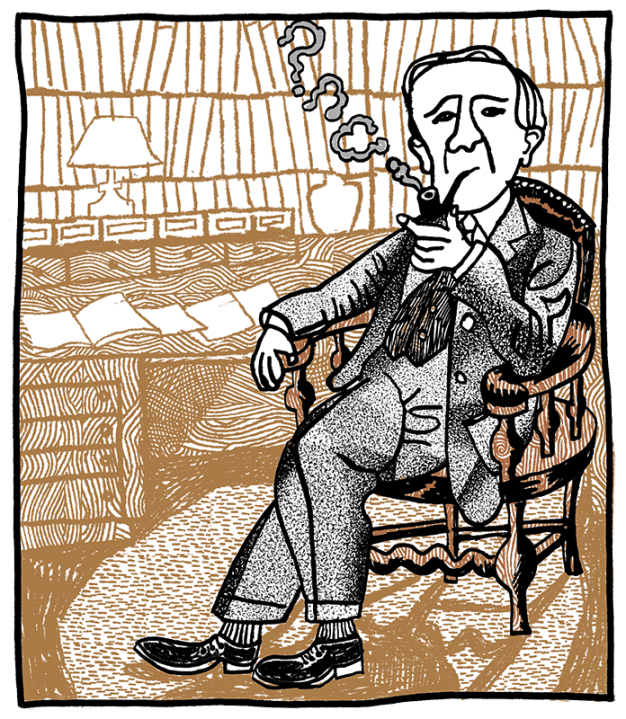
One route into the thorny question of J.R.R. Tolkien’s politics comes courtesy of Giorgia Meloni. Scarcely a profile of the Italian Prime Minister hits the newsstands these days without the Tolkien references piling up like so many windfall apples: The Hobbit plays put on with fellow-members of the Movimento Sociale Italiano (MSI) youth group back in the 1990s; the fixation on the Ringbearer’s sidekick Sam Gamgee (‘Much more useful than Frodo’); the annual birthday tribute to a man who ‘brought up so many of us with his stories’. Here, clearly is a Middle-earth obsessive, Tolkien’s work a direct prompt for political action.
Head a thousand miles north into the Scandinavian forests and the hard-right tocsin clangs even louder. To a generation of Norwegian black metal bands, who gave themselves names robbed from Tolkien’s back-catalogue (‘Gorgoroth’, ‘Darkthrone’ etc), The Lord of the Rings books seemed at times to read like a white supremacist’s almanac. Here, for example, is Varg Vikernes of Burzum (Orc-speak for ‘darkness’): ‘We were drawn to Sauron and his lot, not the hobbits, those stupid little dwarves. The elves are fair, but typically Jewish…’ Vikernes, by the way, spent several years in prison for the murder of one of his musical associates.
All this adds up, to the point where many a left-liberal, imagining the blond-haired, blue-eyed Riders of Rohan trampling their dark-skinned goblin-enemies into the dirt, diagnoses a bad case of (albeit cunningly disguised) fascism. Which, of course, is nonsense.
He was a man who gloried in his backward-looking opinions. ‘Progress’ was bad. Statism was worse
Tolkien was a Catholic and a reactionary and a royalist, but he was not a fascist. He deplored apartheid, detested racism, told his publishers that a German translation of The Hobbit could ‘go hang’ when questions were asked about his Aryanism, and disliked cultural imperialists: informed that an eighth of the planet’s population spoke English he remarked that it was a ‘damn shame’.
All the same, there is no getting away from Tolkien’s deep-dyed conservatism, for it hangs over his world like sea-fret. Beyond his work, he was a man who positively gloried in his backward-looking opinions. ‘Progress’ was bad. Statism was worse. The two combined were a virtual guarantee of disaster. If the foregoing makes him seem hidebound to the point of caricature, then, on the other hand, this was an idiosyncratic brand of conservatism, always capable of veering off in unexpected directions and sometimes producing attitudes that sit oddly alongside the more celebrated patrician utterances, such as: ‘Touching your cap to the squire may be damn bad for the squire, but it’s damn good for you.’
Inevitably, Tolkien’s politics were rooted in upbringing. As a late-Victorian child of the lower middle classes he believed that the bourgeoisie were stuck between a rock and a hard place, organised labour on one side of them, the stratospherically well-off on the other, with a vengeful government trying to undermine them with punitive rates of taxation. The expressions of caste solidarity he allowed himself were always thoroughly middle class. A wartime scandal about tobacco shortages in which suppliers were thought to have privileged certain of their customers found him expostulating: ‘They ought to be in quod. But at the upper and lower levels of the social scale the Govt. still has kid gloves. It is the poor old Middle Classes (as usual) that get put through it! […] Commercialism is a swine at heart.’
This may sound odd coming from the grandson of two small provincial tradesmen, but by ‘commercialism’ Tolkien means high-end corporatism. Had he lived in 1950s France he would doubtless have been a Poujadist. To a tenacious support for middle-class interests could be added a distaste of technology, the materialism it abetted and the political ends to which it could be harnessed. Tolkien doesn’t seem to have read the American political philosopher James Burnham’s The Managerial Revolution (1941), but he would have agreed with Burnham’s argument that in the future the world would be run not by tyrants and generals, but by managers, administrators and technocrats, their deliberations at all times aided by machinery.
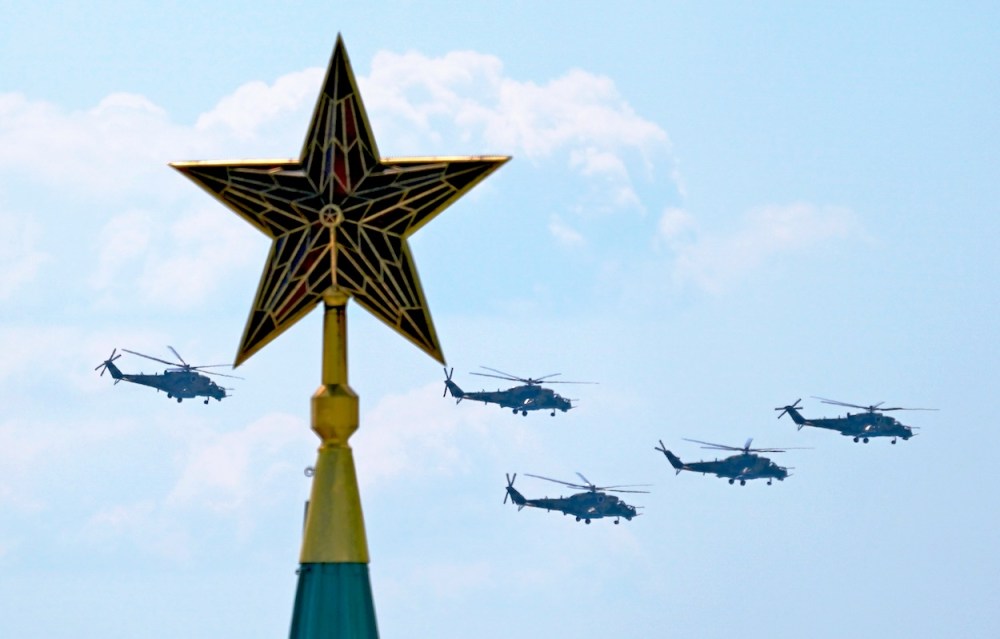
All this has an echo in The Lord of the Rings, where the slave states of Mordor and Isengard are technology-driven and the Ring itself may be regarded, at any rate mythologically, as the supreme machine. The materialism he so disliked was a bad thing for several reasons. Its surface manifestations might only extend to unwanted noise and clutter, but its effect was to demoralise the people it caught up in its grasp. It is not just that the modern world is a swindle, there to bemuse and degrade its inhabitants, but that it is a dangerous and delimiting swindle whose incremental advance will rob people of one of their most precious qualities – a sense of self.
So politics, to Tolkien, is ultimately about individual and collective liberty. But what did he think this consisted of? After a conversation with his friend Charles Williams about ‘the difficulties of discovering what common factors if any existed in the notions of freedom, as used as present’, Tolkien declared that there weren’t any, that like so many abstract nouns the word had been so overused that it was now ‘a mere emotional dose for generating heat’.
As for freedom’s defenders, there was no point in putting your trust in individual politicians for their motives would always be suspect. Scanning press photographs of the Allied leaders at the Tehran Conference in November 1943, he maintained that Winston Churchill ‘actually looked the biggest ruffian present’.
There were other ways in which Tolkien, although an avid reader of the Daily Telegraph, differed from the majority of its readers. If he supported Franco in the Spanish Civil War, it was on religious grounds – the pious horror of a Roman Catholic appalled by reports of church-burnings and the murder of priests. The obliteration of Hiroshima terrified him (‘So horrifying one is stunned’). Significantly, his hostility to post-war calls for retribution against the Germans had a grounding in class: ‘The Vulgar and Ignorant Cad is not yet a boss with power; but he is a very great deal nearer to becoming one in this green and pleasant isle than he was.’ The common man, alas, was increasingly tending toward the commonplace.
At bottom, Tolkien seems to have carried into his views about politics the moral attitudes of the boys’ school story, drawn from a landscape of fair play and shared values, peopled by heroes, cads and gutter-boys, in which right defeated might and the underdog invariably had a chance and yet traditional hierarchies always came out on top. His ideal world is, effectively, the landscape of G.K. Chesterton’s mock-medieval ‘distributism’, with cows and smallholdings all round but squire still ruling the roost and existing class distinctions mostly preserved. Equally, his great fear remained the kind of society prophesied by Hayek’s The Road to Serfdom (1944), a polemic arguing that socialism leads to despotism, which he would certainly have read about in right-wing newspapers.
The result, you suspect, was a kind of Tory anarchism, in which a love of the past combined with a reluctance to be ordered about, the presumption of social superiority was resented and the suspicion that ordinary people were getting above themselves roundly deplored. Tolkien once confessed that his political opinions ‘lean more and more to Anarchy’. He would, he cheerfully continued, execute anyone who uses the word ‘state’ other than with reference to the inanimate realm of England and its inhabitants.
Tolkien once confessed that his political opinions ‘lean more and more to Anarchy’
How did these attitudes translate to The Lord of the Rings? Or did they translate at all? The Tolkien critic Patrick Curry once characterised the political arrangements of Middle-earth as a ‘messy pluralism’. After all, the War of the Ring brings together a city state (Minas Tirith), a feudal kingdom (Rohan), two dictatorial war-lords (Saruman and Sauron), a Hobbit republic, a wood full of trees (the Ents) organised along gerontocratic lines, a dwarf fiefdom with a mercantile underpinning in design and precious metals, a maritime mercenary army (the Corsairs of Umbar), an Oriental caliphate (the Haradrim) and several more highly ambiguous entities.
What, though, are all these individual and collective units, fighting for? On one level, clearly, the man-dwarf-elf-ent-hobbit alliance is a way of ensuring that good defeats evil. But good can only triumph by acquiring and exercising authority, an abstract noun whose value throughout The Lord of the Rings is highly contested, if only because its whole driving force is resolutely anti-heroic. Heroes are not to be trusted: we are encouraged to admire Gandalf, Aragon and Galadriel because when offered power they decline it. And if none of them wants, or can be trusted, with the power of the Ring, then the responsibility is the hobbits.’
Interestingly, this takes us back to Meloni, who once remarked: ‘Above all, Tolkien has given me this understanding that power is not a conquest but an enemy, a problem that you must keep under control, on a leash.’
Meanwhile, there is evidence that Tolkien was interested in specifics as much as generalisations. One of his most intriguing minor works, the short story ‘Leaf by Niggle’, first published in 1945, and featuring an artist of whom it is said that ‘the laws in his country were rather strict’, is usually interpreted as a fable of the creative process. Yet the constant references to rules and inspectors and workhouses insist that is a projection of the feelings that many a Conservative harboured towards the British state machine of the 1940s, as much a product of its time as, say, Evelyn Waugh’s dystopian Love Among the Ruins (1953) or the Larkin stories of H.E. Bates.
Sauron aside, the real enemy is Clement Attlee.
D.J. Taylor’s The King Under the Mountain: In Search of J.R.R. Tolkien is out next month.




Comments