
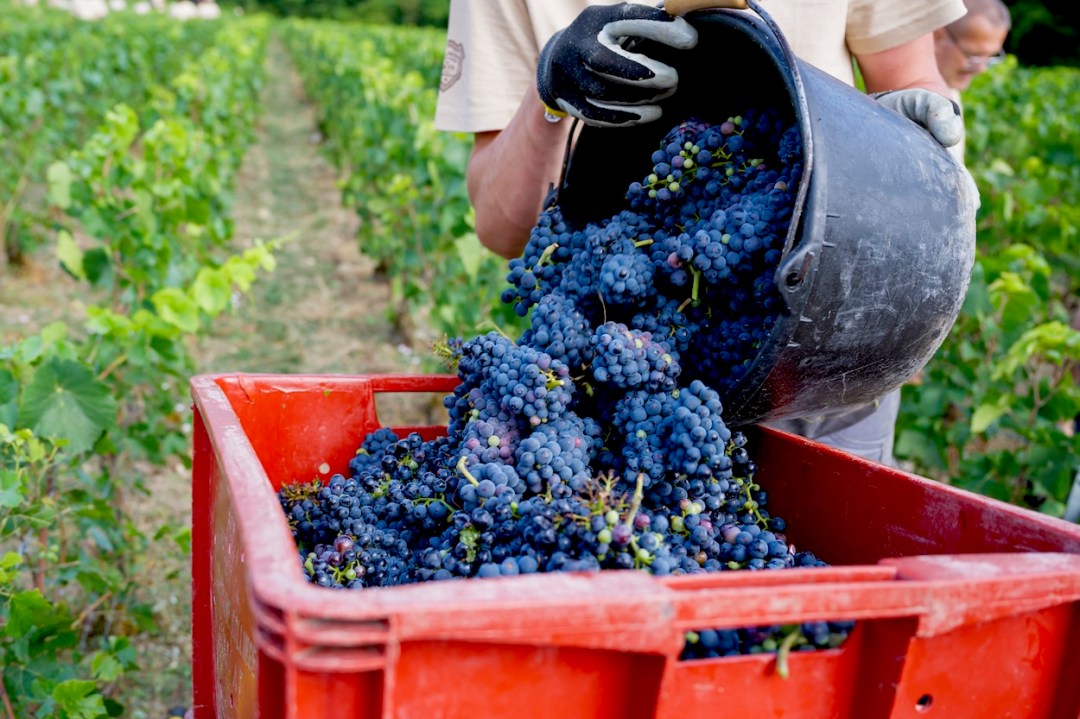
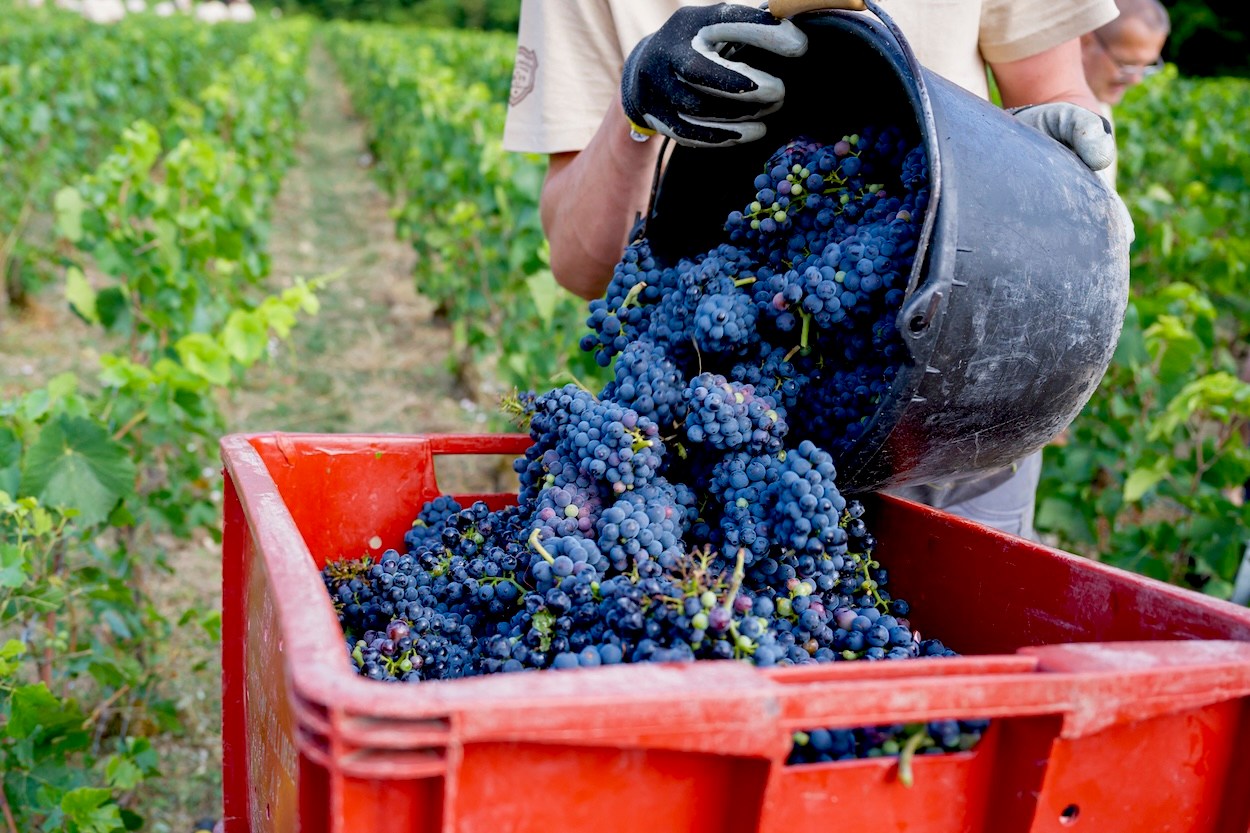
It has been a punishing summer in France. Heatwaves, drought and forest fires have driven away tourists and made life hell for firefighters. The nation’s winemakers have also had an anxious time of it, but there is now cautious optimism that the exceptional weather may work in their favour.
Since late May, France has been swept by a succession of heatwaves as well as a series of destructive wildfires. The worst of these was in the Gironde, west of Bordeaux, which lost 42,000 hectares to flames. Swathes of Provence have also been ravaged by fires in recent weeks.

As a result of the fires and the heat, France’s Ministry of Agriculture decided to postpone its annual grape harvest forecast from early August to early September.
The announcement was welcomed by the industry. Jérôme Despey, a winegrower in the Hérault department and the vice president of FNSEA, France’s biggest agricultural union, said: ‘Due to the heatwave, drought, thunderstorms, and wildfires, harvest forecasts – which are based on observations and analyses conducted in early July – are highly uncertain.’
France has never recorded a summer as continually hot as 2026 with temperatures regularly exceeding 40 degrees. Rain has also been scarce – down 67 per cent nationally – and July was the third driest since 1959.
One consequence is an early grape harvest in Burgundy, Beaujolais and the Centre-Val de Loire region. Another is the damage to vines caused by the drought. Only around 15 per cent of France’s vineyard areas are irrigated and so the majority have suffered from the heat, experiencing what Jérôme Despey describes as ‘defoliation’.
In Provence, some winemakers began harvesting their grapes last week and it has been a dispiriting task. In the town of Correns, a wildfire consumed about 15 per cent of their vines in late July.
A reporter from Le Figaro newspaper visited Correns this week and found a scene of desolation. Trees are charred and vines withered. One winegrower said: ‘Normally, the harvest is a pleasure… I can’t wait for this harvest to be over.’
The biggest fear among some winegrowers is that their harvest will be affected by ‘smoke taint’. It is a condition well known to Californian winegrowers who have endured numerous wildfires this century.
In a 2017 article, the American magazine Wine Spectator said that grapes that have been exposed to smoke can’t just be rinsed clean. ‘When wood burns, it releases aroma compounds called volatile phenols,’ explained the magazine. ‘In the vineyard, these compounds can permeate the grape skins and rapidly bond with the sugars inside to form molecules called glycosides.’
One can’t detect if the grapes have been tainted by smoke until the fermentation process, and sometimes not until after the wine has been bottled. According to one Californian wine merchant, you’ll know if your wine has been tainted because it tastes like ‘licking wet ash trays’.
Red wine is more at risk from smoke taint because their skins are in contact with the must – the unfermented juice pressed from grapes – for longer.
The winemakers in Correns are administering to their harvest a special charcoal-based treatment designed to eradicate smoke taint. But one cellar master admitted ‘that we’re all a bit worried and a bit shaken’.
The pessimism in Provence isn’t mirrored in the south-west of France. Despite the wildfire in the Gironde, the Union des Grands Crus de Bordeaux (UGCB), which represents 126 châteaux in the region, is bullish. Although the fires were widespread in the department, they didn’t reach the major estates in the Médoc and Graves regions.
In a statement released on the last day of July, the UGCB declared that ‘no impact on the quality of the grapes has been observed to date’. It added that this was also the case in 2022 when serious wildfires ripped through the region.
On the contrary, continued the UGCB, they predict that 2026 will be ‘highly promising in terms of quality’.
The dry weather has prevented serious disease and it also promotes high sugar concentration in the grapes. Although these same climatic conditions can lead to the possibility of dehydration and sun damage, the good news is that the heatwave has vanished.
Cooler temperatures and wetter weather have arrived in France this week, allowing the vines to rehydrate and boosting the late-ripening grape varieties. Chablis winegrowers started harvesting earlier than usual this month and they are reporting that while the harvest is slightly down the grapes will provide ‘an exceptional vintage’.
They are also pleased with the harvest in the west of France, predicting that the vintage will be ‘sun-kissed’.
In other words, 2026 is likely to be a year of quality over quantity for winegrowers in France.






Comments