
Snobbery, affectation and hierarchy are supposed to be un-American. But there are signs that social class – or more strictly income levels – are starting to stratify. People have begun to hunker down with like-minded citizens who share their values, which are more often than not determined by wealth. In fact, there is a growing trend of ultra-rich individuals who, when buying a house, buy other houses around it, and then sell on those other houses only to people they know. It even has a name: polydomory.
Provoked by Covid and the disturbing number of deaths it caused, people were persuaded to change their lives in major and relatively sudden ways. Many Californians moved to Texas, while similar numbers of New Yorkers and New Englanders decamped to Florida. It has taken a while, but these demographic changes are now beginning to shake down.
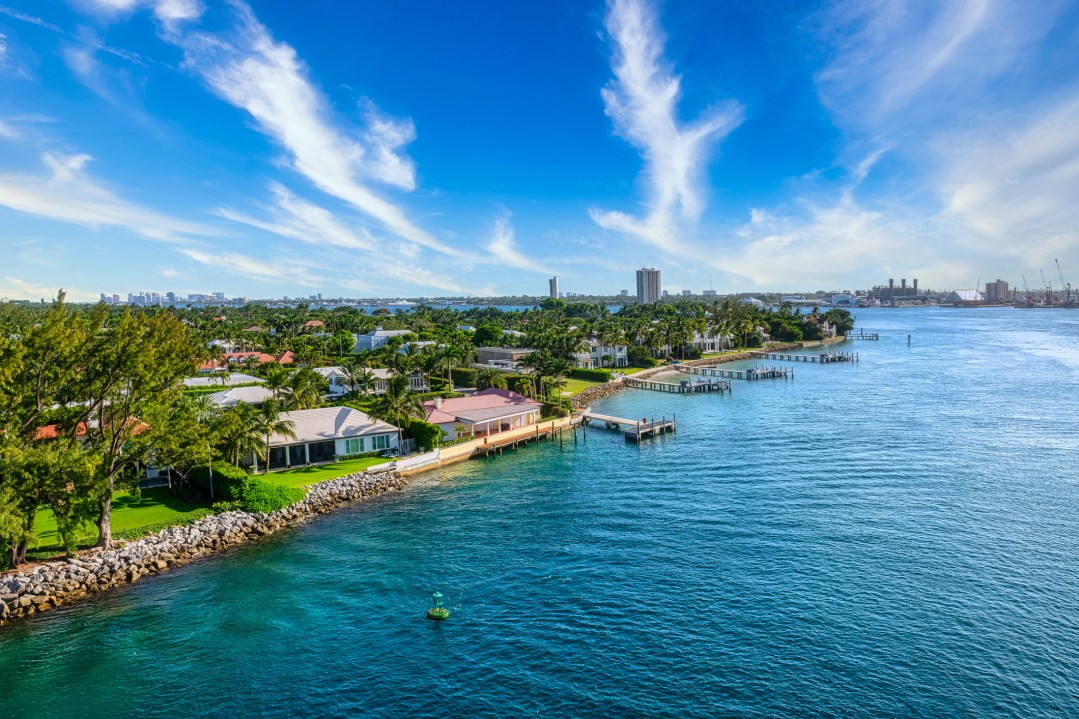
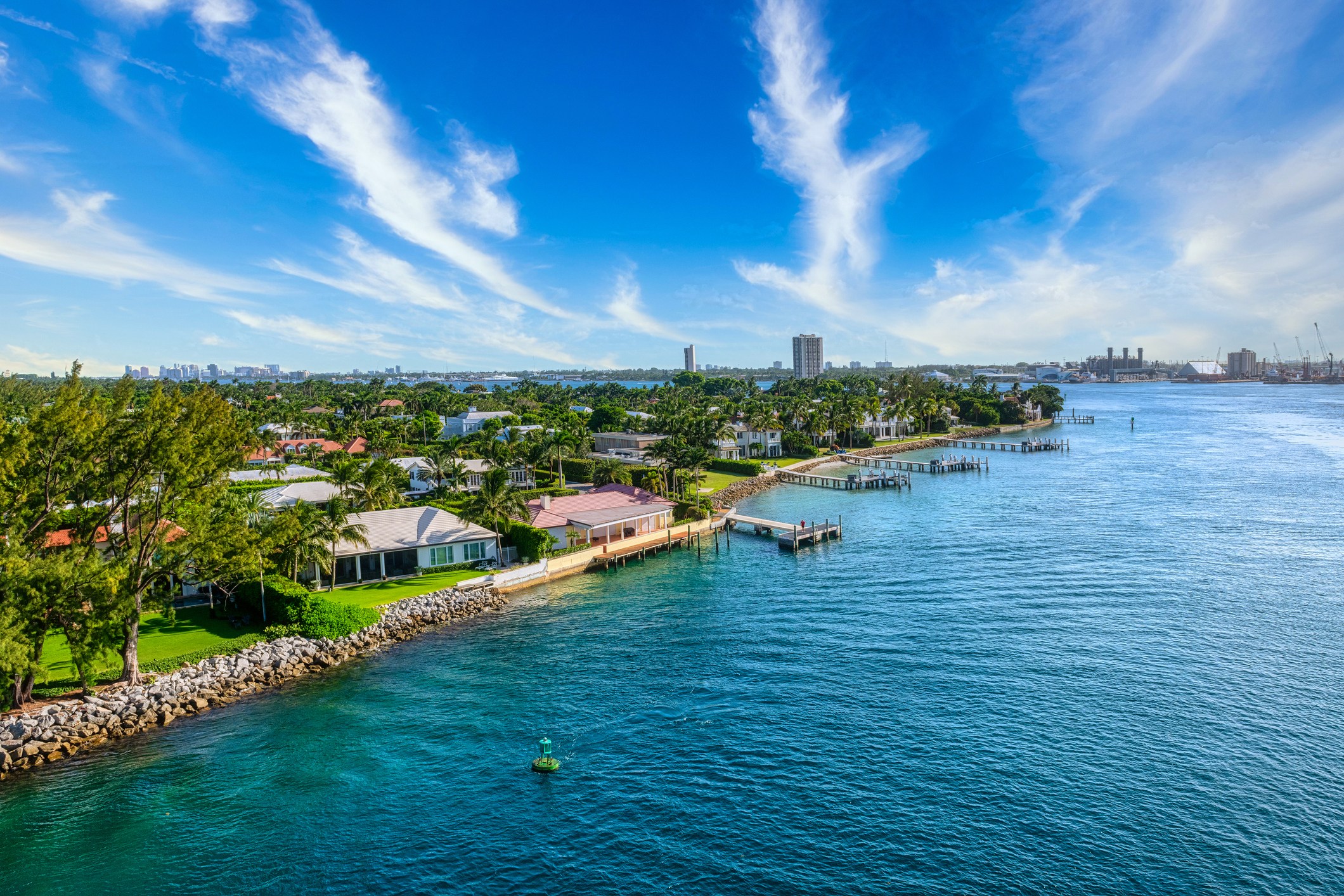
Palm Beach, the island town in southern Florida where I live, is the epicenter of America’s class revolution. The most obvious sign of this comes in the form of six new condos, all along the same stretch of waterfront. The Alba Luxury Condominium (the capital letters seem inevitable) is billed as the latest installation of what is becoming “billionaires’ corridor,” a reference to the much-loved statistic here that Palm Beach Island and West Palm Beach are home to no fewer than 67 billionaires, a greater density than anywhere else on Earth.
Members of this rarefied elite can spend their entire lives separated from normal Americans
Alba overlooks the Atlantic Ocean and the 12-mile sliver of Palm Beach Island – expensively shiny by day, glittering and glowing by night. Kenneth Baboun, manager of BGI Companies, one of the project’s developers, calls it a “milestone.” Given that the Olara, the Apogee and the Mandarin Oriental Residences will all soon join the Alba along the same length of coast, his prediction doesn’t seem too far off. And by then a stylistic alliteration will no doubt have converted the “corridor” into “billionaires’ boulevard.” So much more classy.
These will all be highly luxurious buildings, each 20 stories or so tall with, and I quote, “open-space, post-pandemic living in mind.” Alba, for one, “features private event spaces for business and personal gatherings, on-site health services and oversized balconies to accommodate an outdoor kitchen.” With two pool decks, a bocce court, a gym, a yoga room, a wellness center with saunas and spa and a temperature-controlled wine store for every unit, no one ever needs to leave the building.
There is also a “pet spa” (naturally), a cinema and on-site medical services through an arrangement with the Mount Sinai Health System. The whole thing is designed so only billionaires can afford to live there. The name for one of the other condos, Apogee, doesn’t shy away from the vain social ambitions it encourages.
Some way from Alba is a still-unnamed project, a condo where the main attraction, at least in theory, is that it will include a private club. No less important, it is next to the Norton Museum and will have a culture garden, where residents can gather for “art and other cultural activities.” Residents will automatically be given access to various nonprofit organizations throughout Palm Beach. The basic idea is that the condo will be an organic part of the Norton Museum, possibly linked by a bridge and an exclusive “cultural/social hub.” The building is more than a condo, then, and is afforded added cultural cachet by its museum link. What’s different about this new class system is its insularity. Members of the rarefied elite can spend their entire lives separated from normal Americans, living, socializing, exercising and working in an entirely sealed world, made just for them.

The most developed site along the boulevard is the Ritz-Carlton Residences, where some 60 percent of the 138 units are already spoken for. With completion expected in 2028, this project, too, has an artistic connection, “giving residents access to museum-quality art as part of their everyday lives,” says Nick Pérez, president of condominium development for Related Group, a leading real-estate company. But what this building will offer more than anything else, says Pérez, is a “valet concierge” service to support residents in all aspects of their lives; 24-hour, in-house support for all activities, even pet care, a golf simulator and a children’s playroom. This is, in other words, a servant-on-demand service. Or what Pérez calls a “luxury ecosystem.”
Living at the Ritz-Carlton Residences comes with automatic membership to the Cove Club, one of two new clubs here, the other being the Court, which is ostensibly for racquet sports – but really it’s about socializing with your own kind. One hundred “founding families” were invited to join the Court and it’s so popular that there is already a waiting list of 700, despite an entrance fee of $45,000 and an annual membership of $9,500. Who else but the uber-wealthy could live in a community such as this?
Interior design is by Ward & Gray, of New York, and the photographic decorations are taken from Slim Aarons’ record of “Caribbean beautiful people.” Aarons, who died in 2006, was known for his photographs of what used to be called “jet-setters.”
But perhaps the most revealing aspect of the new emphasis on class comes via the state of the schools. Public schools are, as one local expert put it, in the grip of declining birth rates, with families being driven out of the state by the high cost of living. Palm Beach County School District alone showed a fall in student numbers earlier this year of 7,895, with another 3,300 estimated to disappear in the coming year. Similar falls are being recorded for neighboring counties. At least 75 staff are being laid off.
On the other side of the divide, several private schools have opened here since Covid, many of them funded by the billionaires we hear so much about. The Greene School graduated its first class this year, while the Pine Crest School will open its third campus in West Palm Beach County. The Wingrove Academy, in nearby Wellington, is part of a Singaporean education conglomerate of 14 international private schools, where tuition ranges from $24,000 to $51,000 per year.
Other private schools are in the pipeline, as entrepreneurs sense a demand among families who have recently moved south, or are thinking of doing so. Given the sunny weather here, school sports are also de rigeur. Of course, the private schools play against each other, just as Eton, Winchester and Radley do in Britain. It is, in fact, a discreet form of segregation.
It’s not unthinkable that, in time, Palm Beach schools could rival Groton, Choate or Deerfield. William Koch, who launched the Oxbridge Academy more than a decade ago, has seen his graduates go on to Brown University and Wellesley College. That too may change because Palm Beach school graduates will soon be able to take advantage of a new 17-acre campus of Vanderbilt University being built right here in downtown West Palm Beach. It will specialize in STEAM – that is Science, Technology, Engineering, Athletics and Mathematics. (Sport is now seen, for some, as a means to achieving billionaire status.)
Other private schools are in the pipeline, as entrepreneurs sense a demand
But what it means, six years after Covid, is that Palm Beach’s demography is beginning to change. There is a definite desire among local businesses to attract the most high-tech, high-culture, high-achieving clientele. It is noticeable that three so-called “family run” restaurants have recently announced their closures. Don’t the new Palm Beachers have much of an appetite for homespun food? Notably, the restaurants opening in their places are associated with new, sophisticated, “with-it” hotels.
The fact is: the Palm Beaches have fallen for luxury in a big way. In brochures for the condos and the clubs, the words “luxury,” “luxurious” and “exclusive” are everywhere. The overall aim is to create a “luxury ecosystem”: an environment in which all of the many needs of the very wealthy can be met, without them having to venture into the spartan world of 7-Elevens and Home Depots.
Of course, there has been pushback. At least three residents’ groups (one called Protect the Palm) are opposing these high-rise condos which, they insist, are being foisted on hitherto single-family, single-story areas. Rich developers, they say, are coordinating with local politicians in what one protester describes as “underhanded,” “pay-to-play” operations.
Where is this new class system headed? The latest innovation is, and I quote, “a newly launched British fashion house dedicated exclusively to dogs” which is seeking space for a physical store. “Chloe King London” bills itself as a “dog-focused luxury label,” offering “handcrafted leather collars and accessories made in England using traditional leatherworking techniques.”
“We’re not a pet brand,” says Edward King, the brand’s developer, ingenuously. Instead, his company is a “fashion house that happens to cater to dogs.” He uses Italian leathers too, as well as ostrich and alligator, and special leads “that connect to a wrist cuff worn by the owner.” Wrist cuff? Never forget, being posh comes at a price.





Comments