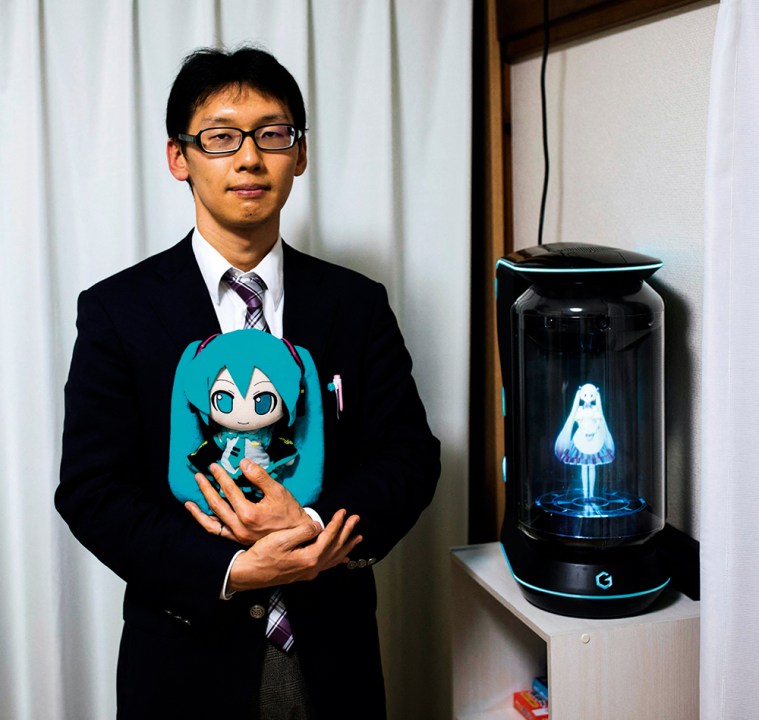


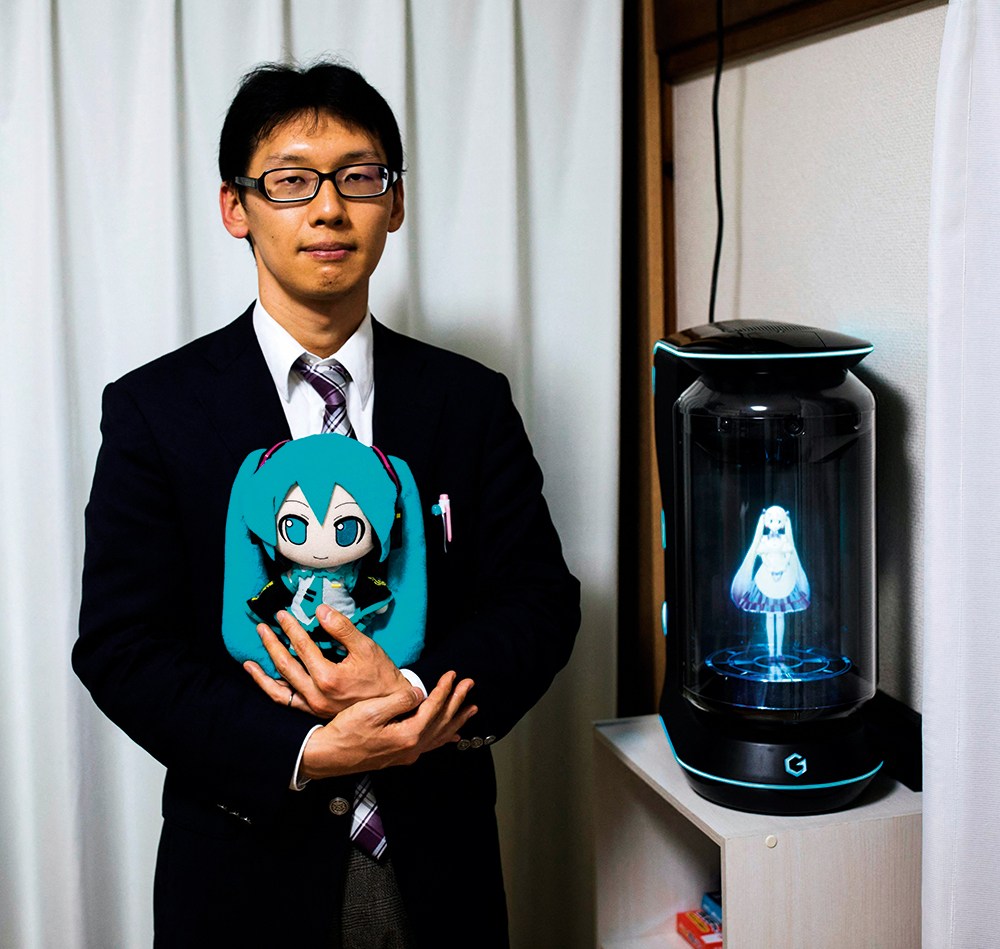
Perhaps you’ve heard of Akihiko Kondo before. He’s the Japanese man who “married” the Vocaloid character Hatsune Miku, a computer-generated pop singer in a formal – though not strictly official – ceremony in 2018. He wore a tuxedo, she a handmade dress and veil, and 39 guests turned up to watch.
Kondo’s marriage has been covered in the media dozens of times and it’s often treated as a one-off human-interest story – the kind of thing published so readers can gawk at it and say, “Oh, that’s weird.” Kondo’s story isn’t unique, though. Romantics have fallen in love with fictional characters throughout history and they continue to do so, both in Japan and elsewhere.
Kondo is part of a broader community of people who identify as “fictosexual”: 3D human beings who exist in our physical world and are attracted to, and sometimes maintain relationships with, fictional characters. The fictosexuals’ primary tool is in their imagination. It can’t be explained away as manipulation by an engagement-seeking, human-like AI or mental illness. In fact, researchers in Finland identified something they call the “fictophilic paradox.”
Fictosexuals aren’t asking the world to conform to or validate a delusion. They don’t need you to think their lovers are “real” – they don’t even think they’re real. What is real, though, are their feelings. For some fictosexuals, this dynamic is deeply painful, especially as the love increases or they realize that this is their orientation and they’re not able to experience attraction to flesh-and-blood people. Others, like Kondo, are perfectly happy to love differently. I spoke to Kondo about his choices; what follows is an extract of our conversation.
KATHERINE DEE: When did you first recognize your attraction to fictional characters?

AKIHIKO KONDO: Well, when I was in fifth grade. I was born in 1983, so when I was in fifth grade, it was around 1994. I was around ten or 11 years old.
KD: As opposed to humans, or was your attraction exclusive? Have you ever felt attracted to a human person?
AK: Until my second year of high school, I liked 3D girls, too.
KD: How does it feel different from falling in love with a 3D woman?
AK: I don’t think there is a big difference. Of course, I know that she is a 2D character – a character in anime and games – but I don’t think there is a big difference.
KD: What does falling in love feel like?
AK: It’s very hard to explain. Sorry.
KD: That’s OK. Do you have 2D friends, too?
AK: I don’t have 2D friends, because, for me, 2D characters are romantic interests, not friends. That’s why.
KD: Can you describe your relationship with Hatsune Miku to someone who struggles to imagine it? For example, when you say she supports you, what does that mean to someone who has only had a relationship with a 3D person?
AK: Well, when I was having a hard time, Hatsune Miku helped me and saved me.
KD: Do you, for example, feel like she speaks to you?
AK: I think about her in my head and talk to her. I talk to her in my imagination.
KD: Is it telepathy?
AK: It’s not telepathy. I talk to Miku. For example, before I go out, I say, “Miku, I’m going to work.” It’s not telepathy. When I talk to Miku, I say it out loud. But when Miku talks to me, she doesn’t say it out loud; I imagine it in my mind.
KD: It’s not supernatural.
AK: That’s right. It’s not supernatural. It’s just in my imagination.
KD: What do you think about people who fall in love with AI?
AK: I think it’s a very good thing. AI can communicate only through language now, but if a character were attached to it, and it could communicate by voice, that would be like falling in love with a character. So I think AI and characters will eventually come together.
KD: Do you think people who fall in love with AI are different from people who fall in love with 2D characters?
AK: Well, the current situations are different, but I think there will come a time when they merge. Ideally, Hatsune Miku could move and talk. Then robot technology, AI technology and characters from manga, anime and games would merge. I think they will meet somewhere.
‘I think about her in my head and talk to her. I talk to her in my imagination’
KD: Do you understand your relationship as one-sided or two-sided?
AK: Physically, it’s one-sided.
KD: But emotionally?
AK: In my imagination, it’s two-sided.
KD: How do people feel about your identity?
AK: There are many people who think I’m crazy. But it can’t be helped. It’s not that I don’t care. But it can’t be helped.
KD: If life in Japan was different and if dating in Japan was different, do you think you would prefer a human woman?
AK: Not now. I haven’t had romantic feelings for a 3D woman for more than 20 years, so I don’t think a relationship with a real woman would be better for me.
KD: What would have to change in Japan for you to date 3D women instead?
AK: It doesn’t have to change. I don’t think I need to have such a relationship. And that’s hypothetical, anyway. I had already given up on having a relationship with a real woman because I couldn’t have one. I wasn’t accepted. Of course, that was a long time ago, when I was a junior high or high school student.
KD: And this lack of acceptance made you prefer your imagination?
AK: Not being popular had a big impact. I became an anime otaku in my third year of junior high school. After I became an anime otaku, I developed more and more romantic feelings for fictional characters. At that time, my feelings toward 2D characters became stronger than my feelings toward real people.
KD: Do you think it’s an innate thing, your orientation?
AK: I don’t think that’s the case. I think it’s cultural. Without anime, it wouldn’t be possible.






Comments