
Harry Mount has narrated this article for you to listen to.
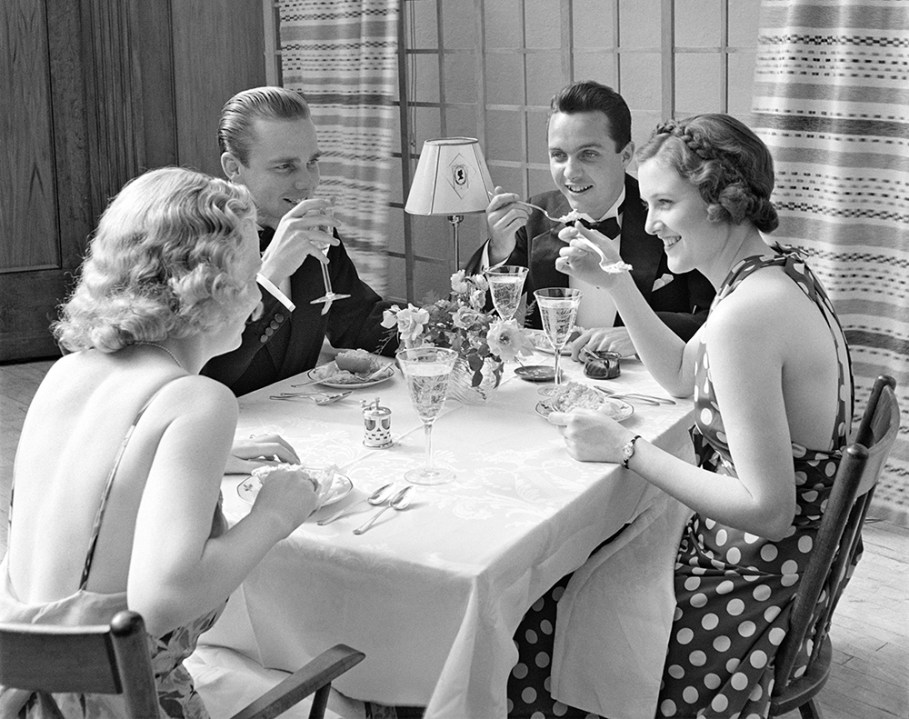
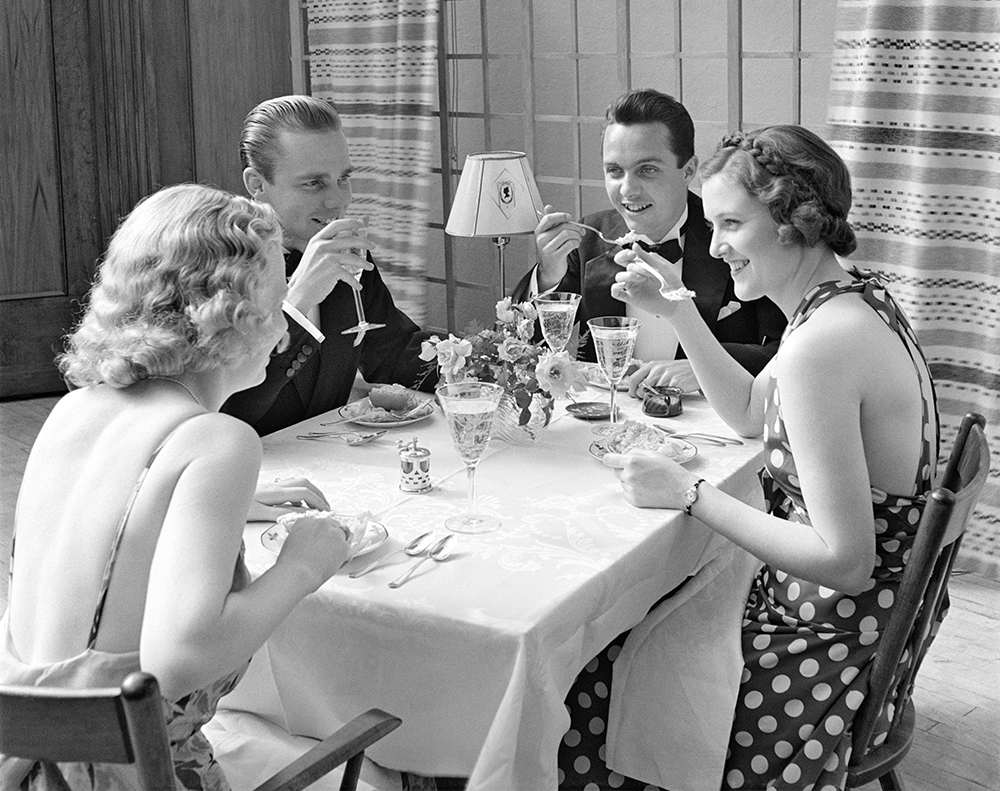
It’s time to put the dinner party out of its misery. Oh, and the awards dinner, dining with the cruise ship captain and any evening gathering where you sit next to strangers for three hours.
Does anyone actually enjoy dinner parties, apart from raging egomaniacs, who have their victims trapped until 11 p.m. (10.30, if you’re lucky)? Whoever thought a random allocation of two neighbours for hours would work as a system for amusement? Nine times out of ten, it’s complete agony.

I ask you where you come from and what you do. Unless you’re that raging egomaniac, you ask me the same. And then we scrabble with mounting desperation and boredom to find common ground – to raise the conversation from mind-numbingly dull to ‘entertaining’. Thus the false laughter and manufactured shrieks of delight: we’re trying to convince ourselves we’re having a good time.
Silent diners are worse than the chatty loudmouths: you have to ask them even more questions. And God save me from another ‘ting-ting-ting’ dinner – as former Spectator editor Alexander Chancellor called them – where the host taps their glass and you’re invited to address the table. Egomaniacs love ting-ting-tings: they get to bore everyone, not just their two neighbours.
Our attention spans are shot by the internet. We’d all prefer to be looking at our phones than making banal chitchat. Curiosity is dying.
It wasn’t that much better in the old days but at least people were a bit better-informed and more outward-looking. In ‘Vers de Soc-iété’, Philip Larkin dreaded evenings spent ‘Holding a glass of washing sherry, canted/Over to catch the drivel of some bitch/ Who’s read nothing but Which’. These days, the bitch won’t even read Which?. She’ll have read emails about herself and her work. But her empty mind won’t prevent her banging on about her new tablescaping venture or her daughter’s sublime xylophone skills.
As James Marriott writes in his new book, The New Dark Ages, the end of reading is bringing on a post-literate society. A tragedy – but might there be a silver lining to the internet turning us into self-contained, digital silos, plugged into our earphones? In our new isolation, might we agree never to gather with strangers again around a table for three courses and three hours we’ll never get back?
There’s a reason why friends were invented. You meet for dinner and know you’ll have a good time; you don’t have to spend the first hour recounting your CV and living arrangements, and the next two hours wondering when it’s acceptable to leave.
Dinner parties were born in a pre-digital age, when people had fewer options to entertain themselves; when they’d been brought up to ask questions and make good conversation; and when it took a long time to get anywhere – so once you’d got somewhere, it made sense to stay there for a few hours. Now, particularly with Ubers and electric bikes, you can get to and from someone’s house in a moment. So why stay for three hours? Worse is when the host says: ‘Please get here early-ish – seven?’ That never means you’re allowed to leave early-ish. So you end up being there for four hours.
Our attention spans are shot. We’d all prefer to be looking at our phones than making banal chitchat
I once had a brave colleague who I’d overhear receiving dinner invitations. ‘Might I ask who else is coming?’ he’d ask his appalled prospective host. On hearing the guest list, my friend said: ‘So sorry. I don’t think I can come.’ Shocking, but logical. Why submit to the bores’ lottery, where you take a 10 per cent gamble you’ll have one interesting person on one side of you, and a 1 per cent chance you’ll have an interesting person on either side?
Oh, for the drinks party – or the buffet dinner, eaten standing up – where you have the magic option of leaving when you want. Paradoxically, the availability of an easy escape means you’re happier to stay longer.
How long does it take to eat lunch or dinner on your own? Twenty minutes? Forty, tops? Why stretch out the ritual? For aspirational reasons, the dinner party apes grand dinners, with ever-expanding courses and combinations of drinks. Here’s hoping weight jabs and a new, sober youth will reverse the trend backwards to the quick-bite model.
Let’s replace the dinner party with the fast-food party. You go to someone’s house at 8 p.m. – and eat for half an hour from the moment you get there. After eating, the occasion becomes a drinks party. Stay by all means, but if you want to leave at 8.30 you can. What joy to get home several hours before bedtime.
Free the dinner-party prisoners: give us our evenings back.






Comments