


Madeline Grant has narrated this article for you to listen to.
Sometimes I wake up in the night disturbed by dreams of James Bond. Surely, you might say, that’s the point of him; a man of such raw sex appeal that he can break the somnial boundary of women all over the world. But these aren’t sexy dreams about Bond’s past; they’re nightmarish visions of his future – Bond in the modern British public sector.
Picture it, 007 walks in for his briefing with M. The process is not the quick-witted sparring of classic Bond but a long PowerPoint presentation complete with a quiz at the end to show he’s been listening. Miss Moneypenny doesn’t ‘feel comfortable’ booking Bond flights because of the carbon output, so he finds himself on a rail replacement bus service. It transpires that his mission, the highest use of the British deep state’s most dangerous asset, is to eliminate someone suspected of misgendering the employee of a Citizens Advice Bureau in Broadstairs.
007 is made to sign disclaimer forms and narrowly escapes strangulation by rainbow lanyard
There are plenty of action scenes. Bond faces an HR manager who makes Rosa Klebb look like Mr Fezziwig. Ninety per cent of his Q scenes involve the signing of online disclaimer forms. He narrowly escapes strangulation by rainbow lanyard. These dreams are all the scarier because, like other horrors (such as ‘ice-breaking exercise’ or ‘Lucy Powell, Education Secretary’), they are grounded in reality.
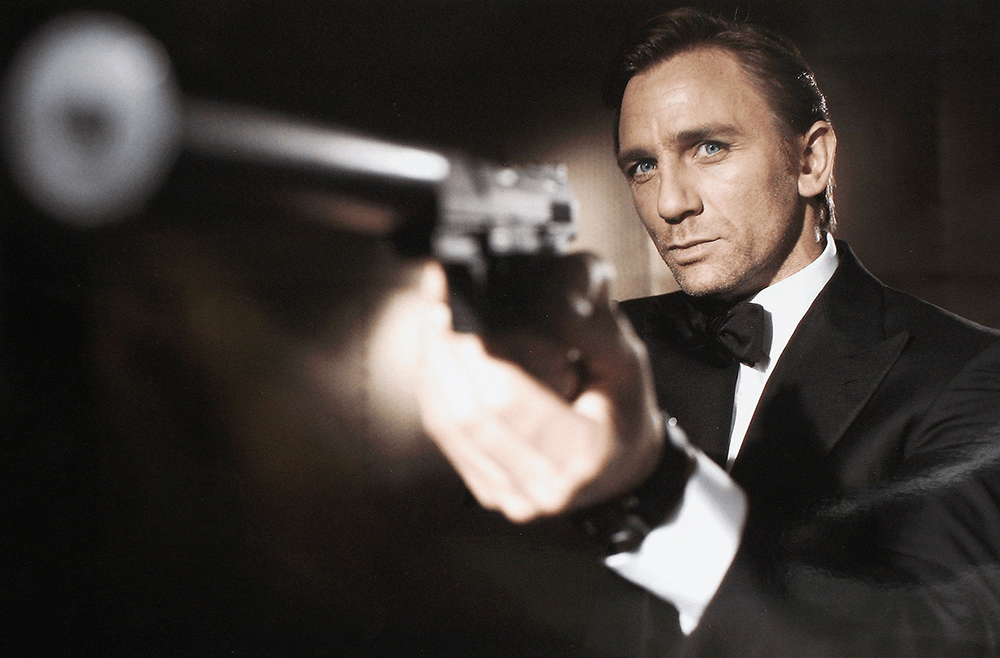
The rumour mill is again in full pelt about the next Bond film. Producer Amy Pascal has promised ‘something really different that is stirring and exciting and different’. If she means different from Daniel Craig’s pseudo-brooding, ‘something nasty in the woodshed’ Bond, then great. More likely, she means something intensely tedious and right-on.
Pauses between Bond films have been getting longer. Six years elapsed between Spectre and No Time to Die, thanks to the pandemic and endless uncertainty over Craig’s return, during his ‘I’d rather slit my wrists’ phase. The delay before the next release, a full reboot, will be even longer. Meanwhile actors who might have excelled in the role have either aged out or simply become too famous. It’s ten years since Tom Hiddleston’s star-turn in The Night Manager and he’s now the same age as Roger Moore in his Live and Let Die debut, then the oldest-ever Bond. Amazon, which bought the Bond franchise last year, is probably too canny to go ‘peak woke’ in its casting (as per South Park’s satire of Star Wars producer Kathleen Kennedy: ‘Put a chick in it! Make her gay!’), but constant dithering has written out a generation of acting talent. The decision to kill off Bond in his latest outing by torpedoing him to smithereens was the price of Craig’s participation, but filmmakers now face the dilemma of where to go next.
Is the modern world even capable of making a good Bond? There is a certain grim disconnect between Britain in 2026 and the world of Bond. 007 is not supposed to exist in a humourless, ambitionless and powerless country. It is discordant and depressing: like imagining the Carry On gang in a gulag. Sadly, Bond has long been in the hands of people with little apparent affection for the series. The Craig era evidently saw itself as more ‘enlightened’ than its predecessors. Bond’s recurring love interest Madeleine Swann is portrayed as high-end totty, the sort of woman you’d meet at Davos, not a Plenty O’Toole type. Even her name involves two Proust references. You could almost sense the writers congratulating themselves: ‘We’d never name someone Onatopp or Dr Goodhead. We’re “cerebral Bond”!’

Craig himself argued that the series needed to take a ‘darker’ turn because the Austin Powers spoofs had rendered the old gags impossible to use. Ironically, Craig’s films contain all kinds of dumb nonsense – flesh-eating nanobots, slapstick villains, gaping plotholes – just without the accompanying fun of Moore’s safari suit. Spectre features the intensely stupid revelation that Blofeld is Bond’s stepbrother; a plot-point which genuinely seems pilfered from Austin Powers, when Dr Evil is revealed to be our hero’s long-lost twin. The problem was that Craig mistook ‘darker’ for ‘moralising’ and ‘more boring’.
Another recurring gag in vintage Bond is that almost every onscreen woman makes clear her desire for 007, which becomes funnier and more endearing when the object of their longing isn’t the prowling thirtysomething sex machine Sean Connery, but Roger Moore, who in later outings looks as though he could be the face of a walk-in bath company rather than an international sex symbol. In No Time to Die, Bond’s legendary philandering is long gone. A female agent repulses his attentions – a scene which exemplifies Modern Bond’s preference for deconstructing its genre, not revelling in it.
Many of the best Bond films are explicitly geopolitical. Some plotlines have aged poorly, such as Bond’s alliance with the Afghan mujahideen in The Living Daylights. But when done well, these add depth. The interplay between Bond and General Gogol during the Moore/Dalton eras beautifully mirrors the thawing of relations between the West and the USSR. Bond often partners with the British armed forces in his missions. Such details would not be included today – far too Anglocentric, too prone to spook ‘international markets’.
This may explain why recent villains have been generic freaks of ambiguous motive, rather than well-defined enemies working for a foreign power. Much Bond involves suspension of disbelief (silly gadgets or sexy Roger), but this is often offset by a more credible geopolitical backdrop. Nuclear annihilation by the Soviets remained the leitmotif of high-Bond. Now we have the opposite – believable sex (or lack thereof) but a willing blindness to the realities of, say, China, or radical Islam.
There is some talk that the next Bond film should be a period piece, taking him back to a time when we were happier, sexier and more powerful. (The fact that the Britain of Jim Callaghan or Ted Heath fits those criteria is worthy of an essay in itself.) However tempting it might be to produce a sort of fetish-Bond, it would be a mistake – a step in the Austin Powers direction, culturally speaking. It would also herald the demise of many British creative traditions. If we admit that we’re no longer a country in which we can set a Bond film, that’s less a statement about a franchise than a depressing admission about our ability to do or say a whole host of other things.






Comments