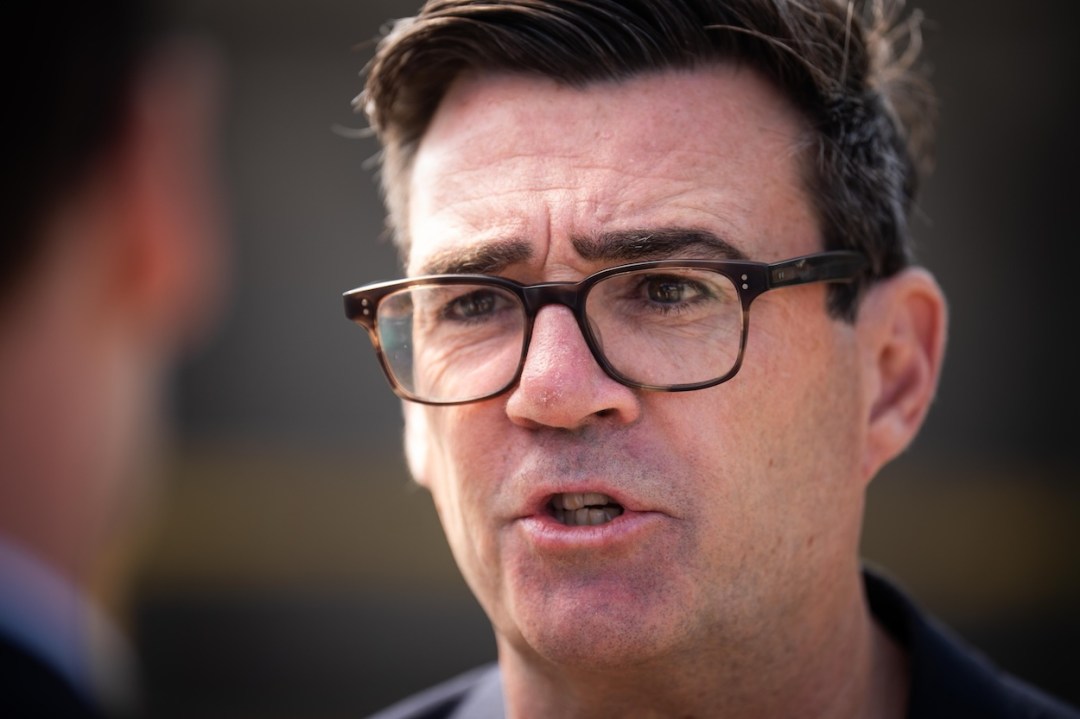
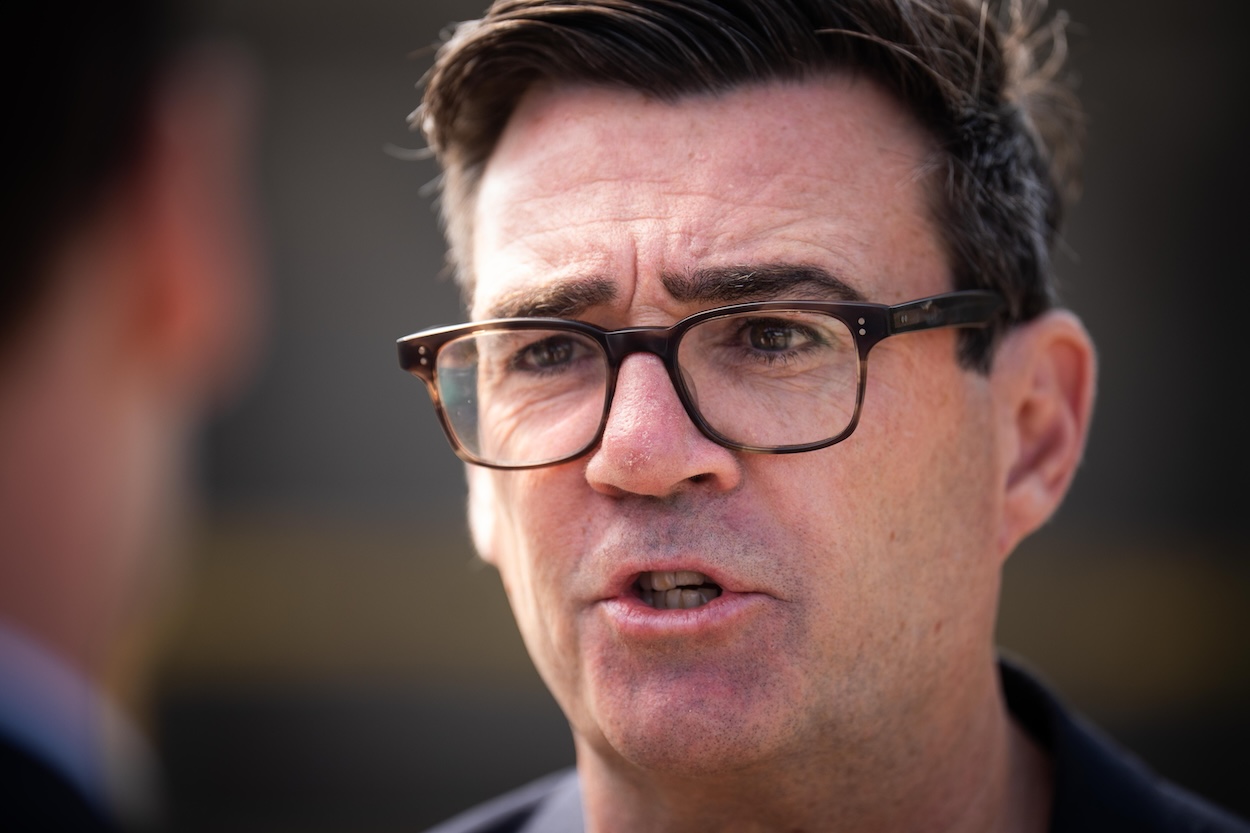
Andy Burnham, who has built a political brand based on being open and approachable, has been duped by a prankster pretending to be a top aide to Donald Trump. He has been messaging back-and-forth with someone posing as Susie Wiles, the chief of staff to the President. No verbal conversation is understood to have taken place in these mysterious text exchanges, first reported by Politico. They began before Burnham became PM and continued after he took office on 20 July.

One official source described them as being ‘of no significance’, but No. 10 would not disclose whether any sensitive information had been disclosed. Politico quoted one of its sources as saying that Burnham began to suspect that the person he was messaging was not who they claimed to be during the conversation. The mind boggles: how and when did detective Burnham finally figure out that he was being played? A government spokesman did not elaborate: ‘We do not communicate on national security matters.’ How pathetic. This isn’t so much about national security but more about sparing the PM’s blushes. Alarm bells should have been ringing in Downing Street from the off. The FBI began investigating an attempt to impersonate Wiles last year after her personal phone was believed to have been compromised. It was widely reported at the time that one or more unknown people had accessed the phone and messaged Wiles’ contacts pretending to be her. Wiles, a key Trump ally, was also among those targeted by a cyber espionage unit linked to Iran’s Revolutionary Guards in 2024. Did no one in Downing Street know any of this?
To be fair, Burnham is not the first PM to fall victim to hoaxers. In 1998, Tony Blair took a phone call from the impressionist Jon Culshaw, pretending to be then Conservative opposition leader William Hague. Blair clocked that it was a hoax after the caller addressed him as ‘Tony’ rather than ‘prime minister’. David Cameron, when serving as PM, also fell victim to pranksters. In 2015, he took a call from someone posing as the head of the intelligence agency GCHQ. Cameron quickly became suspicious and ended the conversation. In 2024, when Cameron was foreign secretary, he exchanged messages and held a video call with someone pretending to be Petro Poroshenko, a former Ukrainian president. This kind of prank is unfortunately an occupational hazard for political leaders.
The problem in Burnham’s case is that he comes across as someone who is more vulnerable to these tricks than most. Why? Because there is something about his ‘man of the people’ shtick, the gift of the gab, and his desperate desire to be liked that makes him an attractive target. It doesn’t help that Burnham practically lives online, whether on X or Tik Tok, exchanging banter with perfect strangers. It might be argued that none of this matters on one level: after all, the messages with the hoaxer were ended when suspicions were aroused, so no harm done. But we still don’t know what Burnham said when he thought he was engaged in direct conversation with someone in Trump’s inner circle.
‘Where’s the beef?’ is the question that will not go away
The more significant issue here is what this embarrassing episode reveals about the PM’s modus operandi and approach to power. Policy detail doesn’t appear to be his strong point. Instead he prefers to engage with the public through starring in toe-curling short videos, such as the one featuring his meandering observations on pub snacks. There is nothing wrong in principle with Burnham’s adeptness at social media, and his communication skills have been rightly recognised as a big improvement on those of his predecessor Sir Keir Starmer. The problem is that this is increasingly all Burnham appears to offer. What you see is what you get, and it’s all show. ‘Where’s the beef?’ is the question that will not go away, and it is getting more urgent as the summer rolls on. Can he grow into a serious leader for serious times?
The signs so far are not encouraging. Since taking office just a few weeks ago, Burnham has been on holiday and is now on a nationwide ‘listening’ tour. That’s broadly the sum of it. The problems are piling up, from small boats to energy bills, and no one has a clue what the government plans to do in terms of substance on policy or spending. That is why these embarrassing messages with the prankster matter. There is an unmistakable air of triviality about Burham, twiddling his thumbs, eager to pass the time engaged in meaningless chatter, rather than getting on with the hard work of running the country.





Comments