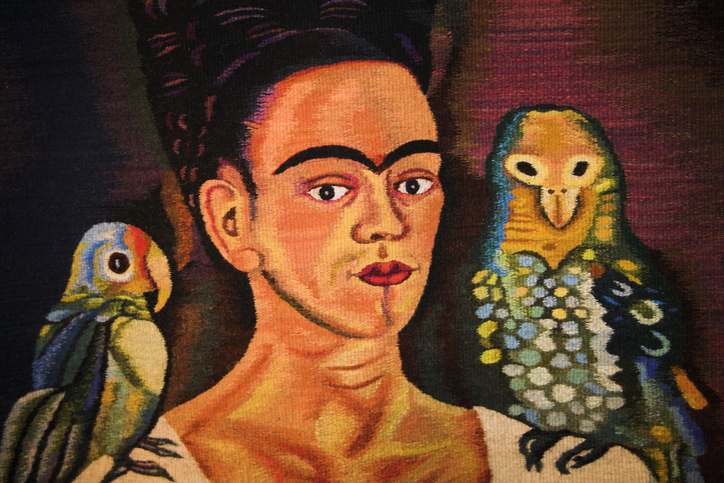
When Theresa May coughed into her hand during her painful conference speech back in 2017, adorning her wrist was a chunky Frida Kahlo bracelet. Some left-wingers were outraged that a Tory would ‘appropriate’ the image of ‘a Communist, bisexual artist who was also a disabled woman of colour’. The Guardian described it as ‘a surprising statement’ given that Kahlo ‘spent her career concerned with the plight of the impoverished, our connectedness to self, nature and the universe, the relationship between pain and identity, and imagined, one day, we could live in a classless society’.
She was as much a materialist as a Marxist
But I believe it was an apt choice for my fellow Conservative. Kahlo is a capitalist icon, a right-wing poster girl. Frida: The Making of an Icon, the current exhibition at the Tate Modern, contains entire rooms of Frida-branded tat, before you even get to the shop. Such is Kahlo’s commercial clout that the show broke pre-sale records despite containing almost none of her most famous works.
The Tate’s blurb admits how thin its pickings are, boasting of having ‘over 30 of her paintings’ alongside ‘200 works by her contemporaries and the artists she inspired’ and ‘200 commercial objects’. When spread across the gallery’s massive exhibition spaces, you often have to hunt through these risible tributes to find an original. A cynic would say the Tate put on the exhibition despite failing to secure loans of her best pictures from private collectors – thanks Madonna – knowing that the name ‘Frida’ alone would have the press describe it as a ‘blockbuster’. But who am I to criticise an arts organisation for exploiting a commercial opportunity. It’s a free market after all.
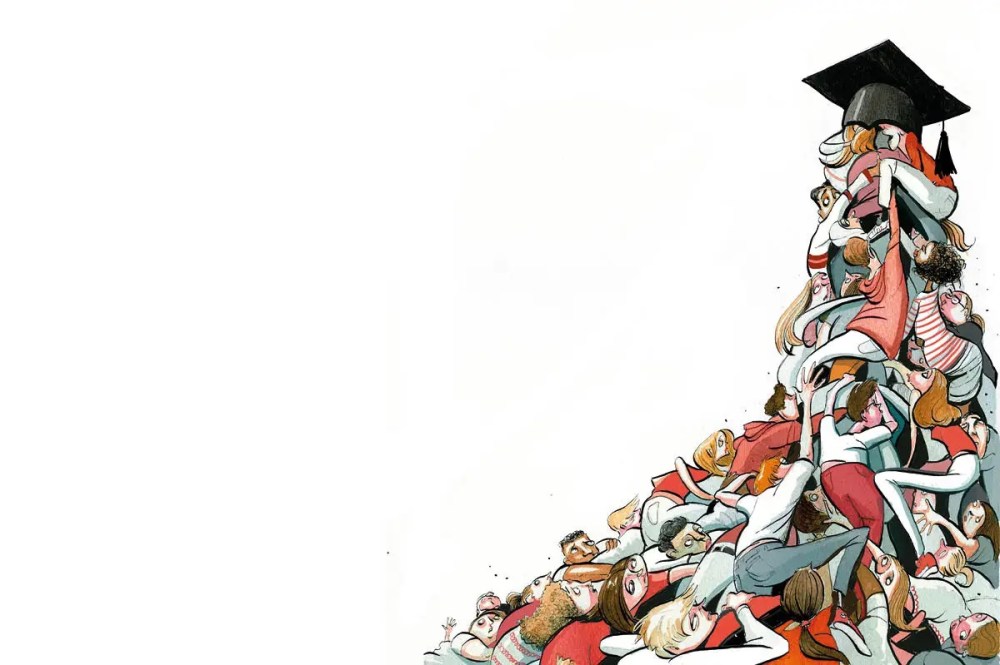
Frida: The Making of an Icon is a helpful confirmation of the extent to which Kahlo has become commodified. Whether by fellow artists or retailers, her image has been reproduced and repackaged in every medium from sculpture to photography to Barbie doll. It’s superficially ironic, given that Kahlo sh*gged Leon Trotsky. But when you consider the art, the reason why is obvious. She was fascinated by her own image and such a talented artist that she has fascinated us too.
There is the colourful biography. Kahlo was crippled by polio as a child then impaled through the pelvis by an iron rail in a bus crash, leaving her in life-long pain. She was bedridden for months and began painting her plaster casts. One decorated with a hammer and sickle is on display in the Tate. On recovering she married fellow artist Diego Rivera but had multiple affairs with both men and women, including dear old Trotsky.
But it’s her self-portraits that are most compelling. It helps that she was very beautiful, with her monobrow almost defying the rest of her striking face. Like all the best self portraits, Kahlo’s deal with interior character via a seductive exterior. The Tate has ‘Self-Portrait with Thorn Necklace and Hummingbird’ from 1940. She wears a christ-like expression of infinite suffering and endurance while surrounded by ambiguous symbols. The titular hummingbird is dead and skewered on the thorns, perhaps representing curtailed freedom, a cat for sexuality and a monkey that could mean mischief or exoticism.
She made paintings about her politics too. There’s ‘Self-Portrait with Stalin’ – which,oddly, lacks the introspection of her best work and is rendered in an even more naive style – Then there’s the last painting she did before she died, ‘Marxism will Heal the Sick’. It shows her wearing her surgical corset, casting aside her crutches while Karl Marx reaches towards her from heaven with two hands while strangling an American bald eagle with a third. Her communism plainly influenced her work but so too did her Catholicism. This painting is as much an assumption of the virgin as it is a Stalinist slogan.
Kahlo’s politics are one of the drivers of what the Tate calls ‘Fridamania’. As every student Che Guevara T-shirt attests, ascribing to a desolate and murderous ideology is no barrier to being fashionable. It’s also why modern leftists are so possessive of Kahlo. A reviewer in the Morning Star wrote that: ‘To rescue her corpus from the clutches of the US corporate art market, we need to acknowledge the overt and covert political dimensions of [her] work’.
It’s a remarkably patronising thing to say about a woman who was anything but a victim. To argue that her image has somehow been co-opted is to ignore that no one was better at co-opting it than her. The Corbynista critic continues: ‘Kahlo was a revolutionary activist before she was an artist’. Maybe, but what is more enduring, her paintings or her failed doctrine? Before she was either she was an individual. That’s where her work gets its power: the force of her personality. This she conveyed with things: traditional Mexican Tehuana dresses, jewellery, medical equipment. She was as much a materialist as a Marxist.
In any case, who cares? Her legacy is not reducible to communism, Mexican nationalism, disability, surrealism, feminism or consumerism. It’s all those things. Her talent was being complicated. Above all, she was a brilliant saleswoman of herself. Next time a pinko bore tells you not to ‘appropriate’ Frida Kahlo, make like Theresa May and dismiss them with a flick of the wrist.




Comments