
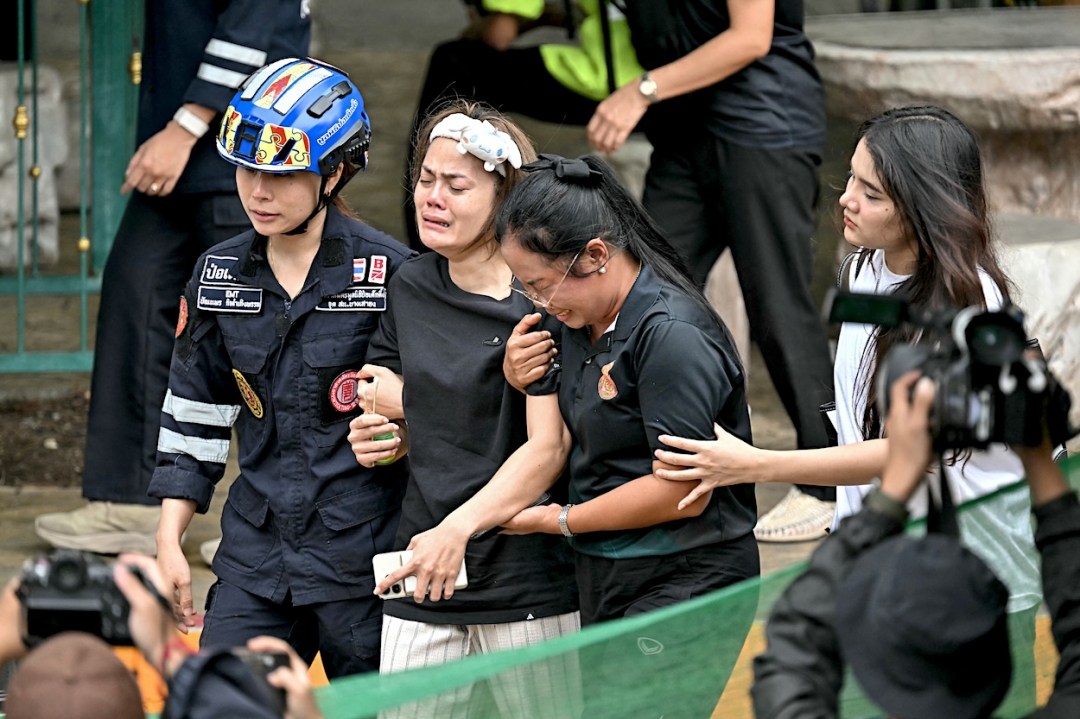
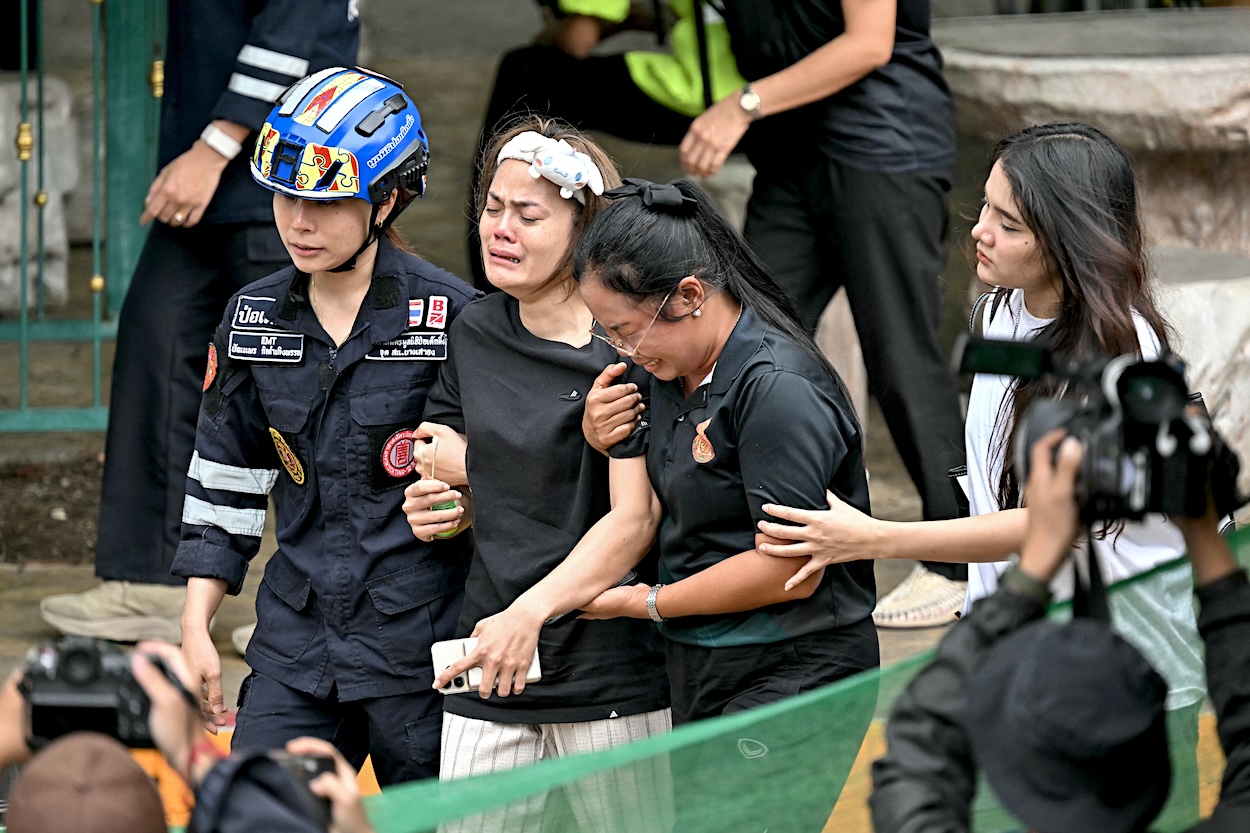
At least seven people have been killed in a mass shooting at a school in Nonthaburi, north of Bangkok. Details are still coming through, and conflicting numbers have been released, but so far it appears that five teachers are among the dead. The suspected gunman, a year nine pupil, seemingly shot himself in the head. More than 30 people are reported injured, with at least nine in a critical condition. The shooter’s grandparents were also found dead at their home, where the suspect is believed to have resided. The firearm, a handgun, apparently belonged to the grandfather. Thai Prime Minister Anutin Charnvirakul has already promised a new firearm control law in the wake of the tragedy.
Not much has been released about the suspect, but the Prime Minister said the 14-year-old was “under stress” in relation to his schooling and that the attack appeared to have been “well-prepared”. There are reports from students at the school that he was being bullied, and had an unhealthy interest in the FBI and guns. One teacher said the shooter was a good student with good grades and “not aggressive”. A police source commented that he was an avid “gamer”.
This is one of the worst mass shootings in Thailand, but is so far from an isolated incident that it is remarkable that the country has retained for many its pacific, paradisiacal “Land of Smiles” reputation. Shootings and bombings are a depressingly regular occurrence; this latest is horrific but not exceptional.
In 2020, an army sergeant killed 29 people, mostly at a shopping mall, in Korat, northern Thailand. In 2022, a former policeman and methamphetamine user armed with a knife and a gun killed 24 children and 13 adults, mainly in a nursery in the north of the country. In July last year, a gunman killed 5 people and then himself at a food market in Bangkok. Earlier this year, one person was killed when a student opened fire with a gun stolen from a policeman at a public high school in southern Thailand.
And so on… Then there are the 13 (out of 20 attempted) coups in Thailand’s near-century existence as a constitutional monarchy.
Gun ownership will be the immediate focus after this latest attack, and there are believed to be over ten million firearms in circulation – one million illegally – in Thailand, a country of 70 million people. Gun possession laws are theoretically strict, but enforcement is lax. There is also a large but poorly regulated military, and theft of weapons from the army or security personnel is commonplace (this vulnerability was depicted in the last season of The White Lotus, where a security guard’s handgun was stolen from his booth). Guns are also popular as status symbols.
For Thais attempting to process this latest horror, there will be profound grief, anger and demands for action. The opposition leader Natthaphong Ruengpanyawut has called for a “collective review” and “systematic approach” to gun control along with “enhanced security” measures in schools in a Facebook post. It is unclear to what extent the suddenly announced new law, when it appears, will satisfy these requirements. The Prime Minister has so far said that it would only be legal for government officials to carry guns but said nothing about ownership.
The problem is that Thais have heard this all before. There have been numerous “crackdowns” on Thailand’s various crime problems with various degrees of success. In 2003, the “war on drugs” was announced to combat the country’s other twin evil. It was officially declared to have been effective but has been criticized (by Bloomberg School of Public Health researchers and others) for its unintended consequences – users simply switched from injectables to methamphetamine. Researchers also found that the greatest impact was on rural communities; little progress was made in the cities.
There have been numerous “crackdowns” on Thailand’s various crime problems
Government policy is often confused and confusing. Cannabis was decriminalized in 2022, then recriminalized (for recreational use) last year, with a resultant lack of clarity about what requirements the new rules would impose or what was legal and what wasn’t. In any case, the porous national borders allow for a largely untrammeled narcotics trade, and due to the mayhem and desperation wrought by the civil war in Myanmar, drug use has tripled in five years up to 2024 in the northernmost provinces, according to research by Chang Mai University.
In 2022, following the Korat rampage, then Prime Minister Prayut Chan-o-cha ordered a fresh tightening of gun ownership rules and a crackdown on drug use. It involved more frequent mental health checks for gun license owners and the confiscation of firearms from officials who had misused them or had behaved in an aggressive way. None of that legislated for illegally owned guns, or the mental health of family members of gun owners.
It may be too early to draw firm conclusions from this latest tragedy, but the same old questions will surely be raised about the seemingly perennial issue of violent crime in Thailand.
The same old solutions, however, surely won’t do.



Comments