Ah, so that’s where the kangaroo comes in! Garsington Opera produces a souvenir mug each summer decorated with cartoons of that year’s operas. Buy yours early enough, and you get a ceramic preview of the season – in the case of Gerald Barry’s The Importance of Being Earnest, a drawing of a kangaroo. True, Barry’s operas are famously anarchic. But quite where a marsupial was supposed to fit into Oscar Wilde’s comedy was unclear until halfway through Act One. Suddenly, there it was: fuzzy and large as life, lolloping dolefully across the stage.
Because? Well, because someone said ‘Australia’, silly. That’s how it works. When Lady Bracknell (a mad-eyed Henry Waddington) mentions the French Revolution, Jack (Zahid Siddiqui) duly positions his head in a miniature guillotine while the butler (Peter Lidbetter) pelts him with cabbages from an on-stage kitchen. All the while, Barry’s brutalist music motors straight ahead. Sometimes the brass get wheel-slip, and whirr and skid on the spot. Lidbetter destroys a restaurant’s worth of crockery in strict tempo, and Barry never saw a piano without wanting to smash every key together at the same time.

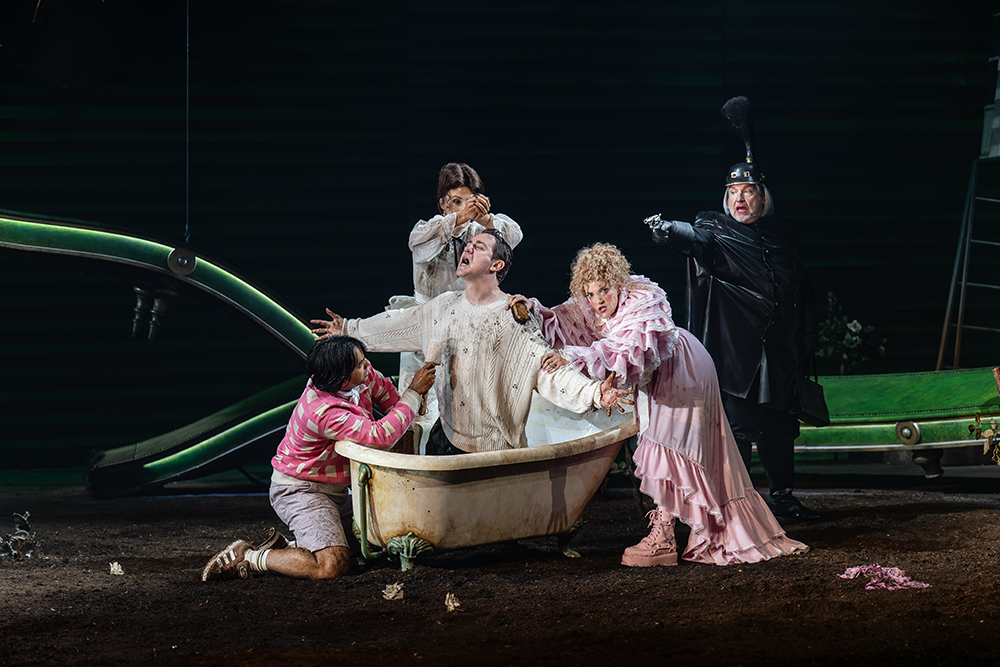
Confronted with Barry’s piledriver sonorities and time-bomb rhythms, the director Jack Furness hurls out surreal shards and sparks. Francis O’Connor’s set is an adventure playground as imagined by Salvador Dali; a Looney-Tunes nightmare where pianos teeter on spindly giraffe legs, and Gwendolen’s chaise-longue has been stretched and twisted into a helter-skelter of green liquorice. The centre of the stage is a patch of mud, and we’ve already mentioned the kangaroo. What, picnic time already?
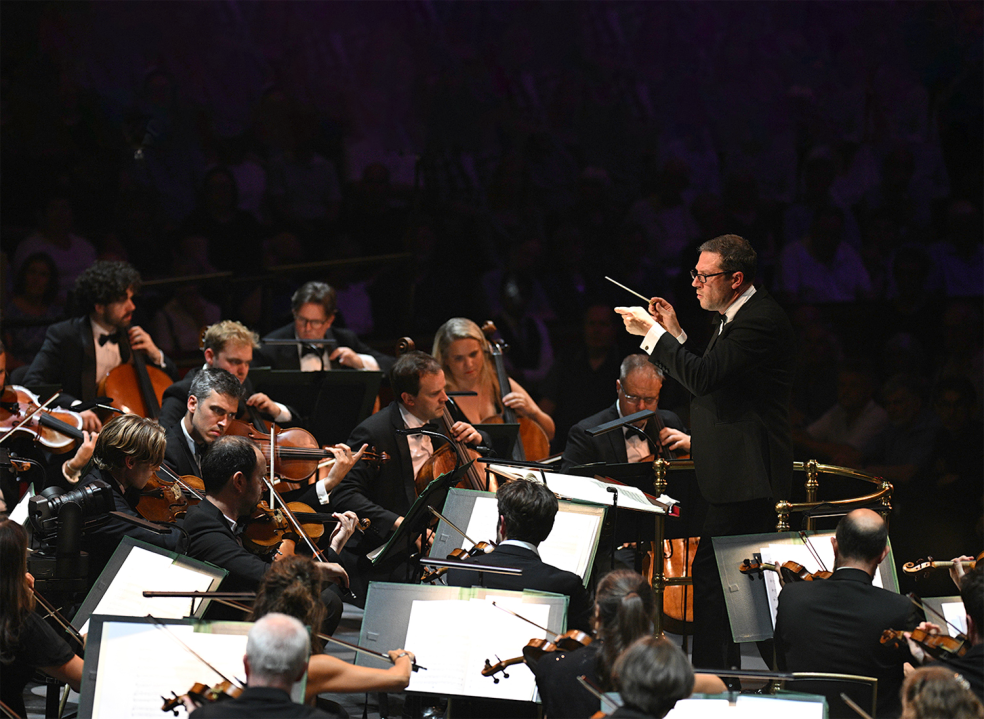
When we return, Jack and Algernon (Sean Boylan) have roughed up the conductor, Douglas Boyd, and dumped him semi-conscious on the podium. The stage is now a war zone. Skippy’s been lynched and Lady B – who is packing heat – has exchanged her grey power suit for a Prussian helmet and latex cape. You can guess what happens next. The Importance of Being Earnest happens, and the interesting thing is that however forcefully Barry dismembers Wilde’s text – chanted, screamed, at times even sung (Jennifer France, as Cecily, gamely disrobes and delivers glass-shattering coloratura from her onstage bathtub) – the surtitles still seemed to get the biggest laughs.
No praise is high enough for Boyd’s conducting and Furness’s crazed but weirdly cogent stagecraft. Or for the commitment and skill of a cast who delivered Barry’s nerve-shredding score while dodging pyrotechnics, rolling in mud and throwing themselves physically off stage. Good on Garsington for taking a punt on a new-ish opera (it’s from 2011) and going all in. I’ve seen three of Barry’s operas in the theatre (as against the concert hall) and I’m still not sure I understand what he’s playing at, though he does seem to annoy all the right people. This was easily the most entertaining, and it’s perfect for the country-house circuit because the final act works even better when the audience is blotto.
Meanwhile, the Proms are back and if Sakari Oramo’s taut, brilliant performance of Mahler’s Sixth didn’t persuade me that this symphony is top-flight Mahler (tragic doesn’t automatically mean better, folks) the curtain-raiser, Kurtag’s Stele, showed the BBC Symphony Orchestra on peak form. Oramo’s reading was simultaneously monumental and painfully intimate, and it managed the rare feat of making silence itself (deep, dark pools of the stuff) feel expressive.
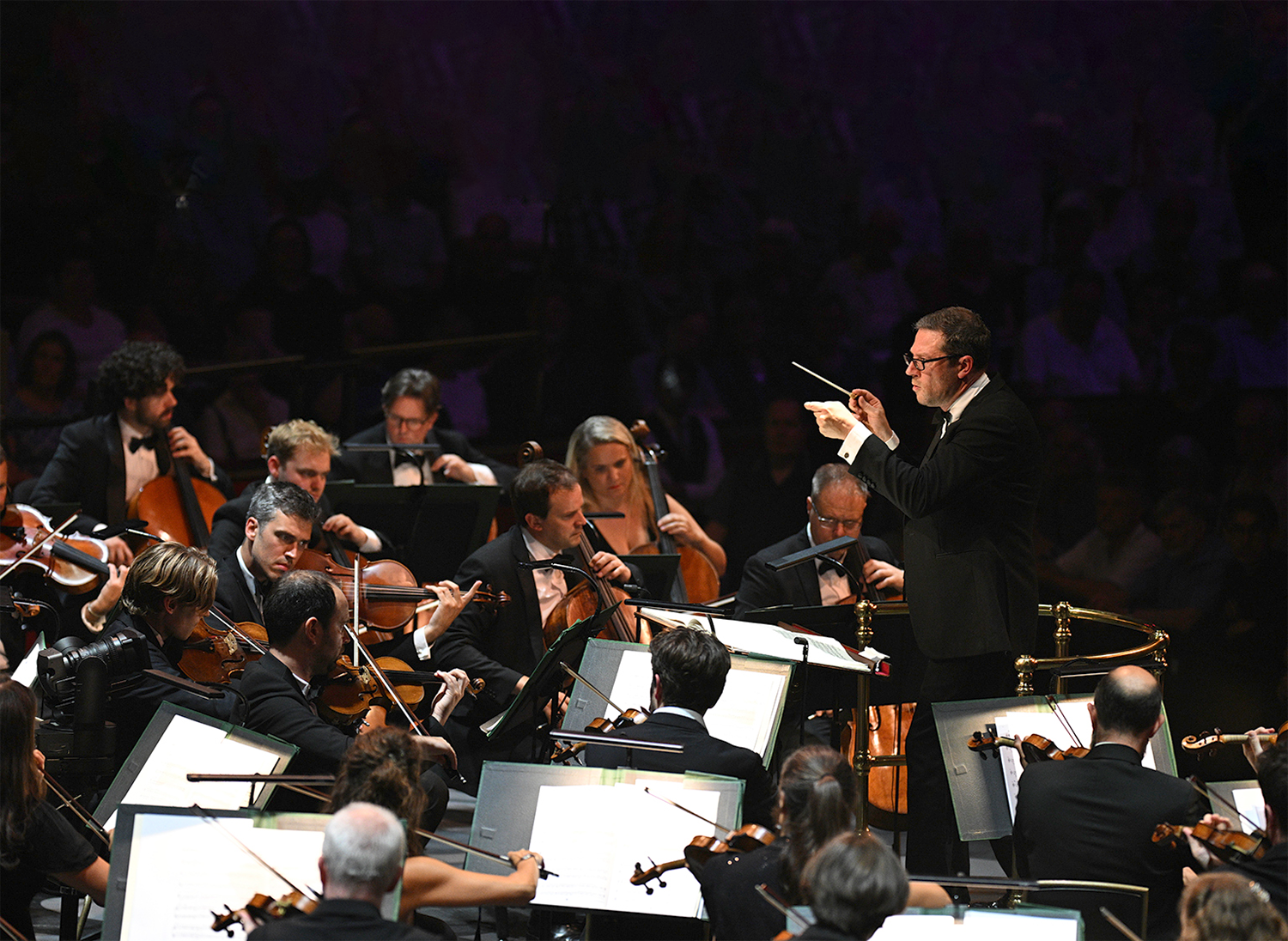
But the concert of the week – currently odds-on to be the concert of the year (the Berlin Phil should look to its laurels) – came on Friday when John Wilson conducted his hand-picked Sinfonia of London in Respighi’s Roman Festivals, Fountains of Rome and Pines of Rome. Virtuoso orchestration goes supernova in these symphonic poems from the 1920s, and it was a safe bet that Wilson and the Sinfonia would hit the heights, supported by phalanxes of antiphonal brass and the Olympian thunder of the Albert Hall organ.
Still, that doesn’t convey the full, life-affirming glory of these performances, or Wilson’s ability to combine thrilling precision with the sense that every musician was playing from the heart. There’s a boyish guilelessness about the way Wilson highlights favourite details (like the glinting piccolo melody in the ‘Valle Giulia’ section of Fountains) and just lets them speak. It never felt manipulated, or over-sold.
And how to describe the sensation – like an electrical current in the air – of a 60-piece string section playing prestissimo, and so softly that you can barely hear them over your own breath? Wilson is one of the supreme orchestra-trainers, and he clearly adores the results. The Sinfonia of London sounds as vital, and as overwhelming, as every orchestra sounded when you were 13 years old. You leave a concert like this feeling young again, and a little bit in love.





Comments