
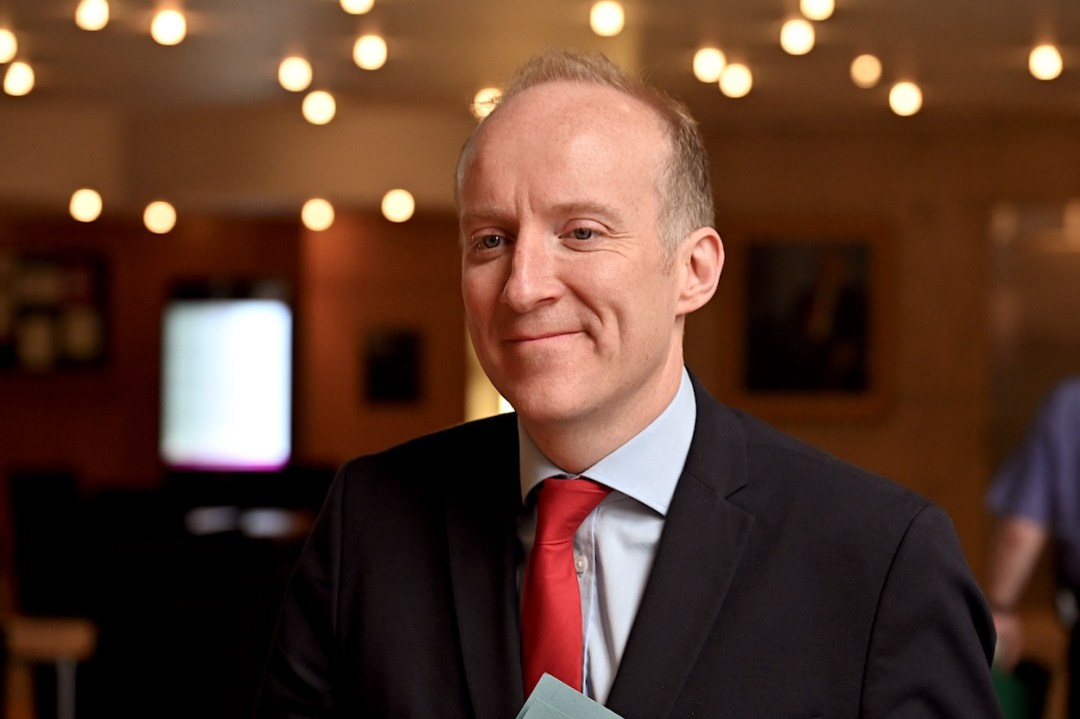
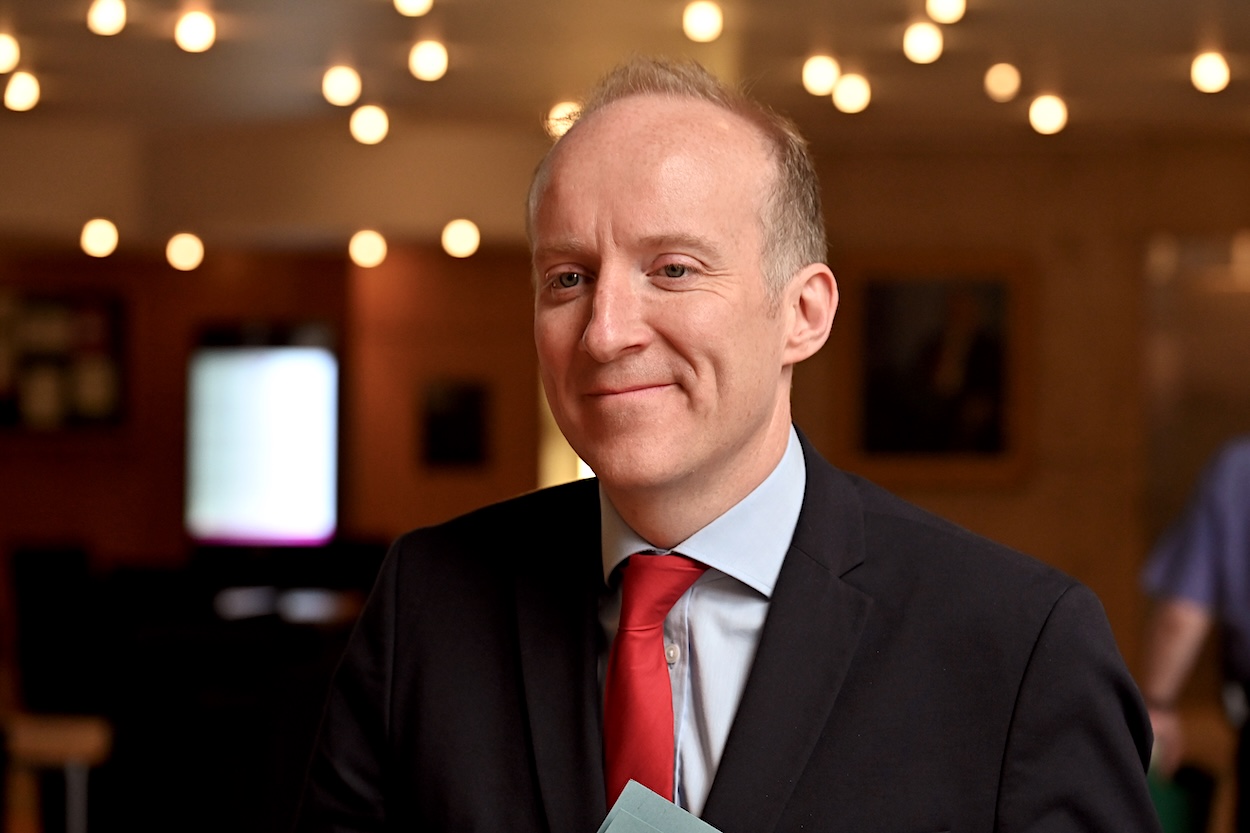
The Scottish Labour party is a bit like cigarette-smoking or the Church of Scotland: it used to be everywhere you looked, but now you can’t remember the last time you saw it. We have been reminded of the party’s existence thanks to the abrupt exit of its leader Anas Sarwar, who was given a peerage and ministerial gig by Andy Burnham for reasons having absolutely nothing to do with his February statement calling on Keir Starmer to resign. That leaves a vacancy at the top of Scottish Labour, and today North East Scotland MSP Michael Marra has followed his Glasgow colleague Monica Lennon in announcing his candidacy.
The Marras are a Dundonian clan of leftist politics; his sister Jenny spent a decade as a Labour MSP in the 2010s while their uncle Michael was a socialist folk singer fondly remembered in Scotland’s fourth city. Michael, the nephew, entered Holyrood in 2021 and has since made a name for himself with forensic interrogations of SNP ministers, a rare sight in a pusillanimous parliament. Marra is the candidate of material concerns: growth and productivity, and how to maximise them; poverty and inequalities, and how to remedy them.
Lennon, who is taking up Sarwar’s regional list seat having lost hers in May’s devolved elections, is a different prospect altogether. Although materialism plays a part in her politics – she championed free sanitary products so successfully that the SNP pinched the policy – she is the obvious candidate for members who want Labour to double down on net zero (Lennon wants to make ecocide a criminal offence), hold the line on progressive identity politics (she is an adherent of gender ideology), and distance the party from its pro-UK constitutional politics (she broke the Labour whip to abstain on Nicola Sturgeon’s Indyref2 Bill).
Inside Scottish Labour, this is seen as a ‘Who are we?’ election. That the party has lost its way is attested to by May’s abysmal election results, with Sarwar leading Labour to its worst ever showing in a Holyrood poll. The party now holds just 17 seats in the 129-member Scottish Parliament and has to share main opposition party status with Reform. A bounce back in 2024, which saw Labour win a majority of Scottish seats at Westminster for the first time since 2010, could prove to be a fluke unless Andy Burnham and the next Scottish leader are able to win over voters north of the border.
Their task is to convince the electorate that Labour is the party to stand up for Scotland’s interests or, failing that, that Labour can deliver more effectively than the SNP. The Nationalists have controlled the devolved Scottish government in Edinburgh since 2007. Policy outcomes, whether in education, health or drugs, have been less than encouraging, but the SNP has been able to rely upon a solid bloc of independence supporters willing to tolerate policy failings so long as a separatist party remains in office. To win devolved government again, Labour will either have to break up this bloc or convince enough of it to give them a chance.
A more difficult question for Labour to confront is: ‘Does Scottish politics still need a Labour party?’ With the SNP, the Greens and the Lib Dems all having captured former Labour demographics (graduate professionals, unionised white collar workers, skilled and unskilled manual workers), there is no longer the same demand for a big-tent centre-left party north of the border, most of the functions of which are performed by the SNP. Whether they go with Michael Marra or Monica Lennon, Scottish Labour members should judge both candidates on their answer to the question: ‘What is the point of a Scottish Labour party?’





Comments