Sometimes the obvious answer is the right one. And so it is with Lord’s versus the Oval. There’s a certain type of cricket fan who likes to point out that they prefer the south London ground, implying that Lord’s is just too famous, too touristy, not ‘real’ enough. If you’re interested in the actual play, goes the theory, if you’re properly gripped by how much turn the left-arm spinner will get in the second innings, then the Oval’s the place for you. Leave that poncey museum in NW8 to the arrivistes, the sort who can recite Blowers’s one-man show word-for-word but haven’t got a clue how Derbyshire’s seconds did last week.

The Ovaltinies are wrong, but for the opposite reason to the one they think. Actually I agree with them about Blowers (terrible man), and I agree about the play – it’s tedious when the crowd thins out in the first hour after lunch because the corporate boxes are still echoing to the sound of prawn sandwiches. (You get that at all grounds.) No, the reason I love Lord’s so much is not that it’s stuck in the past but that it’s surging into the future. As such it’s a metaphor for London as a whole.
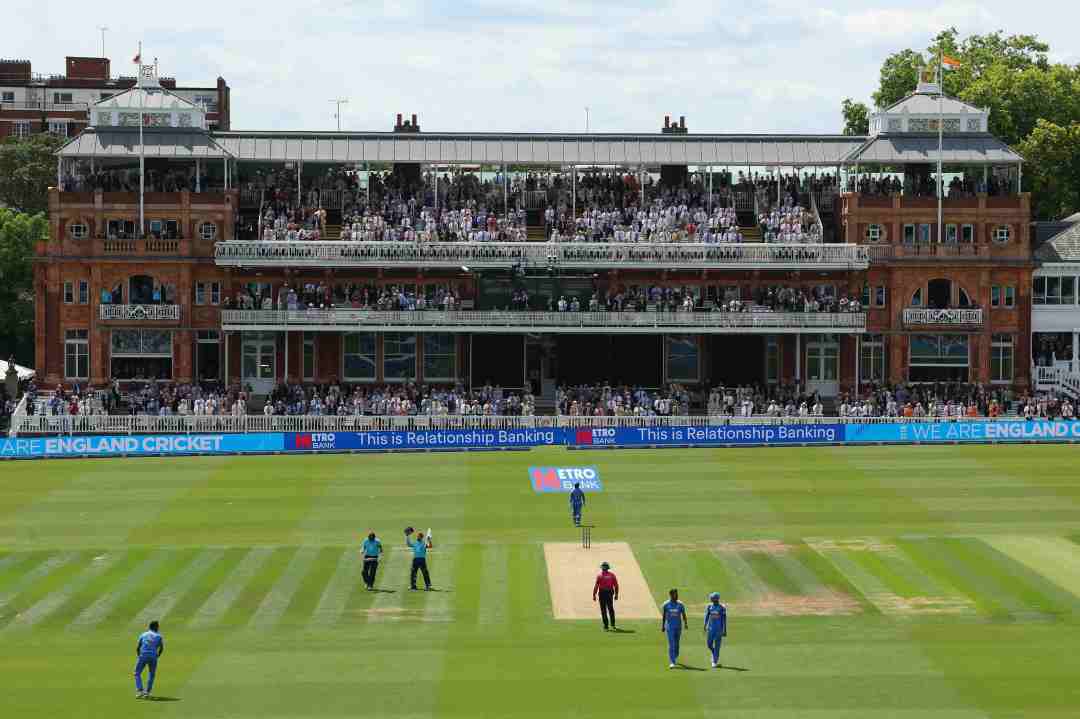
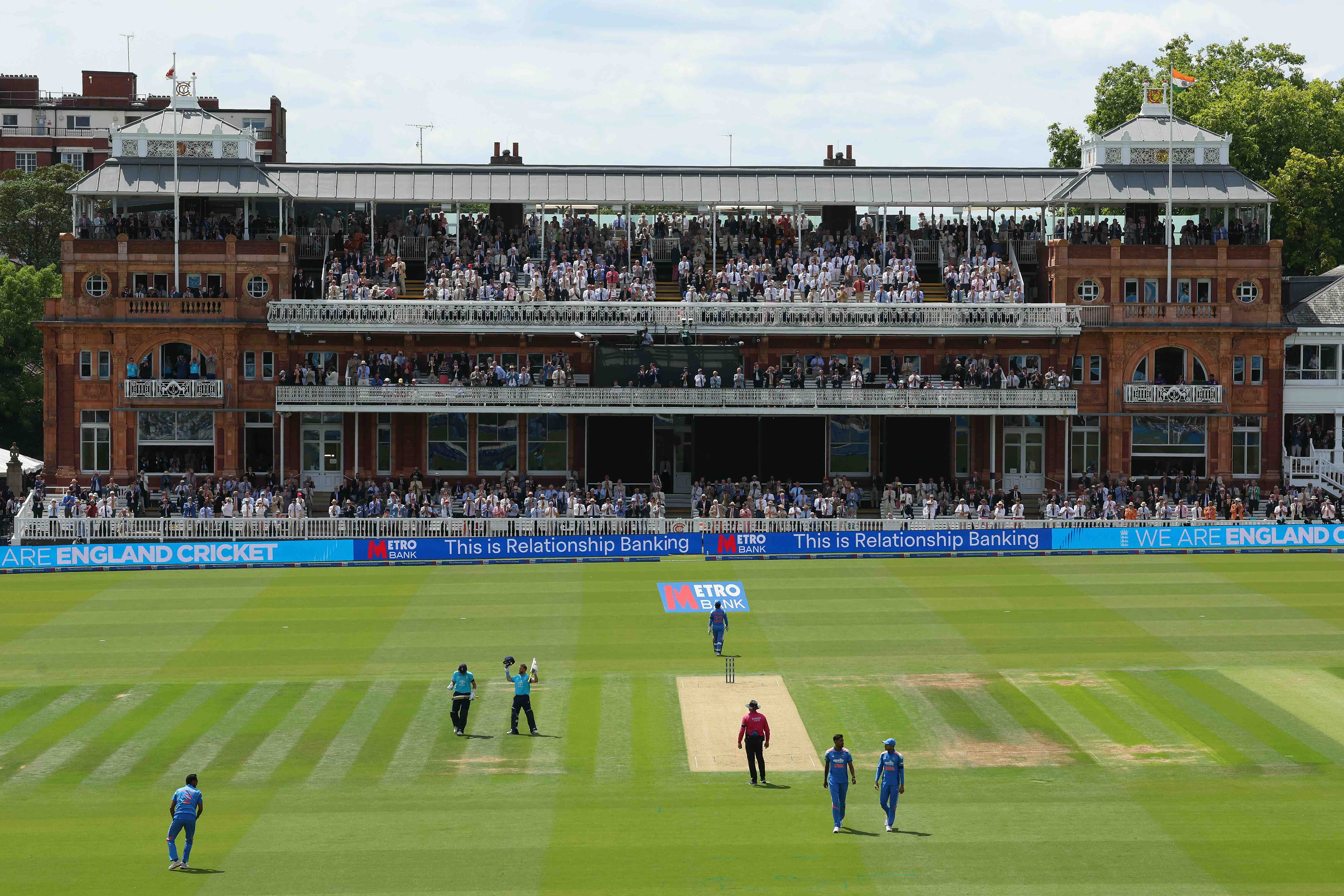
Over the last three decades, virtually every stand at Lord’s has been rebuilt, with the Tavern due to join the list soon. It is a Trigger’s broom of a venue. Only the 1890 pavilion remains unchanged, its famous red appearance (brick and terracotta) due not to architectural choice but a stonemasons’ strike. The Victorian masterpiece sits directly opposite the futuristic media centre. Unveiled in 1999, its front elevation earned it the nickname ‘Cherie Blair’s smile’, while the design of its curved rear was so revolutionary that they had to get a boatbuilder to construct it. The two buildings are the perfect example of how London retains its greatness through constant reinvention, pairing the best of the new with the best of the old.
The Oval has been redeveloped too, of course, but in its case the result has just been a mess. The pavilion end has always been cumbersome, each sprawling extension giving the impression of a monster that’s out of control, sprouting limbs it doesn’t know what to do with, so that you can’t really tell where the pavilion ends and the rest of the ground begins. The latest building, the boxy one to the left as you look from the field of play, is an affront to geometric aesthetics, its angles making it look as though it’s been forced in between the pavilion and the M.A.R. Galadari stand like a Lego brick jammed somewhere it won’t fit by an impatient toddler.
Over the last three decades, virtually every stand at Lord’s has been rebuilt. It is a Trigger’s broom of a venue
Meanwhile at the Vauxhall end, the J.M. Finn stand isn’t bad in itself – it’s just that it’s off-centre, coming round way too far on the left (as you look from the pavilion) and not far enough on the right. It combines with the confusion at the other end to create a ground that just doesn’t know what it’s doing; that needs knocking down and starting again.
Fair enough, the Oval has got some history. It was the first Test ground in England (1880) and hosted the first ever FA Cup final (1872). It’s owned by the Prince of Wales (as part of the Duchy of Cornwall) and possessed the first artificial lighting at a sporting venue (gas lamps, 1889). During World War II it was converted into a prisoner-of-war camp, but the expected German parachutists never arrived so the camp was never used. In 1987 the Oval hosted an Australian rules football match that was so violent it became known as the Battle of Britain. One player actually had his jaw broken. This is south London, after all.
So the Oval isn’t without interest. It’s just that it isn’t as interesting as Lord’s. That ground’s stories always have a human element to them, a warmth, a dash of humour. There’s Albert Trott being the only player ever to hit a six over the pavilion: many have attempted to repeat the feat, sometimes for money or as part of a publicity stunt, but no one’s managed it. There’s the famous slope (from the Warner stand diagonally to the Mound stand it measures 8’2”.) There’s the legendary food, provided by many chefs down the ages (including a young Ainsley Harriott), though none as beloved by the players as Nancy Doyle, who served (in every sense) for 35 years. Mike Brearley once asked for lighter fare, arguing that her ample roasts and puddings with cream were less than ideal for professional sportsmen. ‘You don’t tell me how to feed my boys,’ came the reply, ‘and I won’t tell you how to bat, OK?’
I feel honour bound to report that one of the most famous Lord’s stories – the Seb Coe one – isn’t true. It’s said that he once turned up at the wrong gate for his pass, and got increasingly frustrated with the gatekeeper who insisted he would have to walk all the way round the ground to the correct entrance. Finally he snapped: ‘Don’t you know who I am?’ ‘As it happens I don’t, sir,’ said the gatekeeper. ‘I’m Sebastian Coe!’ came the response. ‘Well in that case,’ said the gatekeeper, ‘you can run round there all the quicker, can’t you?’ Meeting Coe at Lord’s once, I couldn’t resist asking about the story. ‘Not a grain of truth in it,’ he replied. ‘But don’t let that spoil your enjoyment.’ So I haven’t.
The next time someone tries to paint you as a plastic fan for loving Lord’s, tell them you’re perfectly happy with your choice. It’s just that as well as enjoying a beautiful cover drive, you want a beautiful ground in which to watch it.




Comments