In the late 1990s, the rules for unwanted advances in a nightclub were clear. The first line of defence was your own. Only you could decide if the advance was unwanted or not – and if not, you could apply words or force, depending on the context. ‘You’re not made of glass,’ as my Scottish granny used to say. If the advances persisted, your male friends or a chivalrous stranger could be deployed. Occasionally, if a lech was so drunk or so unable to read the room, the situation could be escalated to a bouncer.
I was a barmaid at the Liberty club in Bridlington for the summer after my A-levels, and I watched the bouncers make the sort of careful and immediate judgments we wish social workers and police could make now. Lee and Dave had a sophisticated response scale, equivalent in shared doctrine and meticulous criteria to the US military DefCon levels. These ranged from muscle-flexed preventative peacetime readiness, through to summary justice outside behind the bins.

They knew who needed to be sent home, who was being uncharacteristically leery and needed a warning, and who was completely out of order. Those in the last category needed banning, and perhaps a word out in town, or even to someone’s copper brother. Then an eye could be kept out for anything more sinister, for predatory or abusive behaviour beyond the nightclub.
All this is to say that I personally would have been mortified to report a lunge as sexual assault. My self-respect and the respect of others would be undermined by such an admission of weakness, but more importantly I wouldn’t dream of inflicting the insult implied to my male friends and colleagues. I might also have worried that doing so would affect future, more welcome advances, of which there were a few that summer.
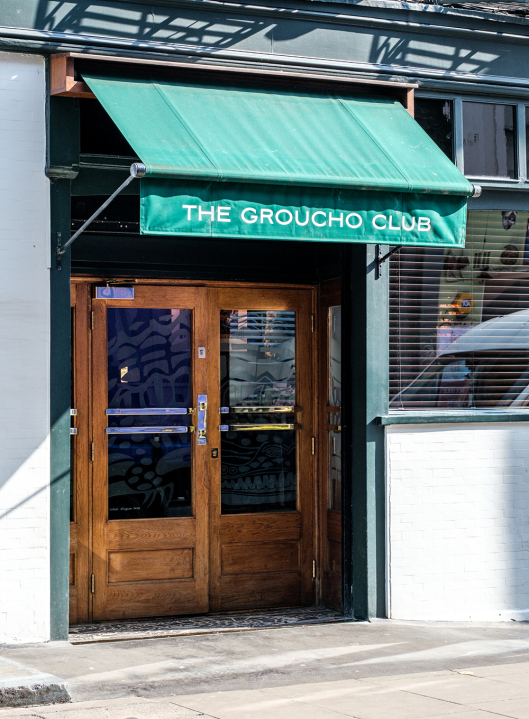
Which brings us to the Groucho Club in August 2023. After a two-bottle lunch with his father and a beery afternoon at the rugby, Patrick Spencer, soon to be MP, ended his day at the club with negronis and more wine. He made bad choices and unwanted advances to two women, giving them drunken hugs from behind. His actions were particularly unwise for a person with political ambitions. The first line of defence should be personal responsibility.
What happened next is a matter of public record: Spencer was accused of sexual assault, leading to a 1,070-day investigation and criminal trial, from the incident to a jury’s verdict. Last week, he was found not guilty. The CCTV footage seems to have been unclear. Speed and angle changes perceptions of both intent and the severity of offence. Footage like this, viewed as part of a later investigation, can be a Rorschach test confirming the existing bias of the viewer. Still, without being there or seeing the club tapes, we can agree his behaviour was rude, aggressive and boorish, even if not criminal.
Yet the inconclusiveness of the CCTV does not excuse the bumbling and prolonged attempt to prosecute. The women reported the grope to the club. The police were involved. The first police investigation stalled. A new detective was appointed, and we can assume Louise Casey’s 2023 finding that the Met is institutionally misogynist had a bearing on this second investigation. Eighteen months on, in March 2025, Spencer attended a voluntary interview. In May that year the CPS authorised the charges. A month later he pleaded not guilty at Westminster Magistrates’ Court and the case was referred to the Crown Court. A month later the trial was fixed for July 2026. After a five-day trial and seven hours’ jury deliberation, Spencer was acquitted on both counts. A conservative assessment of the costs to the public purse – police, Crown Prosecution and courts – is about £40,000. This excludes private legal fees, the long and immeasurable cost to Spencer’s wife and children, and, I presume, to the women at the Groucho that night.
Spencer knows that his actions in the Groucho reflect on his judgment and character, even with a not guilty verdict. He has acknowledged that his conduct was ‘not acceptable in this day and age’. No doubt the world would be better if we all behaved less stupidly. But I’m not convinced we’re making progress by expecting boorish nightclub behaviour to be policed by a creaking criminal justice system.
I’m almost certain Lee and Dave would have intervened on Spencer’s fateful night before he did something so stupid, and no one would have been hurt. I think society was happier when the police and courts could focus resources on the most serious dangers. Relationships between the sexes were more honest, young women were less anxious. Looking back, it may even have been a high point for feminism, and we’ve been going backwards ever since.





Comments