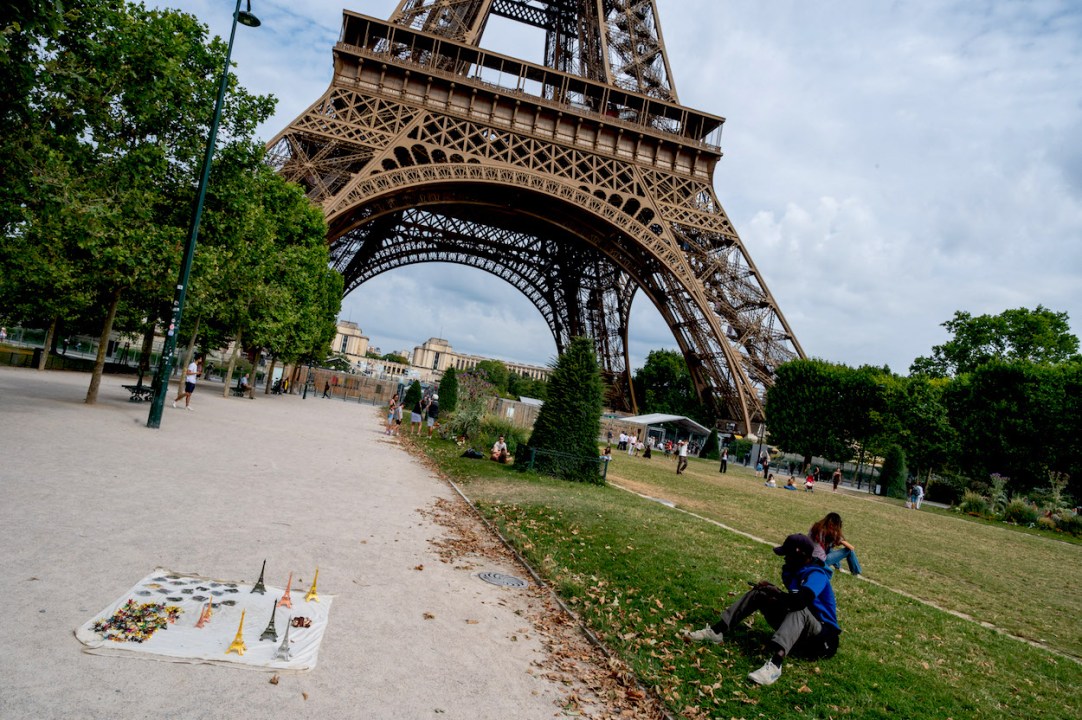
When I moved into Paris’s seventh arrondissement, I was not expecting to find myself living in one of the city’s dreaded no-go zones.
My neighbourhood, admittedly, is not one of the notorious districts on lists of forbidding no-go zones in the French capital’s bleak north end, plagued with crack houses and criminal gangs. I live in one of Paris’s poshest areas. The seventh arrondissement is known for its burnished boulevards and grand monuments. Every morning, I walk my two dogs on the Champ de Mars in the shadow of the Eiffel Tower.

World famous for the annual fireworks display to celebrate Bastille Day, the Champ de Mars boasts a glorious past. As suggested by its name, evoking the Roman god of war, it faces the École Militaire whose graduates include a young officer called Napoleon Bonaparte. For centuries, the Champ de Mars was a symbol of order and grandeur. In 1889, the Eiffel Tower was constructed on the site as the centrepiece of the Paris world fair that year. Over the past century, the lush gardens have been admired as an urban sanctuary of bucolic beauty with sculpted lawns, quaint bosquets, and spraying fountains. Old photos of the Champ de Mars show ice cream stands, children holding candy floss, and mothers pushing prams along promenades with the Eiffel Tower soaring in the background.
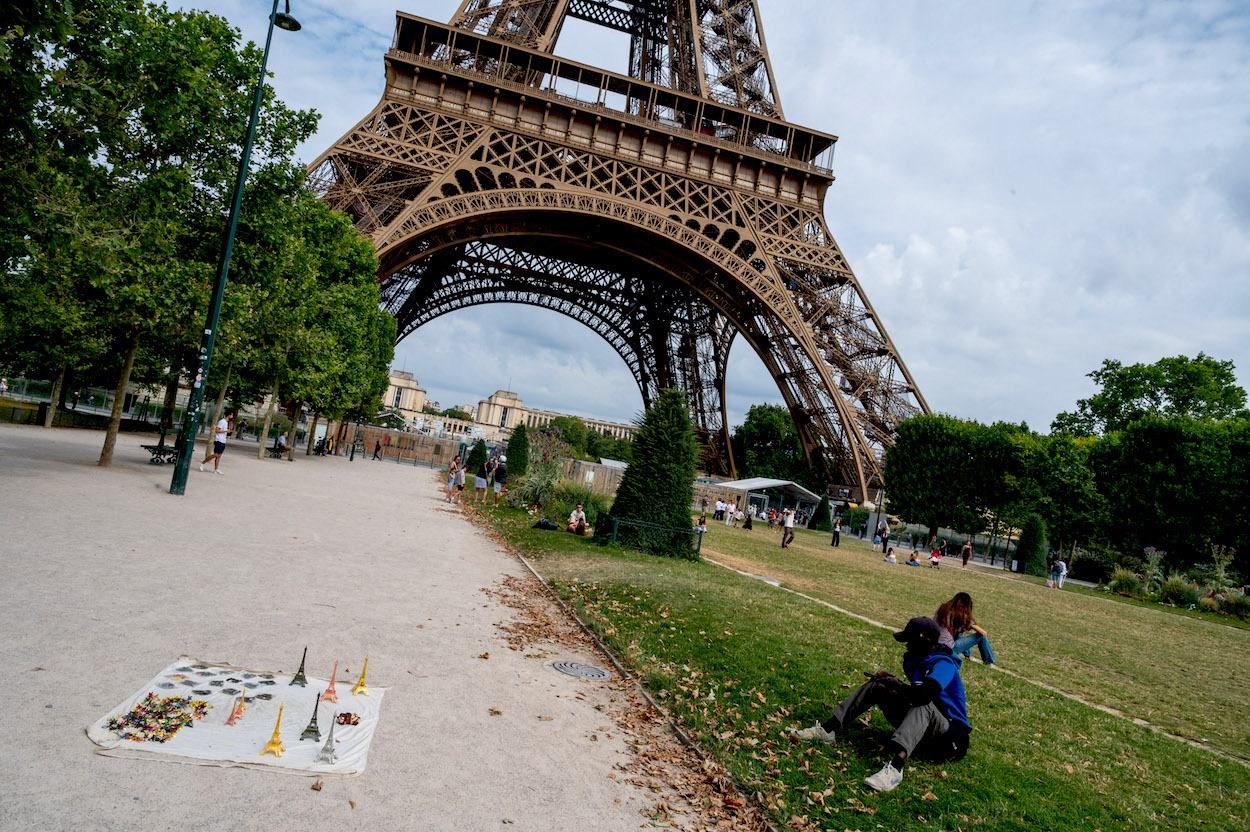
That’s the dreamy picture postcard. Today, the Champ de Mars is a desolate zone swarming with thieves and predators. After the terrorist attacks in 2015, a ten-foot-high, bulletproof glass wall was constructed around the Eiffel Tower. Near the turnstiles for ticket-buying tourists, pickpockets hover in search of easy prey. Swindlers crouched on the pavement lure gullible foreigners with shell games and three-card monte confidence tricks. Africans illegally selling trinkets spread out on carpets quickly gather up their cheap merchandise and scamper at the first sight of police.
Worse, the Champ de Mars is notorious for sexual assaults and rapes. The victims are usually female tourists enjoying evening festivities on the wide lawns at the foot of the tower. Every year, the French media report shocking sexual aggressions on the Champ de Mars. Three years ago, a 35-year-old man from the Paris suburbs was arrested for raping a 23-year-old British policewoman who was visiting Paris at knifepoint . Last year, an adolescent from Libya was charged with sexually assaulting a Ukrainian woman at the same location.
Under pressure, police claim they are reinforcing foot patrols. But they can do little to control the underlying problem: overtourism.
Paris is the world’s most popular destination city with more than 40 million annual visitors. Seven million of them visit the Eiffel Tower. Overwhelmed with tourist traffic, the overtrodden Champ de Mars lawns have been turned into barren patches of dirt and mud. In the darkness before dawn, rats can be seen darting between overflowing rubbish bins. Nothing seems to function for visitors. There are few lavatories and no drinking fountains. Many of the old stone benches are cracked and crumbling. The Belle Époque fountains and basins, handy in a heatwave, are dry as a bone. But the tourists keep coming, carrying cash and getting intoxicated at night on the lawns — easy targets for petty criminals and sexual predators. The Champ de Mars’s reputation is so bad that Le Point magazine observed that ‘France is dishonoured by the state of the Champ de Mars’.
The Paris council seems indifferent to the degradation. In fact, it deliberately aids and abets the deterioration. With a massive debt of €10 billion (£8.5 billion), the city manages the Champ de Mars like a vast amusement park to maximise revenues. One source of cash comes from events and spectacles. From March till October, the Champ de Mars is virtually monopolised by a constant cycle of entertainments – rock concerts, football fan zones, fashion catwalks, equestrian show jumping events. Before the Paris Olympics two years ago, the merry-go-rounds and children’s marionette theatre on the Champ de Mars were shut down to make way for an 8,000-seat stadium. It often takes weeks to set up these events with bulldozers and giant trucks, and more weeks to dismantle them after the crowds go home. Local residents, unwanted intruders in their own neighbourhood, are confined to fenced-off strips along the edges of the gardens to stroll and walk their dogs.
The knock-on effects of this mismanagement have been catastrophic. The city has cut down hundreds of old trees battered by the constant commotion of trampling tourists and live events. The Paris council announced a redevelopment plan that involved massacring 42 trees, one of them two centuries old, to construct buildings for a ticket office, luggage storage, souvenir shops and takeaway food outlets for tourists visiting the Eiffel Tower. That €72 million scheme – drawn up by the London firm Gustafson Porter & Bowman – was cancelled after a storm of protest.
Complaints have fallen on deaf ears
For local residents, constant vigilance is required to thwart these ill-advised plans of city bureaucrats and commissioned architects. An association called Friends of the Champ de Mars was created as a citizen watchdog against the relentless mutilation of the gardens. Many constructive proposals have been made – for example, more policing, fencing off the lawns, more public lavatories, and better management of rubbish collection. Above all, instead of the wall surrounding the Eiffel Tower, gates should be constructed at access points to the Champ de Mars to control entry and impose, as at other Paris parks, strict visiting hours and closure at night.
But complaints have fallen on deaf ears at the city’s Socialist-controlled council. They know that the wealthy residents of the seventh arrondissement overwhelmingly vote for conservative parties. Politics as usual. The show must go on.
When asked, my advice to visitors is to stay away from the Champ de Mars. There is no need for a close-up look at the Eiffel Tower – and you will be in for a shock. I have learned from long experience in the City of Light that the Eiffel Tower is best viewed from a distance.



Comments