
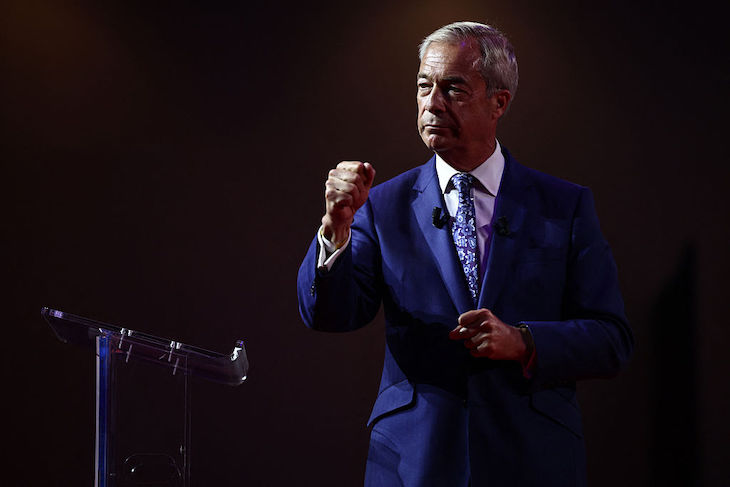
It was Napoleon who said that ‘To understand the man you have to know what was happening in the world when he was twenty.’ Nigel Farage is nothing if not a man of the 1980s. Big ambitions, loud suits, indoor smoking: for him, the greatest year to have been alive was 1988, the high noon of Nigel Lawson’s tax-cutting zeal. Farage was a City trader whose thinking remains defined by that era of Thatcherism: of buccaneering Britain and primary colours politics. ‘Everyone around him was doing well’, says one friend ‘and then he spent the next two decades discovering that it was not the case for the rest of the country’.
One person who recalls that era less fondly than Nigel Farage is Andy Burnham
One person who recalls that era less fondly is Andy Burnham. Six years younger than Farage, he was a twenty-year-old Cambridge undergraduate in 1990, having stood as a school boy for Neil Kinnock in a mock election. Merseyside, unlike London, was one of the greater losers of that era: much of his politics are a reaction to that era. His speech this afternoon made much of that fact, rehashing battles that were once regarded as settled. Burnham claimed that Britain had taken ‘a series of wrong turns in the 1980s [where] political power was centralised and economic power was privatised.’ In Burnham’s view, ‘the country surrendered control of the essentials.’ It was a speech that will cheer those parts of the Labour Party for whom the conflicts of the 1980s are as important as Marsden Moor was for the Victorian Whigs.
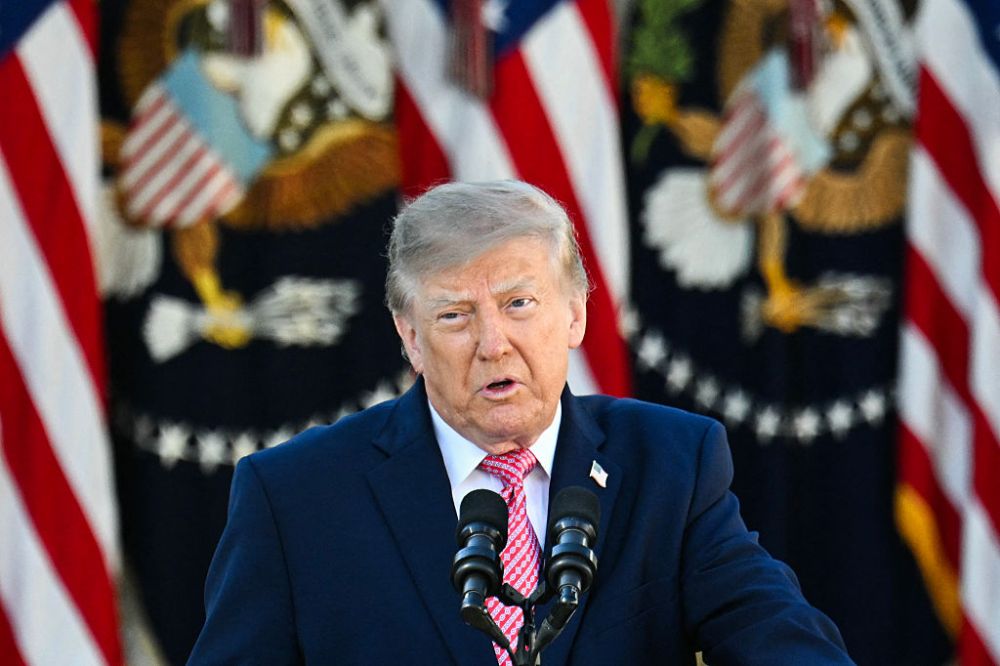
This evening Farage gave his response. Speaking at the Conservative Political Action Conference he set out a different vision of where political power has flowed since the 1980s. It was the European Union, he reminded his audience, that had grabbed control over the past forty years: a force he had spent his life fighting. He dismissed Burnham’s attempt to be ‘all things to all men’ by creating new mayoralties, railing repeatedly against the so-called ‘uniparty…their friends in their media and increasingly loud activist groups.’ This was Faragism in its essence: more a state-of-mind than an ideology, a deep-rooted scepticism and suspicion of the modern elites which have brought the country to its current state.
For Farage, Burnham represents only a new arrangement on an old tune. His speech had plenty of his familiar jibes about Keir Starmer: a cabinet with no private sector experience, an agenda with no mandate. There was even the ‘pigeon in Trafalgar Square’ quip about both Labour leaders’ habit of looking up and down at the notes. But at the heart of both Burnham and Farage’s speeches today is a radically different diagnosis of where Britain has gone wrong. For Burnham, it was Thatcher’s embrace of market forces; for Farage, the post-Thatcher turn and the vesting of power in NGOs, quangos and foreign bodies. Each of their followers believe they stand for more than themselves. The Labour Party has gone all in on Burnham, handing him the crown in the belief he will rediscover the party’s northern soul. For Reform, Farage remains, despite it all, the one figure in contemporary politics who looks like a man of destiny.
The two men agree that ‘the Establishment’ – in so far as it ever meaningfully existed – has gone badly wrong. But they differ on how to correct the problem. Today we saw a preview of the coming battle this summer: between ‘Mr Brexit’ and the ‘King of the North’, the Kent fisherman and the Wigan Warriors fan. One was, clearly, a winner of the 1980s, the other, broadly, was not. Our politics remains defined by that era: both agree the coming months will be a battle for the ‘soul of the nation’. Buckle up Britain, we are in for one hell of a ride.




Comments