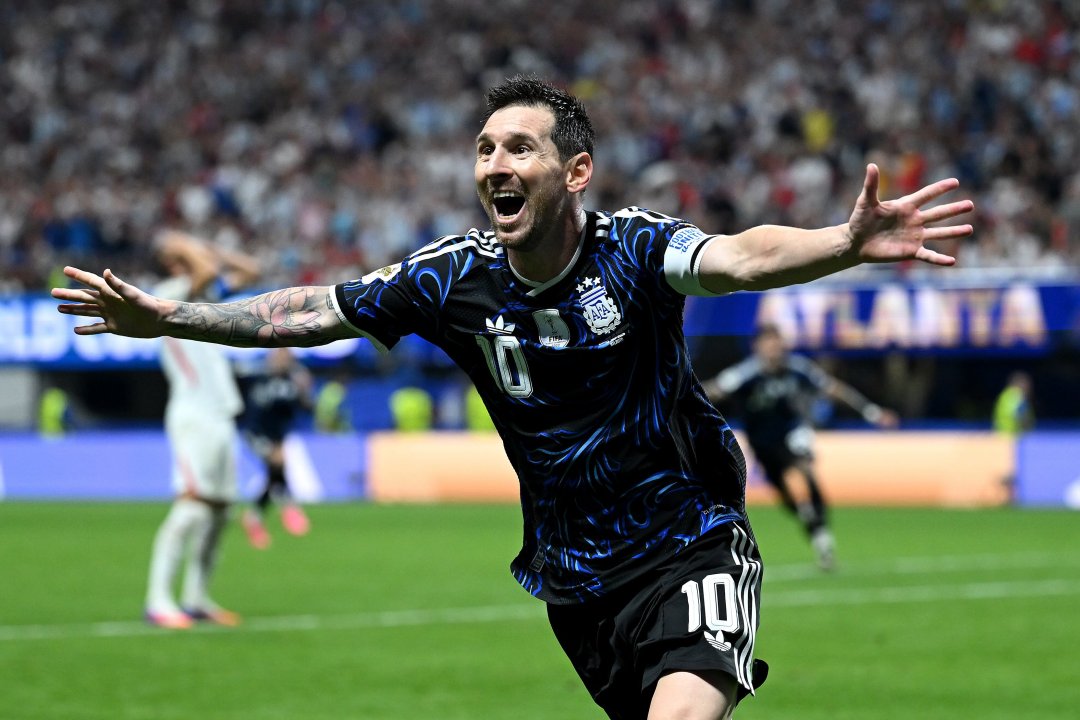
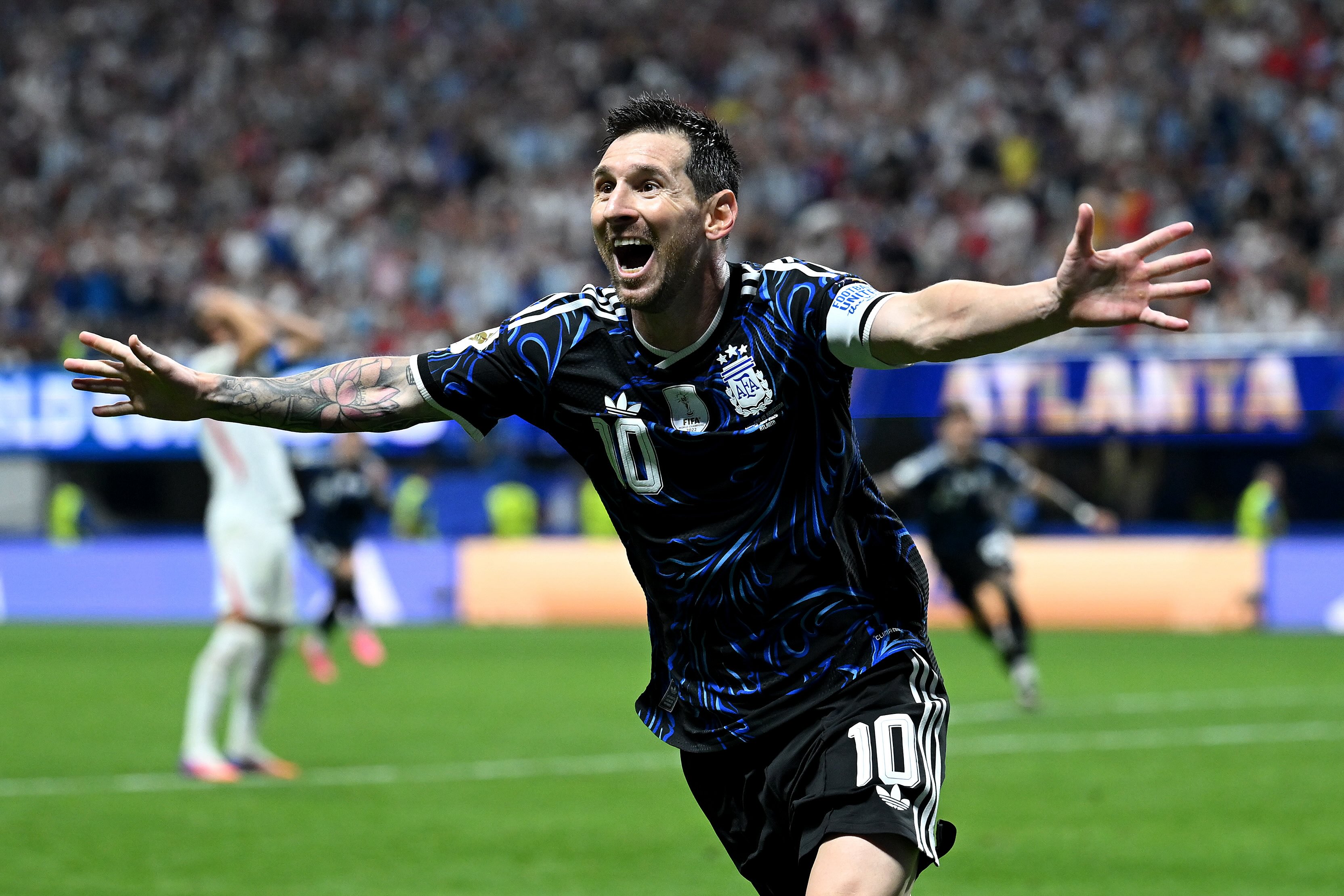
Tonight, Lionel Messi will walk out for his third World Cup final at 39 years old. Should Argentina beat Spain, they will be the first side to retain the trophy since Brazil in 1962, and the case for Messi as the greatest player of all time will be closed for good. As a self-respecting Englishman, I will not be cheering for Argentina after Wednesday’s depressing semi-final. I’ll be silently supporting Messi for a very different reason. At 5ft 7in, he represents a victory for the least pitied disadvantaged group: the vertically challenged man.
Back in 2022, TikTok was awash with videos hailing ‘short king spring’: a trend celebrating the rise (no pun intended) of famous men under 5ft 8in. Fast-forward four years and we seem to be enjoying a ‘short king summer’ of which Messi is just one face – or, rather, body. Arthur Fery (5ft 9in), became the shortest male tennis player to reach the Wimbledon semi-final in decades. The Odyssey actor Tom Holland (5ft 8in) revealed he had secretly married one of the world’s most beautiful women, Zendaya (5ft 10in). And Ben Duckett (5ft 7in) was our highest run scorer in an otherwise miserable Test series against New Zealand.
As a self-appointed spokesman for the community, I feel a duty to highlight their achievements against the odds. At 5ft 8in, I am tall enough to be within tiptoeing reach of the average yet short enough to have looked up what that average is (5ft 9in for British men). Shorthood does not always come with shortcomings: I am generally grateful that I fit into a plane seat and am safe from Tudor beam concussions. But, in an age of competitive victimhood, it seems only fitting that short men receive their dues.
This summer, that has been particularly visible in the world of sport. Most team sports are heightist in all but a few positions. I’m sure we can each remember our favourite pint-sized strikers and wingers, from the 5ft 6in Italian footballer Gianfranco Zola to 5ft 7in Welsh rugby player Shane Williams. But the height of the average Premier League player is still 6ft. The England team at this World Cup are half an inch taller still – not that it helped them defend any crosses. Many athletics events lean towards taller competitors (the world’s fastest man Usain Bolt remains as gangly as he is speedy at 6ft 5in) and let’s gloss over basketball altogether. The only sporting areas where smallness is an advantage tend to be where weight is all important: jockeys, coxswains, gymnasts, Formula One drivers, marathon runners and cyclists who like going uphill. Being short and broad leaves even fewer options: a BBC calculator once told me that my dimensions were best suited for judo.
Fery deserves his own mention. The Brit is closer in height to Ronnie Corbett than to his 6ft 6in semi-final opponent Alexander Zverev. Height confers two massive advantages in tennis: angles (particularly when serving) and reach. As the modern game has become more competitive so too have the players become taller: the average man in the ATP top 100 now stands at nearly 6ft 2in. There are rare exceptions: the diminutive Argentine Diego Schwartzman somehow reached world no. 8 before retiring last year. But to find a genuinely short Wimbledon champion one has to go all the way back to the 5ft 8in Rod Laver and a time when racquets were wooden and the bar was a lot lower.
In an age of competitive victimhood, it seems only fitting that short men receive their dues
If sport seems trivial, consider sex. Dating apps have provided the data to confirm heterosexual women’s height bias. According to OKCupid, men routinely lie about their height, by an average of about two inches. Women typically say they prefer men to be eight inches taller than them but men are, on average, only five inches taller, creating a clear market mismatch. Researchers have found that most women say they would prefer to date a man above 5ft 9in (although one assumes they might make an exception for Messi).
Mismatched couples are notable because they are rare – former French president Nicolas Sarkozy and the supermodel first lady Carla Bruni, F1 boss Bernie Ecclestone and his ex-wife Slavica. In both of these cases, as in others, the gentlemen possessed – shall we say – compensating assets. Depressingly there appears to be a fairly transactional trade-off between height and money. When economists studied online dating, they found that for a 5ft 6in man to attract the same interest as a 6ft-plus, he would need to earn roughly $175,000 a year more.
The further bad news for ‘short kings’ is that acquiring that money also seems to be harder. Around 58 per cent of Fortune 500 chief executives are 6ft or taller. Every inch of height is worth roughly $800 a year in salary. The US electorate is no better: the taller candidate has won 58 per cent of American presidential elections, and every president since Jimmy Carter has stood 5ft 11in or taller. Interestingly we as a country appear to be marginally more meritocratic: in 2002 the nation voted Winston Churchill (5ft 6in) and Isambard Kingdom Brunel (5ft) as the two greatest Britons of all time.
Shorter men may battle against the odds when it comes to sport, sex, money and power but are magnanimous victims. We will forgo the awareness day, the ‘all-short’ shortlists, the quotas and the mandatory board representation. All we ask is that, should Messi lift the trophy again, the Argentines follow our example for diminutive heroes and elevate him on a 169ft column.






Comments