Lionel messi

The short attention-span war

It’s day seven of “Operation Epic Fury” – and the White House is posting through it. The war in Iran that Team Trump wants to show us is tailored for the short attention spans of the vertical video era. Consider this clip posted on X by the official White House account last night, which intersperses declassified footage of US drones hitting their targets with scenes from Gladiator, Iron Man, Braveheart, Top Gun: Maverick and Yu-Gi Oh. Or the video from earlier in the week that cuts between planes and bunkers being blown up and… SpongeBob SquarePants.

attention

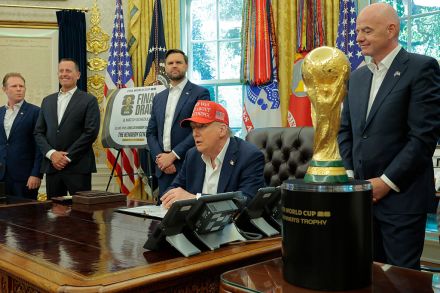
FIFA president joins Trump for Oval Office kickabout

Washington, DC President Trump had balls on the brain on Friday. At an unannounced stop at the People's Museum by the White House – where he was checking out the newly refurbished gift shop –  he laid down the gauntlet to DC Mayor Muriel Bowser. “I think the mayor has to get on the ball, because we have a situation, and she’s a nice woman, but I tell you what she’s got to get on the ball,” the President told the press. “I don’t want to see phony numbers.” We are now in the 12th day of Trump’s federal takeover of law and order in the capital. In that time, 719 arrests have been made, 36 of them illegal aliens, according to the White House. Next, the President headed over to the Kennedy Center to inspect the ongoing reconstruction efforts.

Trump World Cup

What the Messi row reveals about Chinese football

From our UK edition

40 min listen

The Argentinian football star Lionel Messi has been trending on Weibo – and unfortunately, not for a good reason. It all started when Messi sat out a match in Hong Kong earlier this month. His reason – that he was injured – wasn’t good enough for some fans, and keyboard nationalists quickly took offence when Messi played in Japan, a few days later. The furore has dominated Chinese social media over the last few weeks, and even led to the cancellation of some upcoming Chinese matches with the Argentinian national team, as authorities demanded an apology from Messi. What a mess. But beyond its seeming triviality, this episode tells us something about the nature of Chinese online nationalism, I think, and it might also shed light on how football works within China.

Football fans’ loyalty no longer lies with clubs, but players

From our UK edition

The world’s top footballers now have a bigger following than the clubs they play for. Fans are beginning to support superstar players as they move around from club to club rather than sticking with a team – and this threatens the very foundations of the sport. Devotion to a team – for centuries a (largely) peaceful way of channelling our tribalism – is disappearing Streaming and social media are largely to blame. After Pelé signed for the New York Cosmos in the mid-1970s, only 40,000 US football enthusiasts would flock to the old Giants’ stadium. Earlier this month when Lionel Messi joined Inter Miami in Florida, the club’s co-owner David Beckham claimed that Messi’s unveiling had 3.5 billion views online.

Francis Suarez’s Messi debate stage ploy

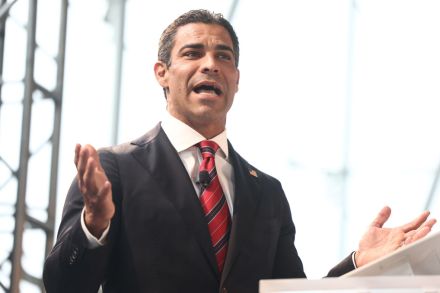
As Miami mayor Francis X. Suarez looks to dribble onto the presidential debate stage in Milwaukee, he’s raffling off front-row tickets to soccer superstar Lionel Messi’s American debut to anyone who Venmo's his campaign a single dollar — but campaign finance experts warn that the gimmick could pave the way for an influx of illegal foreign cash. Suarez is shooting his shot, banking on Messi’s star power more than his own to vault him past the required 40,000 donors the Republican National Committee is requiring in order to debate.  https://twitter.

francis suarez messi venmo

Rest in peace, Pelé, the undisputed King of football

From our UK edition

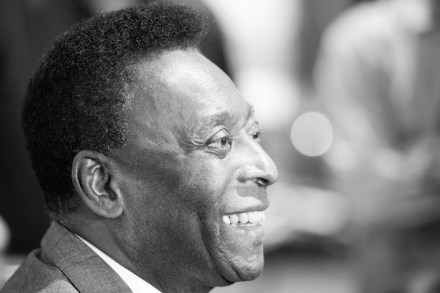
When Lionel Messi won the World Cup for Argentina earlier this month, it not only filled the last hole in his trophy cabinet, it also seemed to end the debate over who was the greatest footballer of all time. Football fans have debated for years about whether Messi was equal to Pelé and Diego Maradona, the two long-standing candidates for one of sport’s most futile and yet most sought-after titles. By finally winning the World Cup, fans and pundits the world over ruled en masse; Messi was now the greatest. Pelé’s death on Thursday will reopen that debate and hopefully give pause to those who have sided with the Argentine magician.

Barça’s golden age and its ruling triumvirate

From our UK edition

Even against our better judgment we tend to imbue our sporting heroes with characteristics they may not possess. This can often lead to disappointment. What passes for fluency on the pitch is seldom matched with any articulacy off it. Lionel Messi, arguably the best player of his generation, is no exception. The Argentinian’s inability to communicate verbally has rendered him an enigma. In Simon Kuper’s incisive and fascinating new book — one that charts FC Barcelona’s transformation over the past three decades from provincial club to international brand — Messi cuts as elusive a figure on the page as he is does off it.