

I’ve been listening to a symphony that I would describe as an almost perfect masterpiece by a composer of towering importance. But until last month I’d never heard it. Most music-lovers would struggle to identify the piece; most orchestras have never performed it and have no plans to do so.
We can only be talking about a symphony by Joseph Haydn. He wrote 104 of them, plus two or three others that didn’t make it into the catalogue. For that reason alone there aren’t going to be many opportunities to hear the less popular ones. Which raises the question: what makes a Haydn symphony popular?

The short answer is: a nickname. That’s not surprising. The Farewell, the Hen, the Clock and the Military play tricks that invite affectionate titles. More significantly, they reveal a miraculous juxtaposition of melody and counterpoint unsurpassed by any composer in the history of music. But then so do dozens of other Haydn symphonies without nicknames.
Which brings me to No. 76 in E flat major. Where has this been all my life? Sitting under my nose in boxed sets that I’ve been too lazy to investigate properly. My excuse, not a very good one, is that it doesn’t seem to be on anyone’s radar. Unless you’re seriously into Haydn, if you discover No. 76 it’s likely to be by accident, perhaps served up by a streaming algorithm.
If so, it will be a very happy accident. The first movement grabs us not with a melody but with a minuscule dotted rhythm (dum-di-DUM). The effect is both carefree and restless – a very Haydnesque combination, and one that so fascinated Robert Simpson that he copied and pasted it into the explosive Scherzo of his Fourth Symphony.
This fleeting motif, heard only in the opening Allegro, flavours all four movements of No. 76. Haydn may not have invented the symphony, but he was the first composer to create thematic and emotional correspondences between their movements. He does this again and again, yet the sum of the parts is always different. There is no substitute for No. 76. Your understanding of Haydn is incomplete until you hear it, and since that won’t be in concert you need to pick the right recording.
Unfortunately that’s easier said than done. The natural place to encounter the lesser-known symphonies is in complete cycles, three of which – by Christopher Hogwood, Roy Goodman and Derek Solomons – were begun in the 1980s but had the plug pulled on them when the money ran out. Max Goberman’s pioneering cycle died with him in 1962; the late Thomas Fey’s set with the Heidelberg Symphony Orchestra had to be completed by others after he suffered a horrific brain injury in 2014.
There are only four Haydn cycles under a single conductor. The first, by Ernst Maerzendorfer and the Vienna Chamber Orchestra, is a historical curiosity that survives in damaged transfers from LPs. Adam Fischer’s with the Austro-Hungarian Haydn Orchestra drowns the ‘London’ symphonies in Nimbus’s sonic mud. Dennis Russell Davies and the Stuttgart Chamber Orchestra sound as if they’re sight-reading. That leaves Antal Dorati and the Philharmonia Hungarica, whose stately but eloquent readings were captured in glowing Decca sound that has just been given extra polish in a new remastering. Alas, you can rely on Decca to screw up its boxed sets, and this one is currently no longer available on Amazon; apparently it sold out on pre-orders. Meanwhile, the thrilling but divisive period-instrument readings in Giovanni Antonini’s Haydn 2032 project are, as the name suggests, some years off completion. So where does that leave us?
There is no substitute for No. 76. Your understanding of Haydn is incomplete until you hear it
Back to Symphony No. 76. The finale, with its swooping grace-notes, bursts with joie de vivre. Here, Dorati is too slow. My top recommendation of available recordings would be Johannes Klumpp, who stepped in to finish Fey’s cycle. His performance has a lovely bounce, though there’s too much period-style fiddling with dynamics.
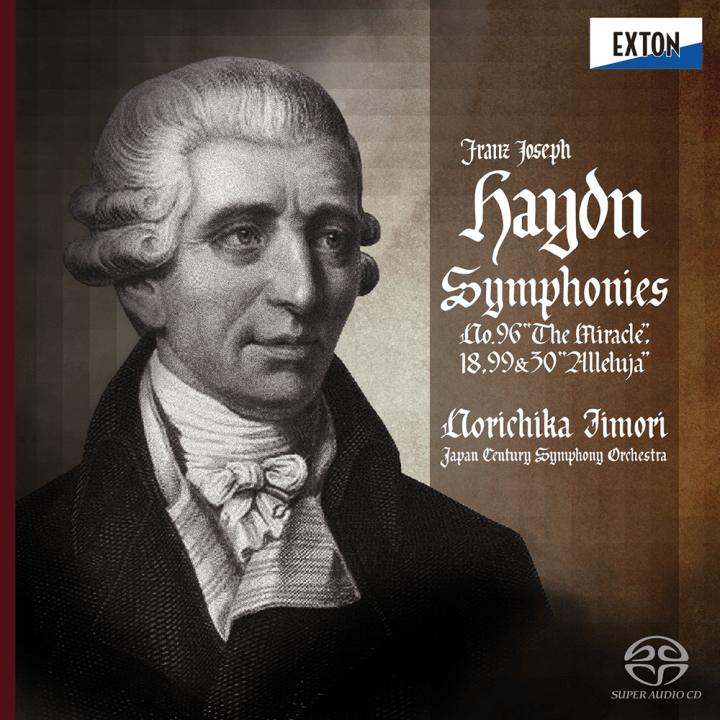
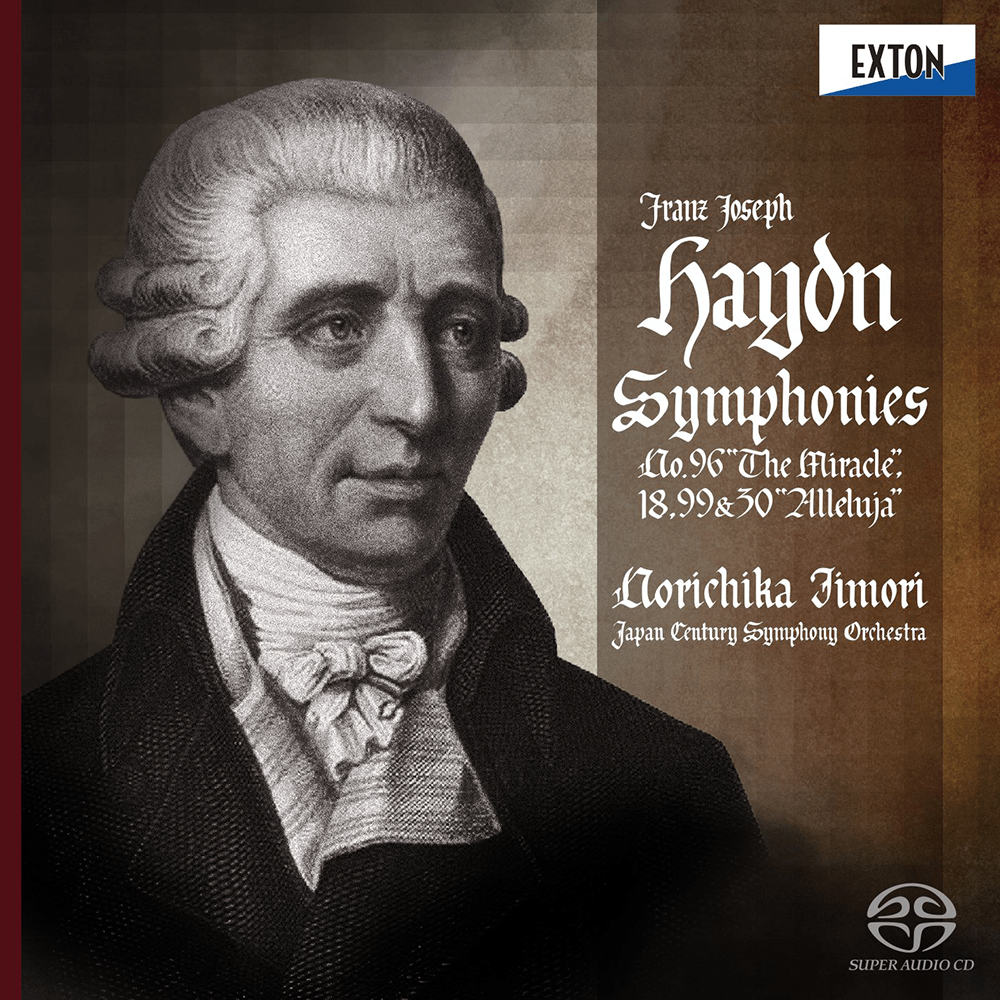
But note that I said available recordings. For the past decade, Norichika Iimori has been recording all the Haydn symphonies with the Japan Century Symphony Orchestra. He has nearly finished. These are wonderfully transparent modern-instrument readings by a conductor whose feel for Haydn’s arches and pauses gives us a near-ideal balance of pathos and wit. In the finale of No. 76, the ornaments fly past like feathers in the wind.
In short, Iimori’s Haydn symphonies are the equivalent of Suzuki’s Bach cantatas with the Bach Collegium Japan: a new benchmark – but with one infuriating difference. Suzuki was on Bis, based in Sweden; Iimori is on Exton, which like most Japanese labels makes its recordings only sporadically available to Westerners at monstrous expense. These are the most consistently fine performances of the most important body of orchestral music ever written, yet there hasn’t been a single review in Gramophone or Fanfare. Why? Because you can’t buy the bloody things. Unbelievable.






Comments