The US military has launched a fresh round of strikes against Iran – the second in the past 48 hours – after President Donald Trump declared the fragile ceasefire agreement between the two sides was “over.” Trump said the latest attacks were in “retribution” for Iranian strikes on three cargo ships in the Strait of Hormuz.
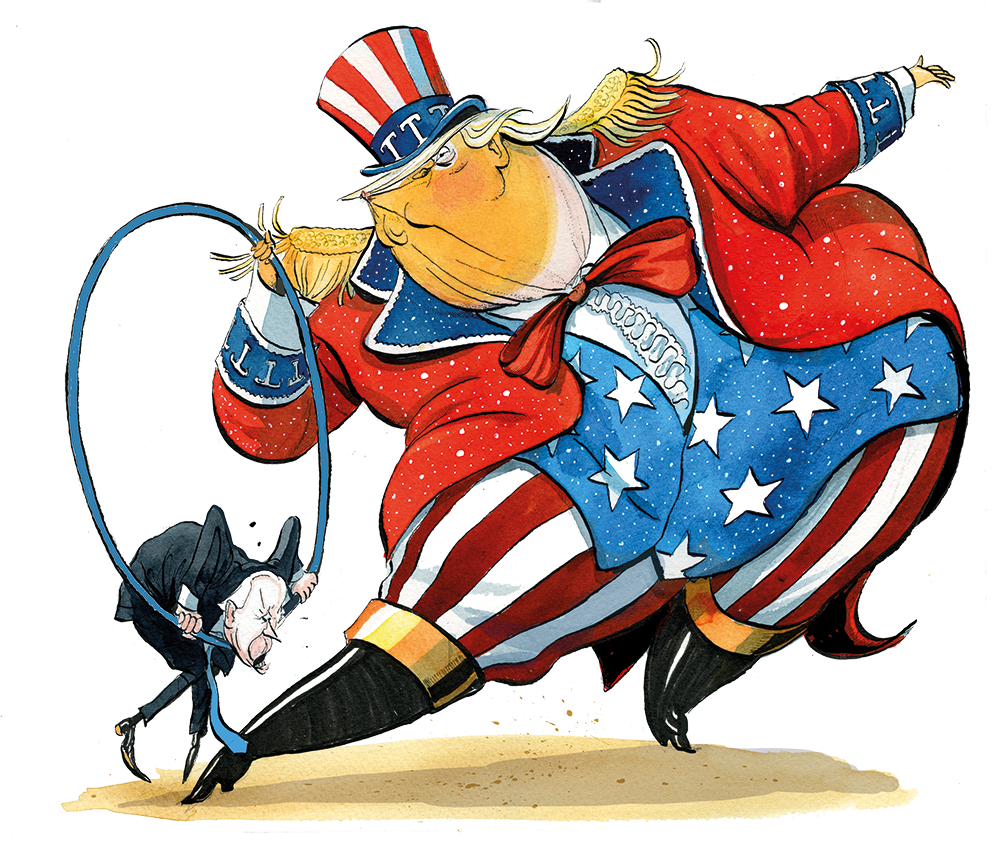
Trump, in an angry tirade, referred to the Iranian leadership as ‘scum’
Trump added that if there were further attacks on shipping “it will get much worse!” The strikes hit a railroad bridge in Iran’s northeast, according to Iranian state media, as well as a military base in the coastal city of Bushehr, which is the site of the country’s only civilian nuclear plant.
In return, Iran’s military claims to have hit targets in Qatar, Bahrain and Kuwait, warning that it would do so again if American attacks continued. The renewed military confrontation has led to widespread fears of the renewal of all-out war in the Middle East. It is certainly the most extensive exchange of fire between the two sides since the memorandum of understanding was signed last month. It makes the task of turning that agreement into a permanent deal to end the war much harder.
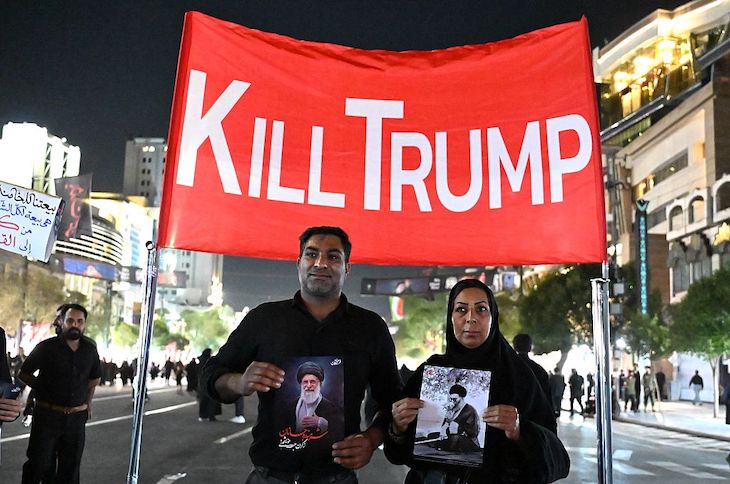
The language used by both sides has also taken a turn for the worse. Trump, in an angry tirade, referred to the Iranian leadership as “scum.” The Iranian parliament speaker, Mohammad Bagher Ghalibaf, a key negotiator in talks to end the war, was just as belligerent on X: “The era of bullying and extortion is over. It leads nowhere. We don’t fold.”
Ghalibaf has become one of the public faces of the regime, goading Trump on X, but what actual power he wields in the ruling circle in Tehran remains unclear. Muddying the waters even further are the latest remarks from the US President who claimed Iran wants to “make a deal so badly,” after the latest attacks by the US. Speaking to reporters on Air Force One as he returned from the NATO summit in Turkey, Trump added: “I just don’t know if they’re worthy of making a deal. I don’t know that they’re going to honor the deal.” Iran has not mentioned any new negotiations.
This latest military confrontation comes on the day that Iranians prepare to bury their former supreme leader, Ayatollah Ali Khamenei, in his home town of Mashhad. He was killed in the first day of the US-Israeli strikes in late February that
marked the start of the war.
His funeral ceremony has been a week-long series of events, with huge crowds of mourners lining the streets. His son and successor, Mojtaba, was a no-show at the funeral, leading to fresh speculation about his state of health. Mojtaba has not been seen in public since the day of the strikes that killed his father and other members of his family. He is believed to have been seriously injured but little else is known about his condition. There has been speculation that he might have been warned off attending the funeral because of fears that he might be targeted for assassination. No one really knows.
His non-appearance has led to questions about who is actually in charge of Iran and making the critical decisions about the conflict with the United States. The elaborate public mourning and funeral ceremonies this week have provided few real clues. Iran remains in a state of limbo, nominally in the hands of a rump of the former regime.
The jockeying for position, influence and power in Tehran is far from over. Some in the inner circle in Tehran will want to continue on the previous path set by Khamenei of wielding regional power and influence through proxy armies across the region; others now favor more dialogue with the United States as a way of gaining sanctions relief and helping boost the country’s ailing economy.
The one thing that has not changed is that whoever rules the roost in Tehran is preoccupied with survival. This is a regime that remains fearful of the unpredictable US President and the danger of all-out war returning. Such an outcome is not in Tehran’s interests, nor does it suit Trump who is under political pressure to bring a permanent end to the conflict. These latest military skirmishes and the belligerent rhetoric that has accompanied them masks a bigger and more enduring truth: both sides need and want a deal.




Comments