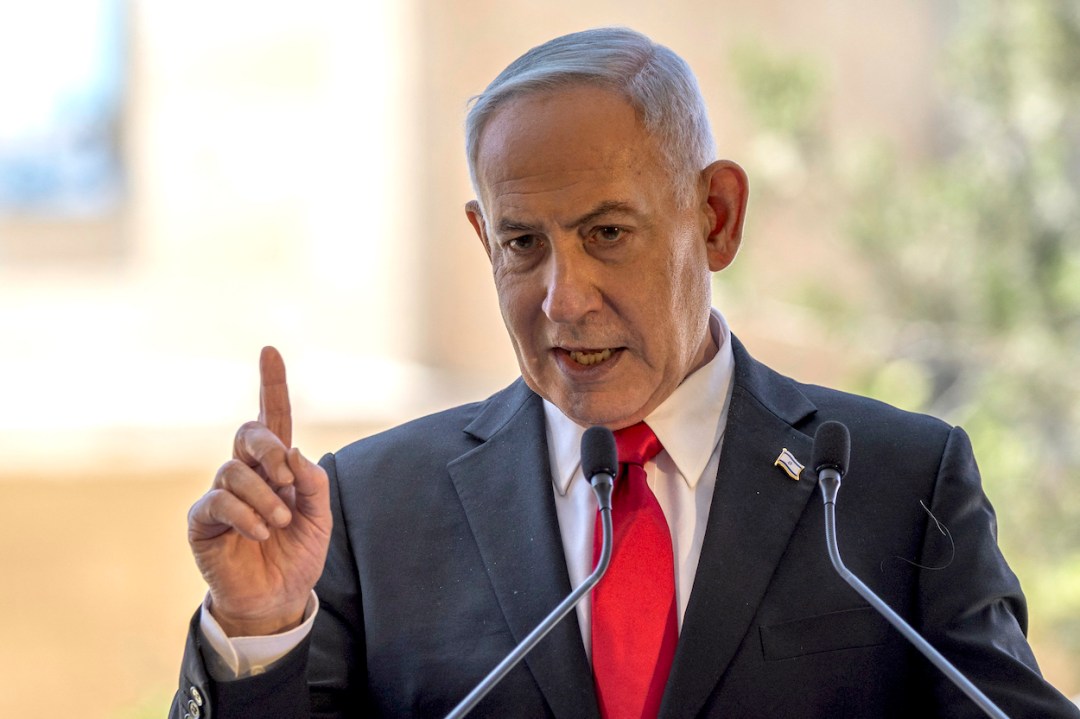
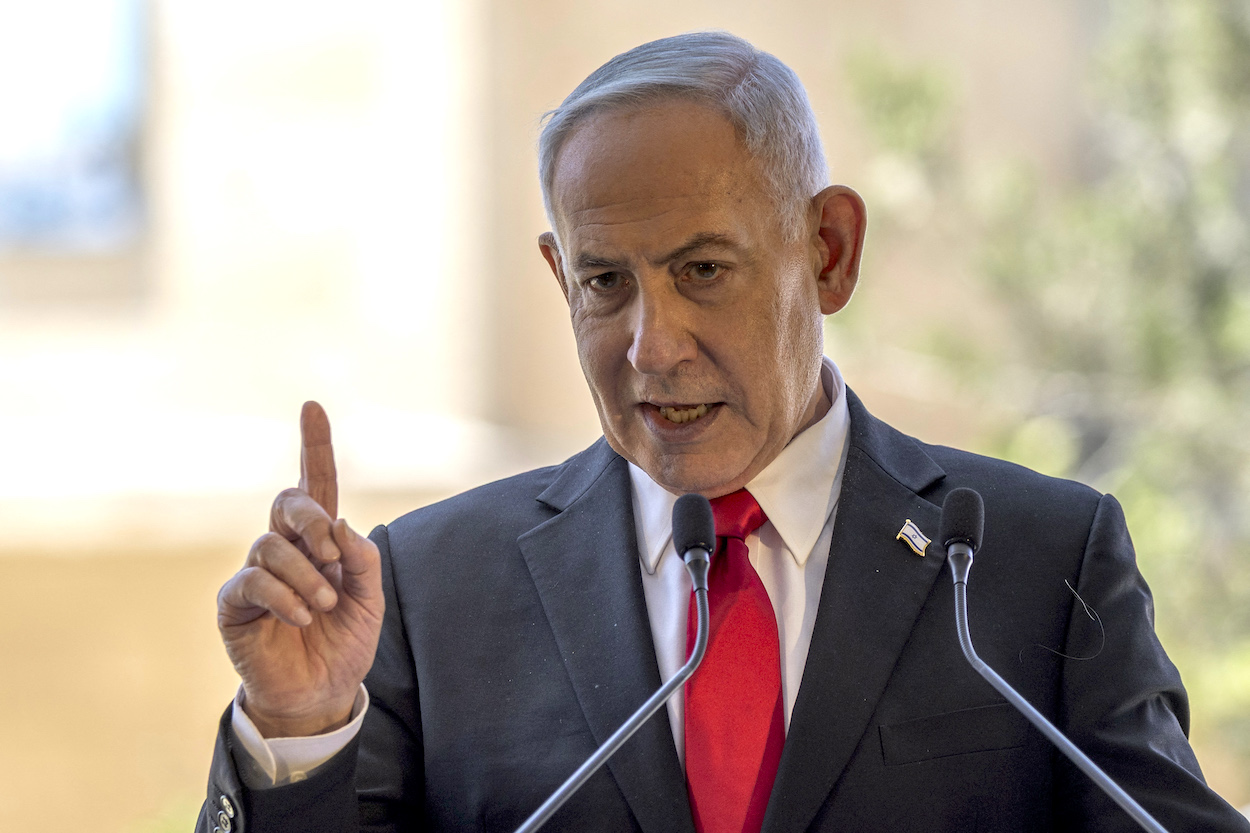
Metaphorically speaking, champagne bottles were uncorked in the Jerusalem office of Israeli Prime Minister Benjamin Netanyahu after Donald Trump declared at the Nato summit in Ankara that the ceasefire with Iran was over. Trump’s remarks – in which he branded Iran’s leaders ‘scum’, ‘a cancer’, and ‘liars’ – were sweet music to Netanyahu and his government.

The 60-day ceasefire, brokered by Pakistan and Qatar on 17 June to end the war between the United States and Israel on one side and Iran on the other – a war that began on 28 February – was effectively imposed on Netanyahu. The Israeli Prime Minister, Mossad, the Israel Defence Forces, and the Israeli Air Force all wanted the fighting to continue. Although they do not admit it publicly, they know that they failed to achieve their stated objectives.
Indeed, Iran’s military capabilities were severely degraded, but its nuclear and missile programs were not destroyed, as both Trump and Netanyahu had claimed and expected. Above all, the radical clerical regime was not overthrown. The CIA and the Trump administration have blamed Mossad for the failure of the regime-change strategy. However, conversations I have held with senior officials from both Mossad and Israeli Military Intelligence paint a different picture. According to them, the plan to overthrow the Iranian regime was developed in full cooperation with the CIA.
Immediately after the first 12-day war in June 2025, Mossad and the CIA launched a joint covert operation. They sent Israeli and American military and intelligence advisers to Iraqi Kurdistan to recruit, train, and equip Iranian and Iraqi Kurdish fighters. They supplied them with weapons, vehicles, uniforms and communications equipment, preparing a force of several thousand troops that was intended to invade Iran. Under the protection of Israeli and American air power, the Kurdish force was supposed to provide the boots on the ground necessary to seize territory and facilitate the installation of a new, more pragmatic leadership in Tehran.
The plan never materialised, even though Supreme Leader Ali Khamenei, who had ruled Iran with an iron fist for 37 years, was assassinated by the Israeli Air Force in the opening strike of the war. Authority instead passed to his son, Mojtaba Khamenei, who is widely regarded as even more hardline. According to Israeli intelligence assessments, Mojtaba – whose health was seriously affected after he was wounded in the Israeli attack – has become little more than a figurehead manipulated by the most radical factions within the Revolutionary Guards.
Netanyahu was convinced that the elimination of Iran’s supreme leader and his dozen top military commanders, combined with a Kurdish ground offensive and covert CIA-Mossad influence operations, would trigger the collapse of the Islamic Republic. Instead, the regime survived, the Revolutionary Guards tightened their grip on power, and the ambitious plan for regime change ultimately failed. Trump pressured Netanyahu into accepting the ceasefire, which, to the Israeli Prime Minister’s dismay, also included the war against Hezbollah in Lebanon. The latest round of hostilities, however – Iran’s missile and drone strikes on three tankers in the Strait of Hormuz, followed by two days of massive US airstrikes and Iran’s retaliatory attacks on American bases in Bahrain – have revived Netanyahu’s hopes that the war will resume.
The Israeli Prime Minister’s motivations are both personal and political. He remains entangled in three long-running corruption trials that have dragged on for eight years, while his standing in opinion polls has declined ahead of elections expected in approximately four months. Netanyahu hopes that a renewed war will improve his electoral prospects. Even so, the prevailing assessment within Israeli intelligence circles, as well as among close observers of Trump, is that the US President has no desire for a full-scale war. It is therefore widely assumed that Pakistani and Qatari mediators will once again step in.
If an all-out war remerges, the Israeli plan is to go all out and destroy most of Iran’s military and civilian infrastructure
The problem, however, is that it remains unclear who is truly calling the shots in Iran. In an eye-opening article in the Middle East Forum, Saeid Golkar and Kasra Aarabi write that the Iranian regime’s oligarchic clans are engaged in a fierce internal struggle that could spiral out of control. ‘This fight is not over ideology or the future direction of the Islamic Republic: all the oligarchic clans are Islamist; some wear turbans, others wear military uniforms, and some wear suits. Rather, they are competing to protect and advance their power and economic interests amid the vacuum that emerged after the elimination of Ali Khamenei.’
Under these circumstances, it is difficult to conduct negotiations, and the situation remains highly explosive, even though both Iran and the United States – unlike Israel – do not want a renewal of the war. In any case, even if the sides manage to return to ‘square one’ and maintain the ceasefire, ‘the chances of reaching a reasonable agreement on control of the Strait of Hormuz and the flow of oil through it, as well as dealing with Iran’s enriched uranium and its nuclear program,’ a former senior Mossad official emphasised to me, ‘are slim.’
If against all odds an all-out war remerges, the Israeli plan is to go all out and destroy most of Iran’s military and civilian infrastructure, including power stations, oil and gas installations, water supplies, and industrial sites. Unlike the last war, ‘this time we will not have a choice but to do it’, my source says, unless once again Trump restrains and tames Netanyahu.



Comments