
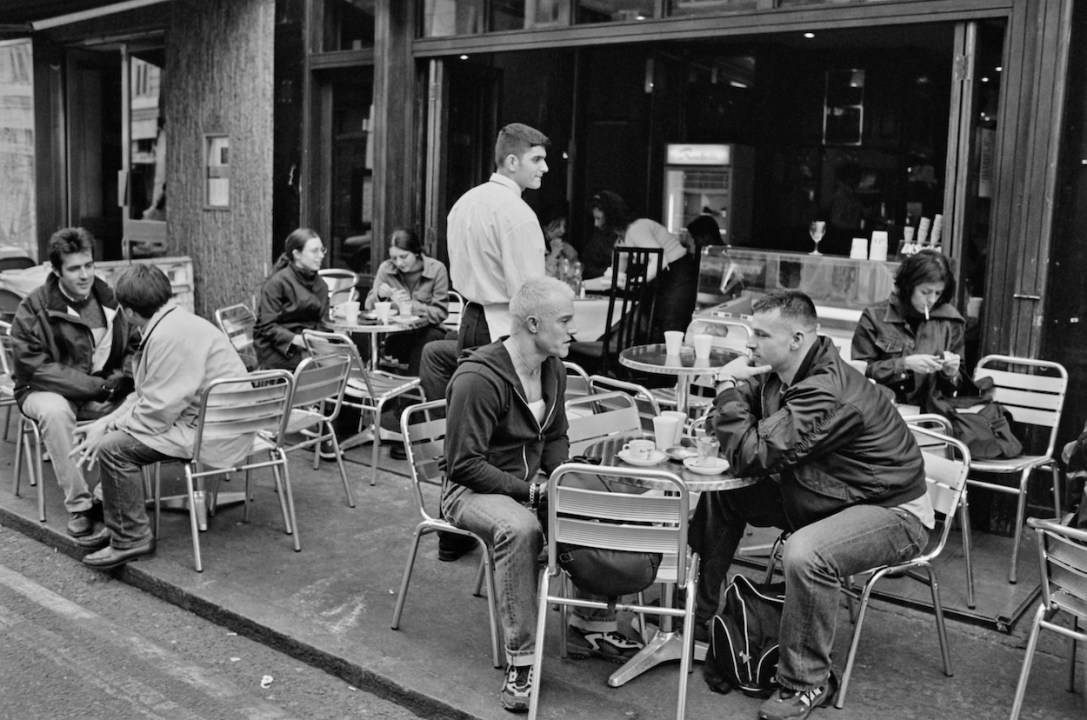
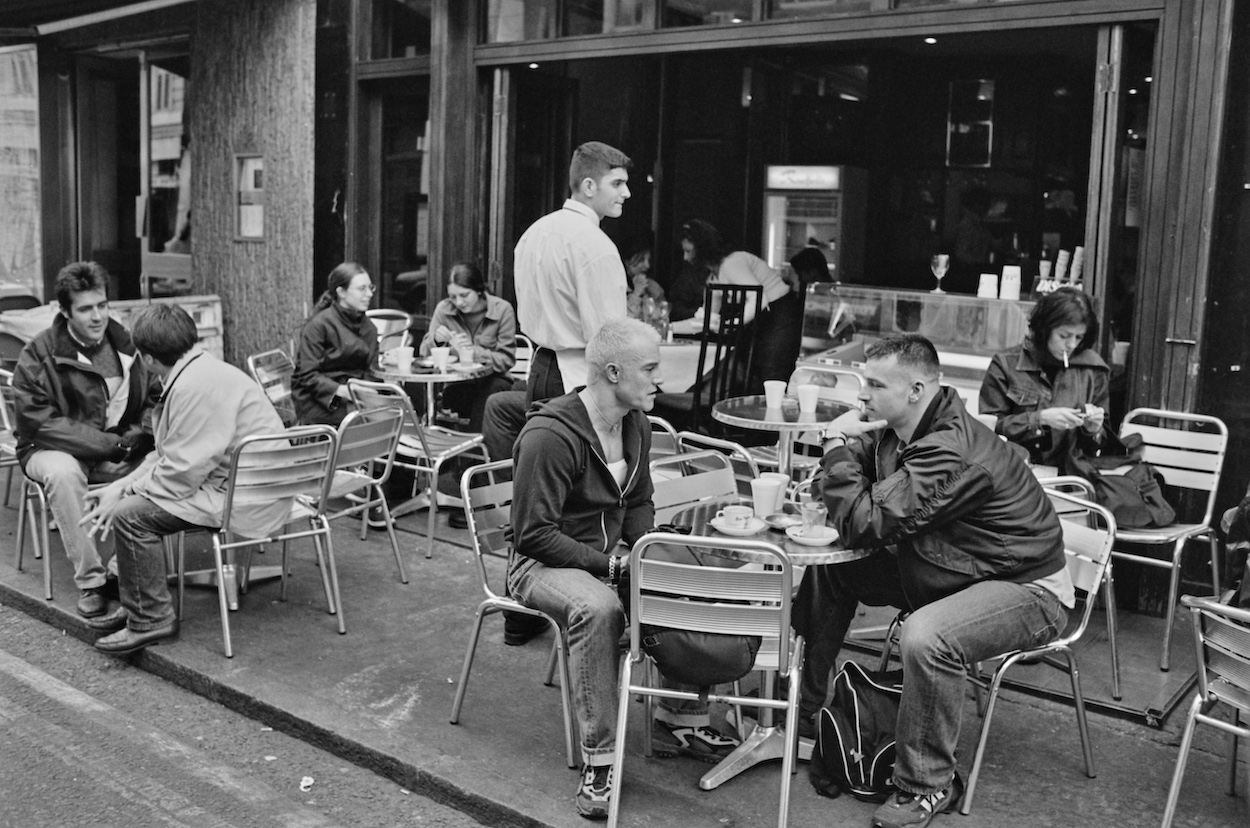
Late in 2020, under semi-lockdown conditions, I viewed an empty flat in the Seven Dials enclave of Covent Garden, a stone’s throw east of Soho. There was no life in the chilly cobbled street. But something told me instantly I had found my next home. ‘This is it,’ I said to the estate agent. ‘How much do I need to offer?’ He raised his eyebrows above his Covid mask. ‘Slow down. You’d spend more time than that buying a new pair of shoes.’
But my mind was made up and I never for a moment regretted the decision. Not least because in a push to revive the moribund West End hospitality trade a few months later, the councils of Camden (of which my flat is at the southern tip) and Westminster, which includes Soho, licenced restaurants and cafés to colonise the pavements in front of their premises — and in some cases the roadways as well. By the summer of 2021, pedestrianised parts of Soho had taken on the ambience of Barcelona.
In my own street, residents’ parking was replaced by tables and benches for a cooked food market and a cocktail bar. An impenetrable one-way system killed almost all traffic after the early-morning delivery trucks and before the boombox-blaring pedicabs which besiege ‘Matilda’ audiences coming out of the Cambridge Theatre. This year, our cobbles have been re-set and the tables have been enhanced with Aperol-sponsored parasols. The only pavement obstacle that bothers me is a crush around the social-media sensation which is the tiny Humble Crumble kiosk.
Overall, I love this post-pandemic, climate-change-congruent rejuvenation of urban life. But among residents of Soho and Covent Garden, I may well be in a small minority. While the transformation of relatively genteel Seven Dials has continued, Soho’s al fresco revolution was largely unwound after a barrage of noise complaints. And the battle lines are being drawn up anew.
On one side, London Mayor Sir Sadiq Khan is threatening to use new powers to override Westminster’s resistance to a renewal for this summer and autumn of the 2021 scheme. Deploying a £500,000 fund with which he aims to promote new uses of outdoor space across 13 boroughs, perhaps he’s hoping belatedly to compensate for his wider failure to add anything positive to London’s economy. But opposing him are the likes of the Soho Society and the Covent Garden Community Association, which work doggedly day-in, day-out, to restrain planning and licensing applications that threaten local quality of life and safety, particularly for families with children.
Everyone recognises that the mass shift to al fresco has enlivened the capital and turned some of its seediest byways into tourist destinations. But it’s also a significant transfer of public outdoor space into private commercial use at far below any estimation of fair value. In return for minimal outdoor licence fees, it has awarded revenue bonuses to restaurateurs estimated at £7,000 per cover per annum; many have effectively doubled their capacity at no cost beyond a few extra sticks of furniture.
All to the good, you might think, given the inflationary and red-tape pressures they face and the tightness of their customers’ wallets these days. But the ultimate beneficiaries are often not the worthy small traders themselves but the corporate landlords who charge them turnover-related rents, notably Soho Estates (controlled by the family of soft-porn publisher and Revuebar owner Paul Raymond) and public-listed Shaftesbury Capital, which owns Carnaby Street, Chinatown and much of Covent Garden. I’m told some hospitality businesses that struggle to find sufficient staff have asked residents’ associations to oppose the outdoor applications these landlords have insisted they should submit.
And most residents would not mind so much if it was all done in a more orderly and courteous way, with passage left for pedestrians without forcing them into the road, tables packed away by 10 p.m. and crowds actively dispersed. But that’s too often not the case. Take a late-night walk through any thoroughfare of Soho (but not its alleyways and not if you’re a woman alone) and you’ll see what I mean.
Noise goes on unabated, inevitably fuelled by drunkenness. Opponents of more liberal licensing regimes cite a correlation with increases in violent and sexual crime which at the very least demands a parallel increase in visible policing. But police budgets are tight, just as borough enforcement officers are too few to cope with multiple licence infractions, ranging from persistent late closing to pavement-blocking without ever having applied for a licence at all. And on top of all that, many pedestrian routes have become assault courses of abandoned e-bikes: on crowded nights our busiest West End junctions are close to anarchy.
The more intense the commercialisation of any urban area, the less family-friendly it becomes
If I’m beginning to sound like a party-pooper here, it’s because I’m aware of knock-on effects that evening visitors from elsewhere can’t see. The more intense the commercialisation of any urban area, the less family-friendly it becomes; and the more those who can will move away, leaving only the poor, the elderly and the transient short-stayers. ‘Soho’s primary school is fighting for its life,’ a neighbour tells me, ‘as is one of the two primary schools in Covent Garden. A generation ago, they were all full. Once they’re gone, we’ll never get them back.’ But as the resident population withers, so will its voice – and the fatcat landlord interest will prevail.
As in every aspect of life, there’s a balance to be found here. Yes, the fashion for al fresco dining in this decade has been a civilising change for London and many other cities – and the saviour of struggling independent eateries. And yes, it happens to suit me personally, as a single male resident of a street that’s quiet as a graveyard by 10.30 p.m. But it needs mutual respect and orderly enforcement, funded by a licensing scheme that recognises the real economic value of outdoor public space. Fun though it may be, it can’t be a free-for-all.






Comments