
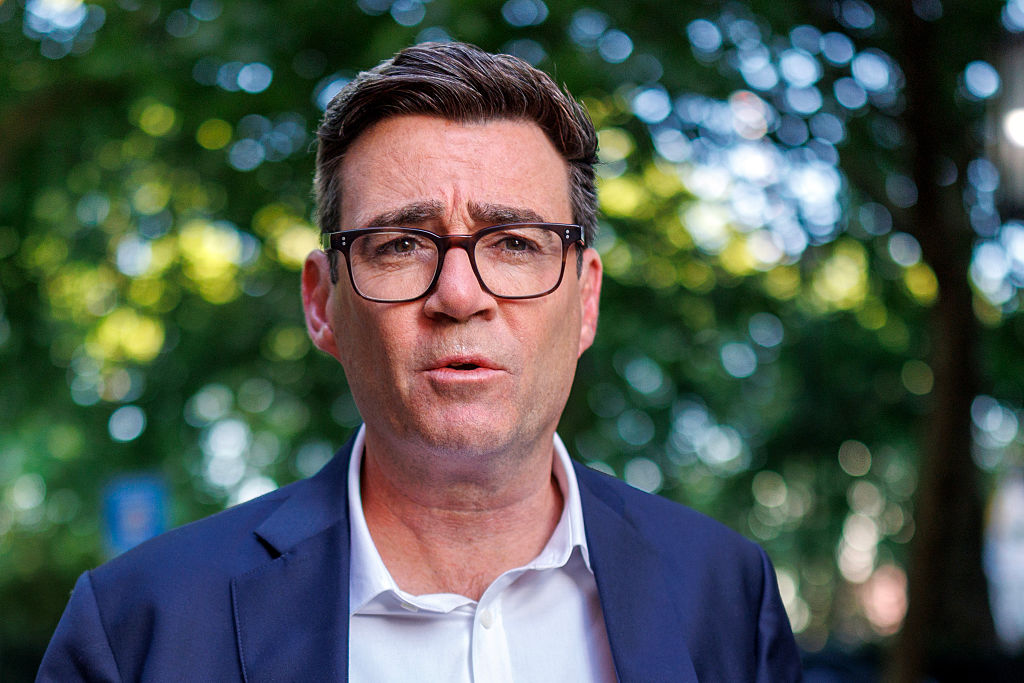
With less than three weeks to go until he enters No. 10, Andy Burnham has adopted a ‘Ming vase’ approach to public appearances. With victory inevitable, why expose himself to media scrutiny at the risk of binding his hands on taking up office? Since his devolution speech on Monday, the new Makerfield MP has kept his interventions to a minimum, with a planned appearance at the New Economics Foundation cancelled last night. But having declined to take journalists’ questions on Monday, Burnham did decide to submit to a radio interview with Andrew Marr on LBC tonight.
The party is split on whether its current malaise is ‘comms or policy’. Burnham may be an upgrade on the former but not necessarily the latter
It is a format in which Burnham is well-versed, having until recently enjoyed his own regular slot on BBC Radio Manchester. Unsurprisingly, the Labour MP’s style was relaxed, fluent and engaging: a marked improvement on the stuttering performances of the current Prime Minister.
The substance, though, was less convincing. Marr opted to start with some easier ice-breakers before getting into the harder stuff. Much of it focused on the culture of politics in Britain, a subject on which Burnham has often opined. He decried the partisanship of Westminster and spoke of his own work with Conservatives on grooming gangs in Manchester. ‘My generation of politicians has failed’, he admitted. ‘The time has come for a circuit breaker to try something different.’
Burnham was keen to talk about ‘how’ he would be different, but more circumspect on ‘what’ he would actually do with power. Across the Labour party, the economy is, by common consent, the biggest issue he will face. Marr tried to tease out just the ways in which Burnham’s approach will be different from Starmer. He will stick to the manifesto on the fiscal rules and tax promises – but believes there is some room for movement on tax. One area he highlighted was his pledge to cut business rates for pubs, which he says will be funded by an increase in rates on Amazon warehouses. ‘I am not indisciplined when it comes to the public finances’, he said. ‘I was in the Treasury’. Hawkish noises on tax then but few commitments.
There was little new on spending either. Asked how he would help small businesses, Burnham suggested that ‘more public control over water, energy, transport’ would lead to lower prices – something that experience suggests will not be the case. There will be no ‘crude cuts’ in welfare, with a focus on reforming education and training. Similar sentiments have been expressed by successive governments. After the debacle last year with Keir Starmer’s attempt to cut benefits, pushed for by the Treasury, many within Labour will regard Burnham’s words as prudent. But given the spiralling cost of the UK benefits bill, Whitehall bean counters will be hoping that he and Alan Milburn, his welfare guru, come up with a plan to curb this trend sharpish.
It was an interview that will change few opinions within Labour. The party is split on whether its current malaise is ‘comms or policy’. Burnham may be an upgrade on the former but not necessarily on the latter. Currently, he has the luxury of functioning more as a commentator than an executor, bemoaning the ‘frustrating’ culture of Westminster when Marr dared to ask if he had chosen a chancellor yet. It is churlish to criticise the questions he gets when the answers he provides are so unenlightening. For now, Burnham will get away with it but after 20 July, the interrogation will only get worse.




Comments