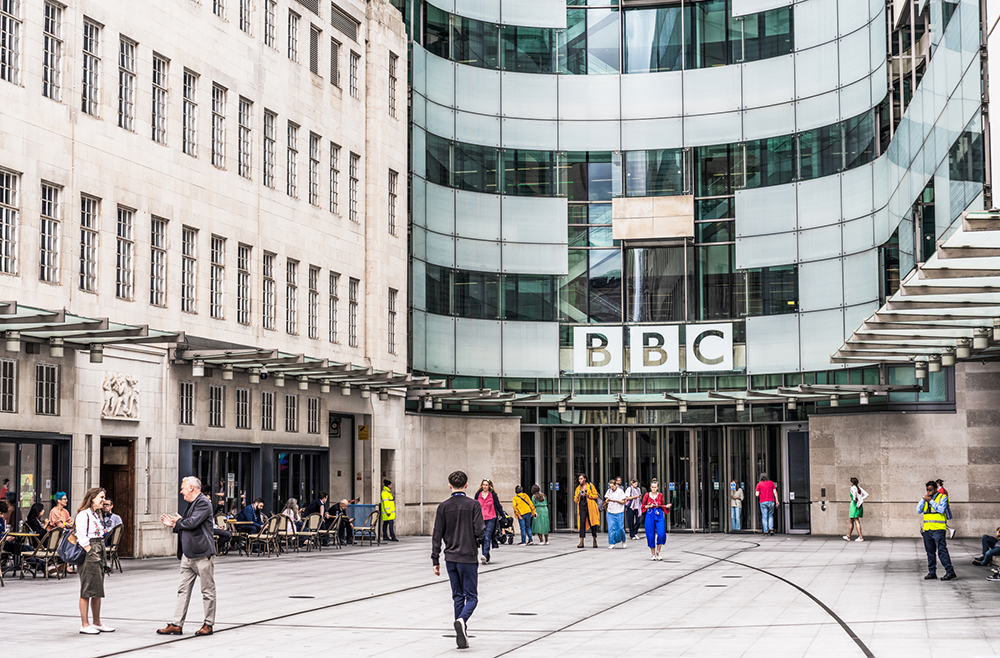


Just when you think this government cannot get any madder, it publishes a truly mental green paper. Called ‘Watch this Space’ and produced by the Department for Culture, Media and Sport, it suggests forcing social media platforms to make content produced by public-service media providers, like the BBC, ITV and Channel 4, ‘prominent and easily discoverable’. So, if you search for an instructional video on YouTube about how to do the foxtrot, it would steer you towards an episode of Strictly Come Dancing. And the content recommended for you by a platform’s algorithm wouldn’t be based on your personal preferences, but on what DCMS – or possibly Ofcom, the details are vague – thinks you ought to be consuming.
In other words, the government’s solution to the declining popularity of our ancient media dinosaurs is protectionism. What could possibly go wrong? Well, for one thing, Donald Trump might retaliate, forcing social media companies in the US to give more prominence to domestically produced content. That would do serious harm to the UK’s freelance content producers, with the US being the largest market for many of them. Even if America doesn’t respond in kind, the new regime could damage the very broadcasters the government is trying to help. Suppose you keep getting tawdry Channel 4 reality shows popping up in your feed when you’re looking for second world war documentaries; you might respond by hitting ‘Dislike’ underneath them, at which point the algorithm concludes they’re rubbish and stops recommending them in countries where they still have to compete on a level playing field.
‘This paper was written by civil servants who don’t have a clue about global media markets,’ I was told by one despairing executive of a social media company. ‘I don’t think they know what a recommender system is.’
The green paper isn’t just a cack-handed attempt to rescue our analogue broadcasters from oblivion. According to Ian Murray, a DCMS minister who’s written the Foreword, the proposals are designed to promote ‘trustworthy news’ and downgrade ‘divisive and inaccurate narratives’.
But isn’t it a bit of a misnomer to describe the media content the government wants people to consume as ‘trustworthy’? After all, if people trusted it, they wouldn’t have to be made to watch it. The reason the BBC now attracts fewer viewers than YouTube is precisely because people don’t trust it – and with good reason, given the misinformation it pumps out about the Israel-Gaza conflict, its fake-news Panorama documentary about Trump and its one-sided coverage of the ‘climate crisis’. Forcing social media platforms to label it ‘trustworthy’ is unlikely to restore its authority. More like the final nail.
But there may be some method in the government’s madness. In chapter two of ‘Watch this Space’ (entitled ‘Supporting a healthy information environment’), it says Labour may legislate to require social media providers to boost content from ‘local and national news publishers’ as well as public service broadcasters. Is that a device to force newspapers and magazines to accept state regulation of the press? We know Labour’s finger–wagging scolds like Ed Miliband and Harriet Harman are frustrated that this recommendation of the Leveson Inquiry was never implemented, and have been searching for a way to hobble the free press ever since. This could be just the ticket, since news publishers would have a powerful incentive to ‘voluntarily’ sign up to a state-controlled regulator, knowing they’d face a huge competitive disadvantage if they didn’t. It could also be a way of doing it without incurring the wrath of the press, since editors are constantly bellyaching about losing eyeballs to algorithmically promoted digital news content. There would be a benefit to submitting to state regulation, as well as a cost.
The reason the BBC now attracts fewer viewers than YouTube is because people don’t trust it – and with good reason
But that cost would be too high. Government control of the British press ended in 1695, when parliament declined to renew the Licensing of the Press Act 1662. The Online Safety Act 2023 does promise some additional free speech protections to ‘recognised news publishers’, but the criteria publishers have to meet to achieve this exalted status are so broad as to be largely meaningless. If this green paper ushers in a narrower definition of ‘trusted news’ publisher, and No. 1 in the list of criteria involves bending the knee to a state regulator, that would, in effect, be a new Licensing of the Press Act and the end of our free press.
There’s a much simpler solution to the declining audience share of legacy media companies: produce better content.



Comments