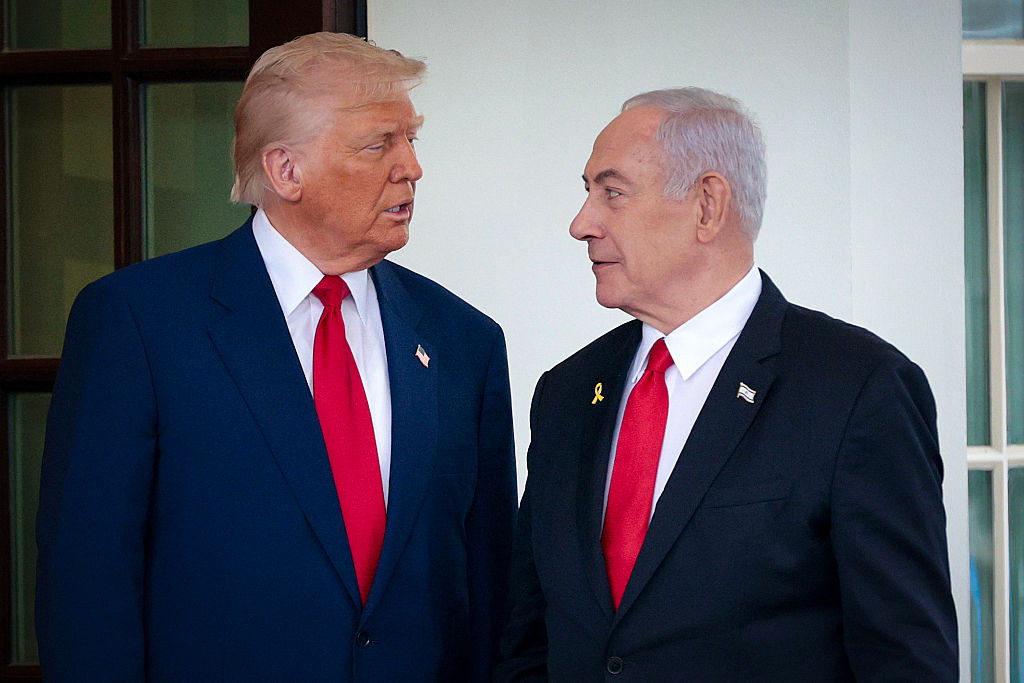
Until recently, the Israeli right regarded US President Donald Trump as its greatest ally. He was often described in quasi-religious terms – as a saviour, even a messiah sent to rescue Israel from international pressure and the constraints imposed by previous American administrations.
According to several American media reports, Trump told Netanyahu: ‘You’re fucking crazy’ and ‘All the Jews are sick of you.’
That admiration stemmed from Trump’s unwavering support during his first term. He moved the US Embassy to Jerusalem, recognised Israeli sovereignty over the Golan Heights, and adopted Netanyahu’s position that Washington should withdraw from the nuclear agreement with Iran negotiated in 2015 under president Barack Obama. Ironically, if the current negotiations with Tehran succeed, the resulting agreement is expected to resemble many of the core elements of the very deal Trump abandoned.
After returning to the White House in January 2025, Trump initially continued his strong support for Israel. He met Netanyahu seven times – more frequently than any other foreign leader and backed Israel’s confrontation with Iran. Together they embarked on a military campaign that, in retrospect, appears to have lacked a clear diplomatic objective and a credible exit strategy.
Trump was ultimately the first to recognise the strategic trap. Once it became apparent that the conflict risked turning into a costly economic burden and open-ended confrontation, he began searching for a way out. Limiting American losses and reaching a diplomatic settlement became his priority, even at the risk of appearing to grant concessions to Iran’s authoritarian Islamist regime.
Against that backdrop, Trump has come to view Netanyahu – and elements of Israel’s security establishment – as key advocates for the war and as having oversold the prospects of a rapid military victory, with even the possible collapse of the Iranian regime. What had begun as a close partnership has increasingly turned into a relationship marked by suspicion and mutual frustration.
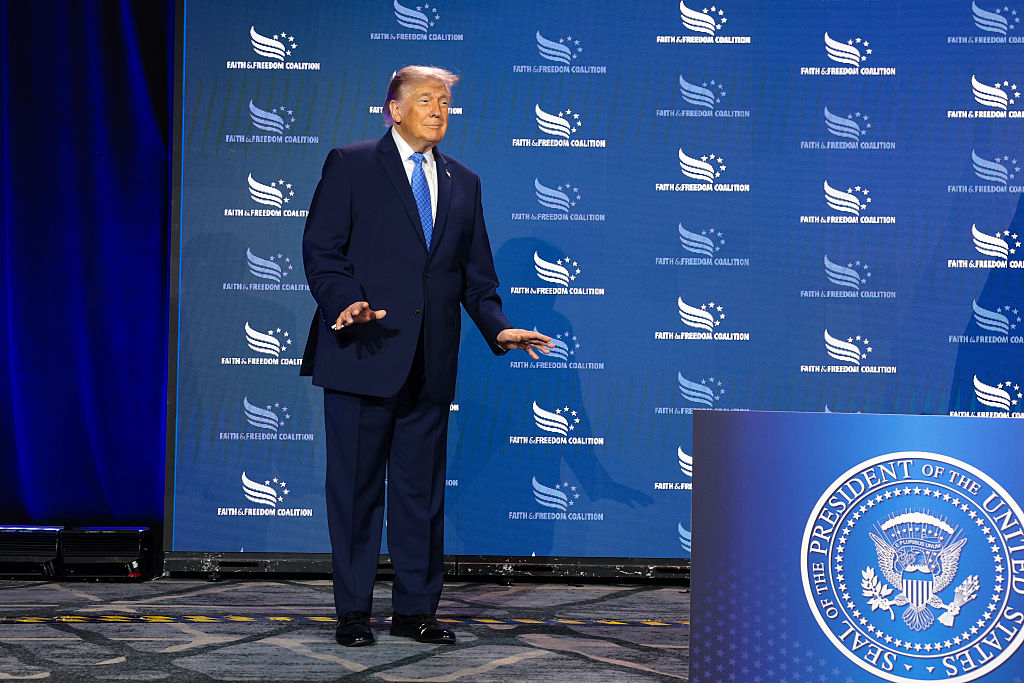
The emerging US-Iran understanding may therefore represent more than a temporary disagreement between allies. It could signal the beginning of a profound transformation in US-Israel relations and the gradual erosion of what has long been known as the ‘special relationship’.
The deterioration did not begin with Trump. Israel’s bipartisan standing in the United States has been weakening for years, a trend accelerated by the Gaza war. Within the Democratic party, support for Israel has not disappeared, but sympathy for Israeli government policies has declined dramatically. Among Republicans, particularly within the growing isolationist wing associated with Vice President J.D. Vance, support for Israel can no longer be taken for granted.
For more than six decades, the special relationship has been one of the pillars of Israel’s national security. Beginning with the Eisenhower administration in the 1950s, Israel came to be viewed as both a strategic asset and a country sharing fundamental democratic values with the United States. That perception deepened after the Six-Day War and reached its high point during the American airlift that helped sustain Israel during the 1973 Yom Kippur War.
The benefits of the relationship have been immense. Following the Egyptian-Israeli peace treaty brokered by President Jimmy Carter, in 1979, Israel became the largest cumulative recipient of American foreign assistance after the second world war era. Economic and military aid has totalled nearly $200 billion over the past six decades.
The partnership has produced joint research and development projects, including missile defence systems such as Iron Dome, David’s Sling and Arrow. These systems have played a central role in protecting Israel from rockets and missiles launched by Hamas, Hezbollah, Iran, and the Houthis.
Washington’s commitment to Israel extended beyond financial assistance. Successive American administrations sought to preserve Israel’s qualitative military edge by limiting the sale of advanced weaponry that could alter the regional balance of power. Military cooperation became institutionalised through joint exercises, intelligence sharing, and operational coordination.
The intelligence relationship has been equally significant. The CIA and Mossad have worked together for decades on counterterrorism operations, intelligence collection, and covert actions against common adversaries, such as Hezbollah and Isis. Diplomatic support has been no less important. The United States has consistently shielded Israel from international efforts to force it into joining the Nuclear Non-Proliferation Treaty and relinquishing its undeclared nuclear capability. In return, Israel has maintained a policy of deliberate ambiguity, neither confirming nor denying its possession of nuclear weapons.
These are extraordinary arrangements between a global superpower and a small Middle Eastern state – arrangements that should never have been taken for granted.
Today, however, they appear increasingly vulnerable. Trump has grown frustrated with Netanyahu, whom he views as manipulative and determined to undermine American diplomatic initiatives with both Iran and Hezbollah in Lebanon.
According to several American media reports, Trump told Netanyahu: ‘You’re fucking crazy’ and ‘All the Jews are sick of you.’ He also reportedly remarked, ‘You’d be in prison if it weren’t for me’ – an apparent reference to the corruption trials that have been hanging over the Israeli prime minister for eight years.
It is therefore unsurprising that Israel’s far right is struggling to come to terms with Trump’s sudden reversal. A revealing example came from Yinon Magal, one of the leading commentators on Channel 14 and widely viewed as a loyal amplifier of Netanyahu’s political message. Magal publicly described Trump as a ‘loser’, referred to presidential advisers Steve Witkoff and Jared Kushner as ‘Jewboys’, and called Vice President Vance ‘scum’.
Those remarks were widely reported in the American media and attracted attention inside the White House. According to several accounts, administration officials interpreted them as reflecting Netanyahu’s thinking.
The result is a profound crisis of expectations for many Israeli conservatives. For years they invested enormous political and emotional capital in the belief that Trump represented an unshakable strategic asset. Now they find themselves confronting a reality in which the American president appears increasingly willing to prioritise US interests – even when those interests diverge sharply from the preferences of the Israeli government.
It is therefore understandable that many on the Israeli right are struggling to overcome their political hangover and the cognitive dissonance in which they find themselves. However, it remains doubtful whether this awakening among the Israeli right will, in the next elections, also be directed at another ‘messiah’ they admire – Netanyahu himself.



Comments