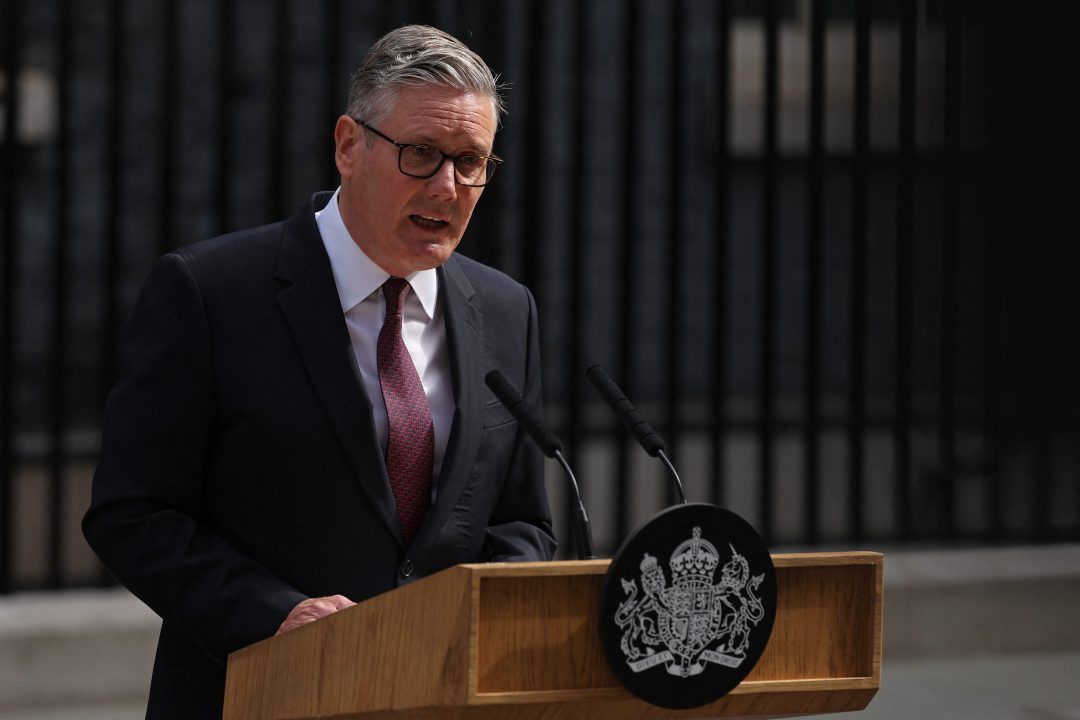
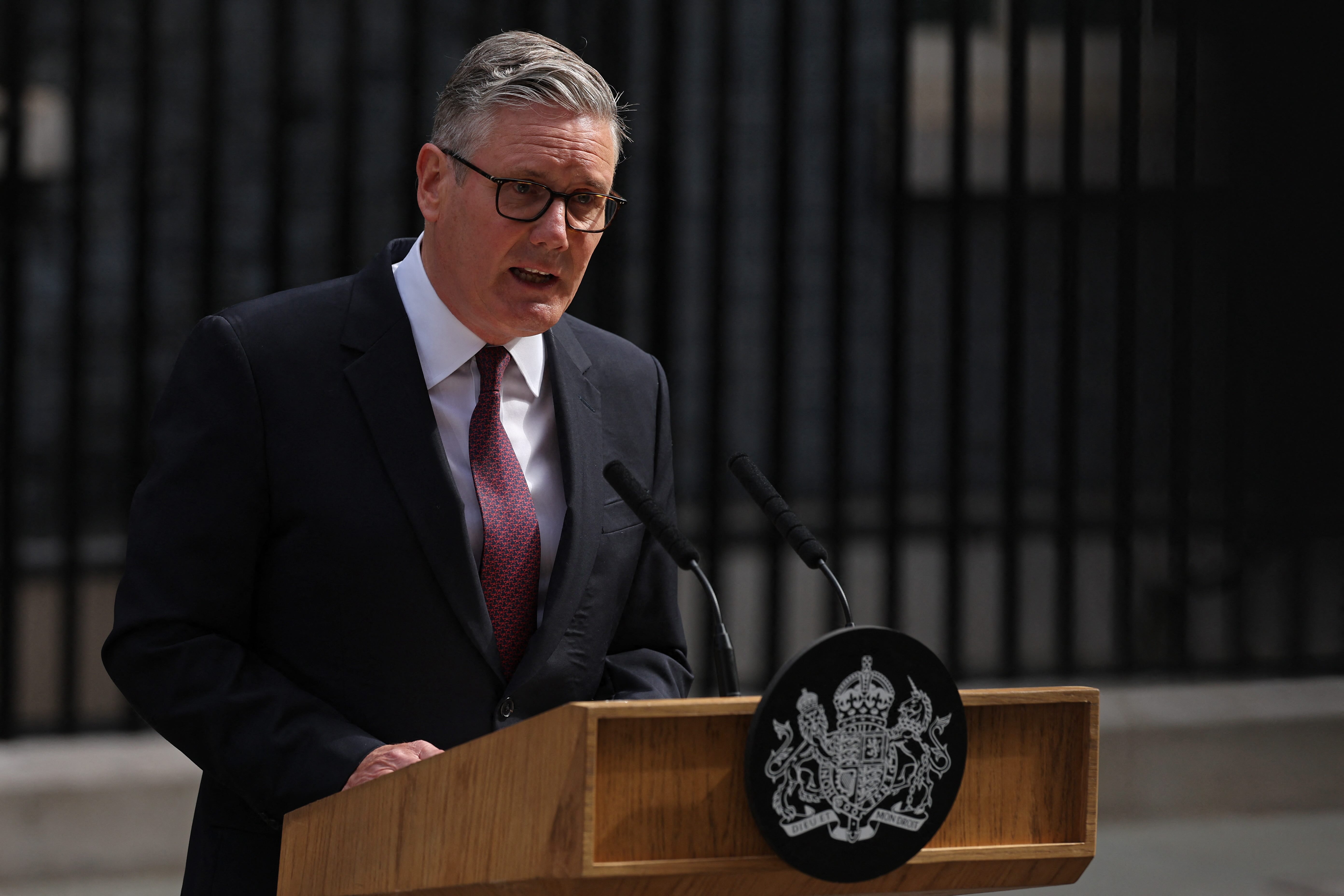
The most memorable thing about Keir Starmer’s resignation speech yesterday was not the resignation. It was the soundtrack. As the Prime Minister tearfully announced his intention to depart Downing Street, the veteran anti-Brexit campaigner Steve Bray began blasting Beethoven’s ‘Ode to Joy’ across Whitehall.
I was initially mildly surprised that modern broadcast technology proved incapable of filtering out a single protester with a loudspeaker somewhere down the road. As the speech dragged into its second minute, I was no longer entirely certain which audio I most wanted removed.
The great joke of the morning was that ‘Ode to Joy’ is a piece about reconciliation. The most important words in the entire symphony are not the famous chorus but the interruption that precedes it. ‘O Freunde, nicht diese Töne!’ (Enough of this. Let us try something else).
It is one of the most startling moments in music. After an hour of struggle, Beethoven appears to lose patience with the argument itself. The old themes are discarded. Human voices enter. The work changes direction. The piece is built around the radical proposition that disputes can be put away. If only it were true.
Bray had come to mark the tenth anniversary of the Brexit referendum. Starmer had spent much of his political life trying to reopen the result. Even on the day of his resignation, Brussels was reportedly fretting over the future of his planned ‘reset’ summit, another instalment in Britain’s seemingly endless effort to renegotiate a relationship that had already been renegotiated repeatedly. A decade after the vote, Britain remains trapped in the same conversation.
The irony is that the European Union adopted ‘Ode to Joy’ while quietly dispensing with the words. The melody was retained. The awkward business of saying anything definite was not. Officially this was because Europe speaks many languages and the anthem needed to belong to all of them. Unofficially, words have a habit of meaning things.
Bray had come to mark the tenth anniversary of the Brexit referendum. Starmer had spent much of his political life trying to reopen the result
This was a difficulty Starmer has spent much of his political career trying to avoid. He reached the Labour leadership by allowing different factions to hear what they wanted to hear. He reached Downing Street by extending the same tactic to the electorate. The less he said, the more people heard. Voters supplied the missing details themselves. He promised nothing in particular and delivered exactly that. ‘I inherited a Labour Party that was politically, financially and morally bankrupt,’ he declared during the speech.
It was a curious target for a man who had spent most of the previous decade sitting in Labour shadow cabinets, six years leading the party and two years governing the country. The habit reflects a broader tendency. Awkward facts, inconvenient associations and embarrassing responsibilities seem to exist just beyond the limits of his perception. History has generally treated Beethoven’s loss of hearing as a misfortune. Listening to Starmer, I began to have doubts.
The composer was apparently so profoundly deaf by the premiere of the Ninth Symphony that he could neither hear the orchestra nor the applause and was still conducting, several bars adrift, after the music had stopped.
I should be careful about drawing parallels. Beethoven’s deafness was involuntary. Starmer’s relationship with unwelcome information often appeared rather more discretionary. One heard nothing of his greatest work. The other claimed to have seen, read or heard nothing of the monumental stupidity that all but ended his premiership.
The curious thing about the scene outside Downing Street was that nobody seemed especially persuaded by Beethoven’s appeal to end the discord. A Remainer Prime Minister was being heckled by a Remainer activist to the accompaniment of the European anthem.
It has become easier to leave the European Union than to leave the argument about leaving the European Union. A piece of music about brotherhood has become a tribal marker in a quarrel that refuses to die. The cast changes. The argument remains. Another Prime Minister leaves office. The referendum is ten years behind us. The result has been delivered. Yet there stands Steve Bray, loudspeaker in hand, as faithful to his cause as a medieval anchorite rattling prayers at an indifferent sky. For all the convulsions of the past decade, there is something reassuring in finding at least one feature of the Westminster landscape entirely unchanged.



Comments